

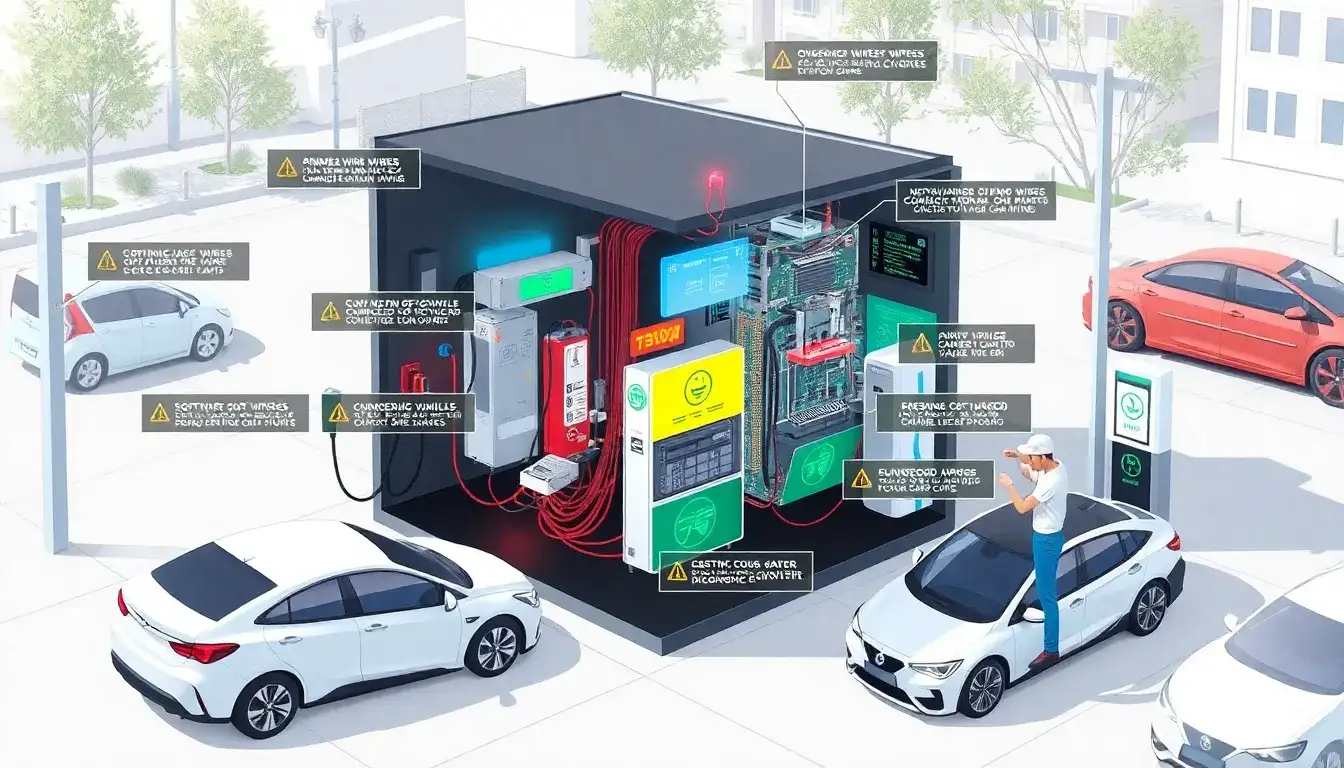
The most common internal faults in EV charging stations include both hardware and software issues. Here are some typical problems:
Hardware Issues
- Power Supply Issues: These are often caused by improper installation, power loss, vandalism, or environmental factors like weather damage. Regular inspections and proper installation can mitigate these issues.
- Faulty DC Contactors: These critical components can fail due to wear and tear or internal faults, preventing the charger from delivering power to vehicles. Replacing faulty contactors is a common fix.
- Component Failures: Components like circuit boards and connectors are prone to damage from environmental factors such as humidity or dust. Enhanced quality control can reduce these failures.
Software Issues
- Firmware Bugs: These can lead to system crashes or unresponsive displays. Regular firmware updates are essential to resolve these issues and maintain compatibility with various EV models.
- Connectivity Issues: Many charging failures are due to network connectivity problems, as stations rely on cellular links for authentication. Hardwired connections can be a more reliable option but are less common due to higher installation costs.
- System Crashes or Unresponsive Displays: These often result from software errors or outdated firmware. Resetting or updating the system can resolve these problems.
Additional Issues
- Internal Faults or Errors: These can manifest as frozen screens during reboots, requiring individualized solutions depending on the station model.
- Credit Card Reader Issues: Though not typically an internal fault, these can be a source of frustration for users.
Understanding these issues can help in troubleshooting and maintaining EV charging stations effectively.
Original article by NenPower, If reposted, please credit the source: https://nenpower.com/blog/what-are-the-most-common-internal-faults-in-ev-charging-stations/

