

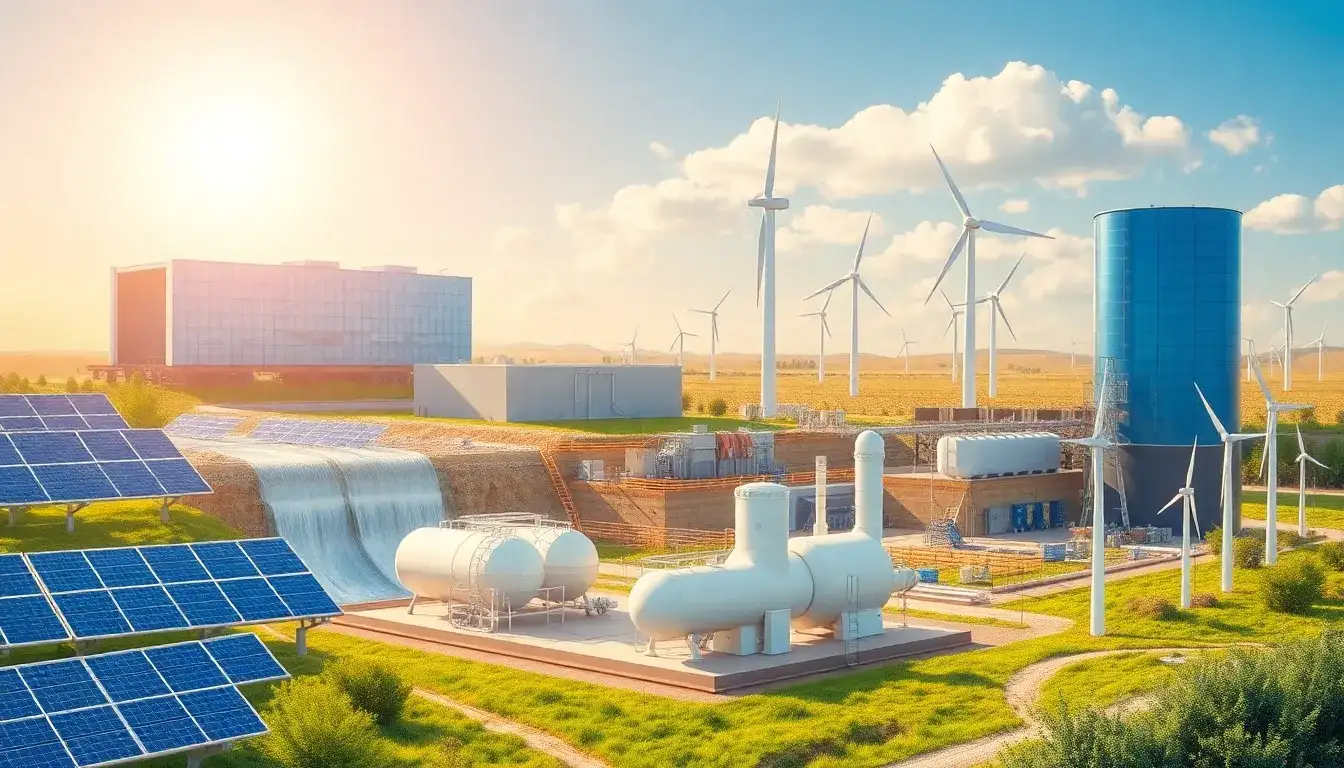
The most common energy storage technologies used with renewable energy sources are primarily focused on mitigating the intermittency of solar and wind power. Here are the leading technologies:
Common Energy Storage Technologies
- Lithium-Ion Batteries: These are the dominant and most economically viable technology for large-scale renewable energy storage. They are widely used due to their high efficiency and versatility, similar to those used in electric vehicles and mobile devices.
- Mechanical Pumped-Storage Hydropower: This is the oldest form of energy storage. It involves pumping water into a reservoir during periods of low demand and releasing it to generate electricity when demand is high. Although it is not as easily deployable as batteries, it remains a significant capacity for large-scale energy storage.
- Other Electrochemical Batteries: Beyond lithium-ion, other battery chemistries are being developed, including sodium-ion, lead-acid, and flow batteries. These technologies aim to provide cost-effective alternatives while maintaining performance.
Emerging and Advanced Technologies
- Flow Batteries: Useful for long-duration energy storage, these batteries are suitable for applications requiring hours or even days of storage capacity.
- Sodium-Ion Batteries: Research is ongoing to develop these as alternatives to lithium-ion batteries, as they could offer cost advantages and resource availability benefits.
These technologies help integrate renewable energy into the grid by storing excess energy produced during periods of high renewable output and releasing it during peak demand, enhancing the reliability and efficiency of the energy supply.
Original article by NenPower, If reposted, please credit the source: https://nenpower.com/blog/what-are-the-most-common-energy-storage-technologies-used-with-renewable-energy/

