

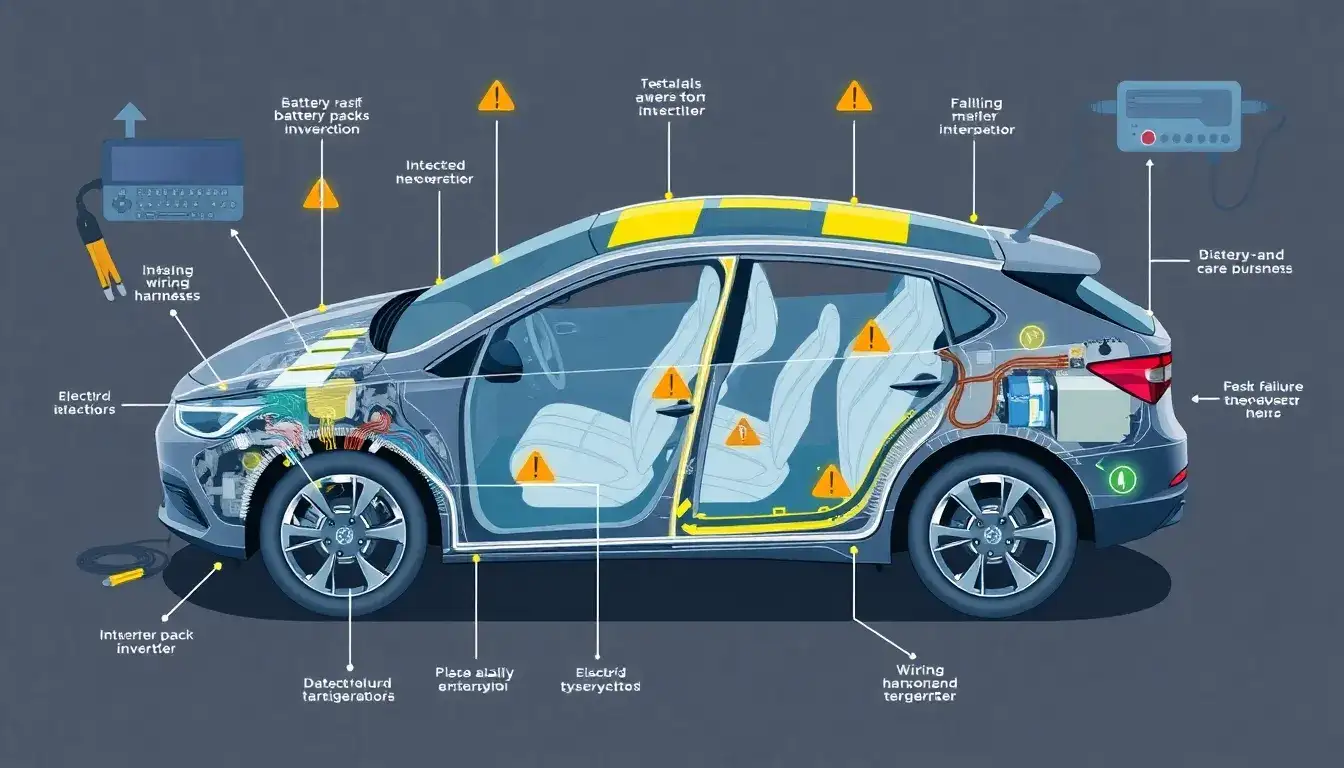
The most common electrical component failures in plug-in hybrid electric vehicles (PHEVs) include the following:
- Protective fuse failures: These are frequently prone to failure due to overloading. Fuse failures are generally straightforward to diagnose and repair, making them a common electrical fault in PHEVs.
- Battery and charging system issues: PHEV owners most frequently report problems related to the battery and the vehicle’s charging system. These components are critical for the vehicle’s operation and are common sources of reliability problems.
- High Voltage (HV) isolation faults: PHEVs experience high voltage isolation faults when the resistance between the battery’s high voltage system and the vehicle chassis decreases below safe levels. This condition, known as a Loss of Isolation (LOI), can cause hazardous current flow and poses a serious safety concern. These faults are challenging to detect and diagnose but are a notable failure mode in hybrid and plug-in hybrid vehicles.
In summary, the most common electrical failures in PHEVs revolve around protective fuses, battery and charging systems, and high voltage isolation faults, with the latter demanding particular attention due to safety implications.
Original article by NenPower, If reposted, please credit the source: https://nenpower.com/blog/what-are-the-most-common-electrical-component-failures-in-phevs/

