

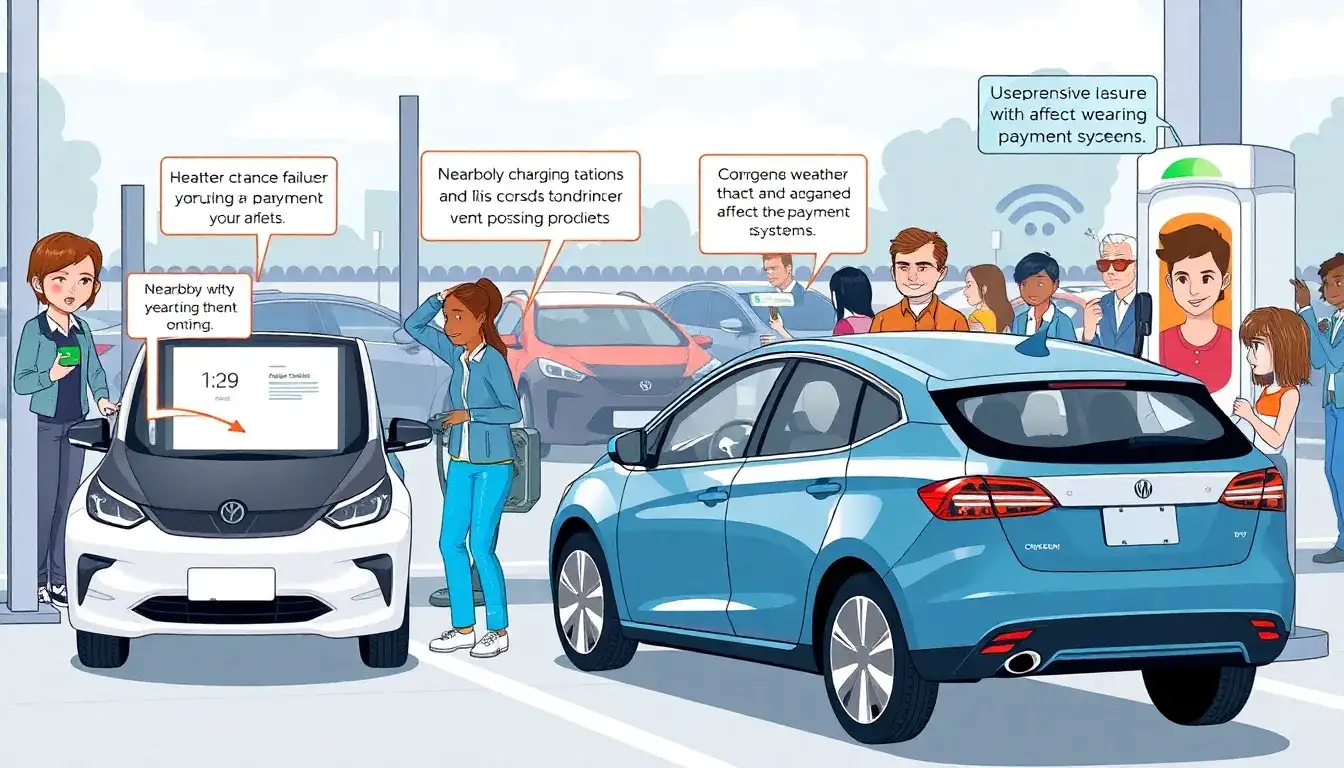
The most common causes of payment failures at EV charging stations largely stem from connectivity issues, hardware problems, and payment system complexities:
- Connectivity failures are the primary cause of payment-related charging session failures. More than half of all charging failures come from the station being unable to connect to its network to authenticate payment or user credentials. This is often because most public EV charging stations rely on cellular network connections, which can be unstable or unavailable in certain areas. When connectivity fails, the payment process cannot be authenticated, causing the session to fail.
- Payment system hardware and software issues also contribute significantly. Many stations experience internal faults or errors, including unresponsive or broken screens that prevent payment entry or confirmation. Credit card readers, in particular, are prone to failure more than other payment methods like RFID, NFC, or apps. Software glitches can cause stations to freeze or reboot mid-use, resulting in payment problems or failed sessions even if the payment is accepted.
- Complexity and diversity of payment methods add to the challenge. EV chargers typically offer multiple payment options—credit cards, RFID, NFC, smartphone apps, Plug & Charge, or SMS—but all depend on network connectivity for real-time authentication. Any disruption in these systems can result in payment failure. Additionally, some chargers may not support newer payment methods like Plug & Charge, causing authorization to fail even when the vehicle supports it.
- Specific network and hardware-related issues include:
- Chargers refusing to start despite payment acceptance, meaning drivers pay but do not receive charging service.
- Networks vary in reliability; some like Tesla Superchargers have relatively low failure rates (~4%), while others such as Shell Recharge, EVgo, and Blink report failure rates of 40% or higher during charging sessions, including payment problems.
In summary, the most common causes of payment failures at EV charging stations are unreliable cellular or network connectivity preventing authentication, hardware malfunctions like broken or unresponsive payment interfaces, and the complexity and compatibility issues among different payment systems and methods. Solutions include improving network infrastructure, implementing fallback options such as free charging during network outages, and standardizing payment systems to reduce failure points.
Original article by NenPower, If reposted, please credit the source: https://nenpower.com/blog/what-are-the-most-common-causes-of-payment-failures-at-ev-charging-stations/

