

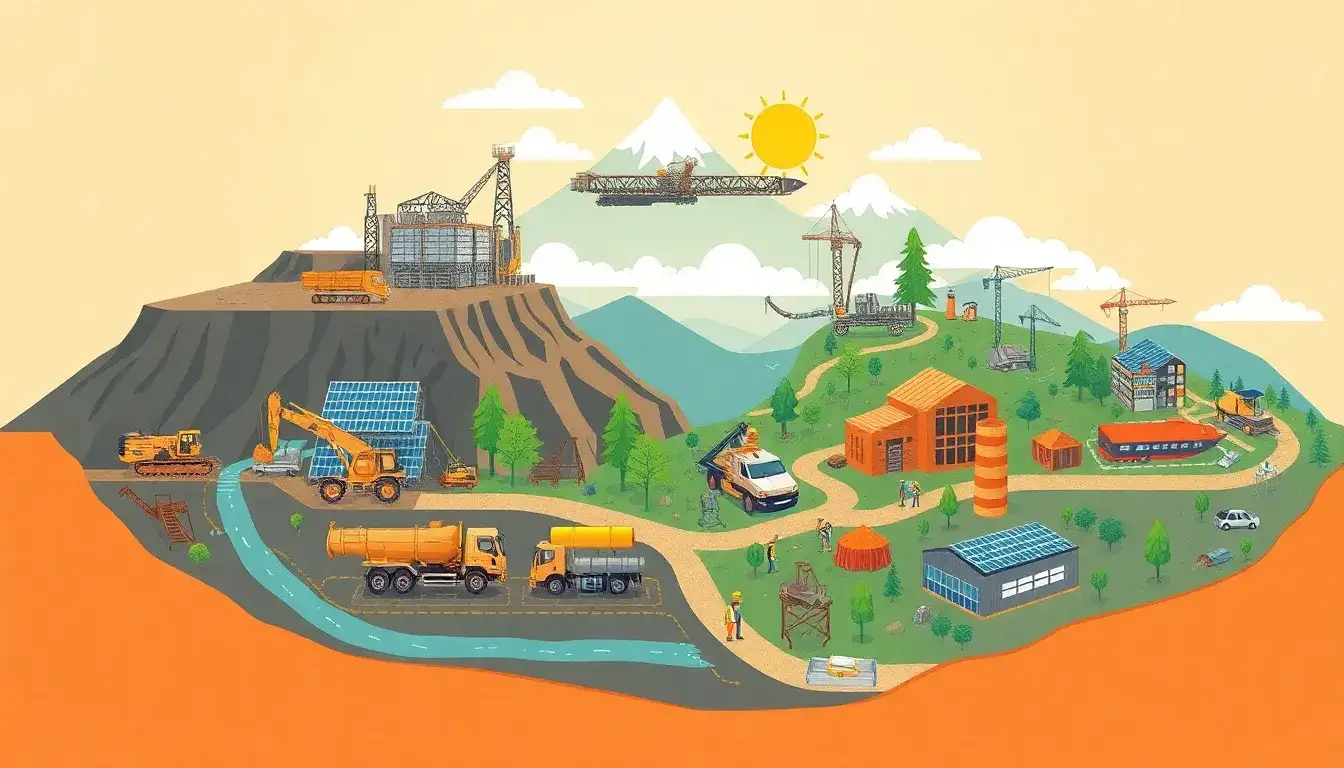
The most carbon-intensive stages in the life cycle of solar panels occur primarily during the early phases, particularly:
- Raw material extraction and processing: Mining and refining raw materials like silicon, silver, aluminum, and other metals used in solar panel manufacturing consume significant energy, leading to notable carbon emissions. These upstream materials require energy-intensive extraction and refinement processes.
- Manufacturing of PV modules and system components: The production of photovoltaic cells and assembling them into panels is energy-intensive, especially for crystalline silicon panels. This stage involves high-temperature processing and use of chemicals, which contribute substantially to the carbon footprint of the overall lifecycle.
Other stages such as installation, operation, maintenance, and decommissioning/recycling have relatively lower carbon impacts. During operation, solar panels generate electricity without direct emissions, thus greatly offsetting the initial carbon investment over their typical 25-30 year lifespan.
Recycling and disposal processes are emerging to reduce lifecycle emissions further by recovering valuable materials and avoiding waste, though their carbon contribution is currently smaller compared to material production and manufacturing stages.
In summary, the most carbon-intensive stages of solar panels are the extraction and refining of raw materials, and the manufacturing of the photovoltaic modules themselves. These early stages dominate the life cycle greenhouse gas emissions compared to other phases such as installation, operation, and end-of-life management.
Original article by NenPower, If reposted, please credit the source: https://nenpower.com/blog/what-are-the-most-carbon-intensive-stages-in-the-life-cycle-of-solar-panels/

