

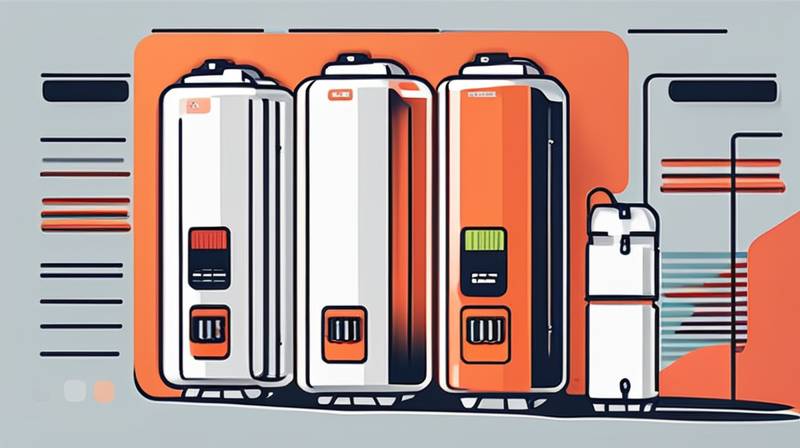
What are the modular energy storage power supplies?
1. Modular energy storage power supplies are… a category of systems designed to store energy for various applications, innovative technology, providing scalability, flexibility, and efficiency, thus reducing reliance on traditional power sources. These systems can be adapted for residential, commercial, or industrial use, enabling integration with renewable energy sources. The modular approach allows users to incrementally build their energy storage capacity based on evolving needs, ensuring a customized energy solution. At a time when energy demand is increasing and environmental concerns are paramount, modular energy storage plays a critical role in advancing energy independence and sustainability.
ANALYSIS OF MODULAR ENERGY STORAGE SYSTEMS
1. DEFINITION AND FUNCTIONALITY
To comprehend modular energy storage power supplies, it is crucial to delve into their definition and operational mechanics. These systems are designed to harness, store, and distribute energy efficiently. They capitalize on a modular approach, wherein units can be added or removed according to demand requirements. This adaptability renders them suitable for diverse applications, ranging from homes to large-scale industrial operations.
The core functionality of these systems resides in their ability to store energy generated during off-peak periods or from renewable sources, such as solar or wind. Subsequently, this energy can be distributed during peak demand times, thereby enhancing grid stability and reducing the dependence on fossil fuels. Moreover, they facilitate the use of renewable energy by providing a reliable storage solution that addresses the intermittency issues associated with resources like solar power, which is variable throughout the day.
2. TYPES OF MODULAR ENERGY STORAGE SYSTEMS
Several types of modular energy storage systems are available in the market, each with unique characteristics and applications. Lithium-ion batteries are among the most prominent types, known for their high energy density and efficiency. They are favored in residential settings due to their compact size and performance capabilities. Furthermore, lithium-ion batteries can be configured in modular designs, permitting users to scale their systems seamlessly.
Another variant is the lead-acid battery, which has been a staple in energy storage for decades. While traditionally larger and less efficient than lithium-ion counterparts, lead-acid systems can still be configured in a modular manner, making them suitable for specific scenarios where budget constraints or historical preferences dictate their use. Flow batteries represent another innovative option, allowing for large-scale energy storage with potentially lower degradation over time, making them ideal for utility-scale applications. Each of these types has its advantages and constraints, impacting their selection based on specific needs.
3. ADVANTAGES OF MODULAR ENERGY STORAGE POWER SUPPLIES
The advantages of modular energy storage power supplies are substantial and multifaceted. One major benefit is flexibility. In traditional systems, scaling energy capacity often involves significant infrastructure changes. However, with a modular approach, components can be added incrementally, allowing users to adapt to changing energy demands. This point is particularly compelling for businesses and homeowners who anticipate growth or fluctuating energy needs.
Another significant advantage is cost-effectiveness. Modular energy storage units can be built and installed according to financial capabilities, without necessitating a large upfront investment. Users can start with a smaller module and expand as their budget allows, thereby spreading out capital costs over time. Additionally, these systems can contribute to energy savings by optimizing electricity usage during price fluctuations, consequently reducing overall energy expenditure.
4. ENVIRONMENTAL IMPACT AND SUSTAINABILITY
The environmental implications of modular energy storage power supplies are noteworthy as societies strive for a sustainable future. These systems contribute positively by supporting the integration of renewable energy sources, significantly lowering greenhouse gas emissions. By storing excess energy generated from renewables, they minimize reliance on traditional energy sources that contribute to air pollution and climate change.
Moreover, modular energy storage systems can promote efficiency across the energy landscape. By facilitating better load management, these systems assist in reducing peak demand stress on grids, which can lead to the need for additional fossil fuel power plants. This dynamic not only enhances energy security but also propels advances in reducing the carbon footprint of energy consumption.
5. CHALLENGES AND LIMITATIONS
Despite the substantial benefits, modular energy storage power supplies do come with challenges that must be addressed. One notable concern revolves around technology and infrastructure compatibility. Not all energy systems and appliances are currently equipped to work seamlessly with modular energy storage solutions. This requirement for compatibility can lead to increased upfront costs for retrofitting or upgrading existing systems.
Another challenge ties to the lifecycle management of the storage modules. As with all battery systems, issues related to disposal and recycling arise. It is crucial to develop sustainable practices to manage the end-life of batteries efficiently. Moreover, the environmental impact of mining metals for battery production should be critically assessed, prompting a need for more sustainable practices within the industry.
6. THE FUTURE OF MODULAR ENERGY STORAGE POWER SUPPLIES
Looking ahead, the future of modular energy storage power supplies appears promising, driven by innovation and changing energy paradigms. Advancements in battery technology are expected, which may lead to higher efficiency and decreased costs. As the need for energy storage grows due to increased consumption and fluctuating fuel sources, modular systems will likely gain more traction among both residential and industrial users.
Furthermore, collaboration between technology providers, energy regulators, and users will be pivotal in fostering an environment conducive to the expansion of modular energy storage. By developing standards and best practices, stakeholders can ensure that these systems are integrated effectively into energy strategies. The emergence of smart grids is also projected to enhance the utility of modular storage by facilitating better energy management and distribution channels.
FREQUENTLY ASKED QUESTIONS
1. WHAT IS THE DIFFERENCE BETWEEN MODULAR ENERGY STORAGE AND TRADITIONAL ENERGY STORAGE SYSTEMS?
The distinction between modular energy storage and traditional energy storage systems is primarily centered on flexibility and scalability. Traditional systems typically require a large upfront investment and lack the ability to adapt easily to changing energy demands. They often involve considerable infrastructure changes if additional energy capacity is needed. In contrast, modular energy storage systems allow users to add or remove units as necessary, making them highly adaptable to varying requirements.
Moreover, modular systems often incorporate advanced technologies, enabling users to benefit from the latest improvements in energy storage and management. This characteristic means that performance can be optimized continually as newer modules and technologies become available. As a result, users may experience enhanced efficiency and reduce energy costs over time.
2. CAN MODULAR ENERGY STORAGE SYSTEMS BE INTEGRATED WITH RENEWABLE ENERGY SOURCES?
Absolutely, and this is one of the significant advantages of modular energy storage systems. These systems are particularly well-suited for integration with renewable energy sources, such as solar and wind power. Since renewable energy generation can be variable and unpredictable, having a reliable energy storage solution is crucial for maximizing efficiency and ensuring consistent energy availability.
By coupling modular storage with renewable technologies, users can harness surplus energy generated during peak production times, storing it for use during periods of low generation. This capability not only enhances the utility of renewable sources but also promotes energy independence and resilience against grid fluctuations. Ultimately, such integration is critical for transitioning to a sustainable energy future.
3. HOW DOES THE COST OF MODULAR ENERGY STORAGE SYSTEMS COMPARE TO TRADITIONAL ENERGY STORAGE OPTIONS?
When comparing costs, modular energy storage systems often present a more manageable financial structure than traditional options. In traditional systems, users are required to invest significantly upfront for a complete installation, which can deter potential adoption. Conversely, modular systems can be incrementally purchased, allowing users to adapt their investment according to their specific energy consumption needs and budget.
Furthermore, the modular approach can lead to long-term savings. Users can optimize their energy expenses by utilizing stored energy during high-demand periods, thereby reducing reliance on expensive peak-time electricity. Additionally, as battery technology progresses, the costs associated with modular systems are also expected to decrease, providing even greater financial incentives for end-users in both residential and commercial markets.
MODULAR ENERGY STORAGE POWER SUPPLIES REPRESENT A VITAL COMPONENT IN THE EVOLUTION OF ENERGY MANAGEMENT. BY OFFERING FLEXIBILITY AND SCALABILITY, THESE SYSTEMS MEET THE DEMANDS OF MODERN ENERGY CONSUMERS, ADDRESSING BOTH ECONOMIC AND ENVIRONMENTAL CONCERNS. AS THE ENERGY INDUSTRY CONTINUES TO TRANSFORM, IT IS ESSENTIAL TO EMBRACE INNOVATIVE SOLUTIONS LIKE MODULAR ENERGY STORAGE TO PROMOTE SUSTAINABILITY AND ENERGY INDEPENDENCE. THE ALIGNMENT BETWEEN TECHNOLOGICAL ADVANCEMENTS, REGULATORY SUPPORT, AND MARKET DEMANDS WILL ULTIMATELY SHAPE THE PROGRESS OF MODULAR SYSTEMS AND THEIR ROLE IN ACHIEVING A LOW-CARBON FUTURE. CONTINUES INVESTMENT IN RESEARCH AND DEVELOPMENT, AS WELL AS COLLABORATION AMONG STAKEHOLDERS, WILL ENSURE THAT MODULAR ENERGY STORAGE EVOLVES TO MEET THE CHALLENGES OF A CHANGING ENERGY LANDSCAPE AS WELL AS PROVIDE A FRAMEWORK FOR A SUSTAINABLE AND EFFICIENT ENERGY INFRASTRUCTURE.
Original article by NenPower, If reposted, please credit the source: https://nenpower.com/blog/what-are-the-modular-energy-storage-power-supplies/

