

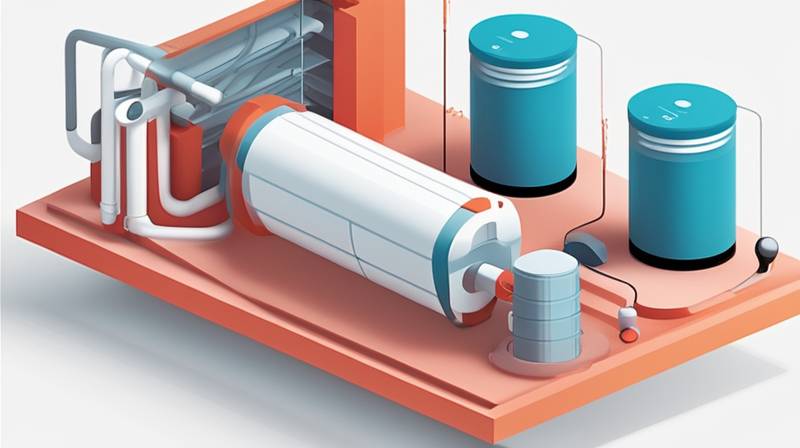
Photothermal energy storage materials can be classified into several categories including: 1. Phase Change Materials (PCMs) which provide efficient thermal energy storage through phase transitions, 2. Thermochemical materials that utilize chemical reactions for energy storage, 3. Heat-conductive composites that allow for rapid heat transfer and storage, and 4. Nanomaterials designed to enhance the efficiency of heat absorption and retention.
Among these, Phase Change Materials (PCMs) are particularly noteworthy due to their ability to absorb and release significant amounts of thermal energy at specific temperatures. This characteristic makes them ideal for applications in various fields, including building temperature regulation, solar energy systems, and industrial processes requiring thermal management. Attention to the latest advancements in PCM formulations and their specific applications is essential to comprehensively understanding their role in the realm of photothermal energy storage.
1. INTRODUCTION TO PHOTOTHERMAL ENERGY STORAGE MATERIALS
Photothermal energy storage represents a promising avenue for improving energy efficiency and sustainability. In the quest for innovative solutions, a plethora of materials has been developed, each with unique properties that contribute to effective thermal management. Phase Change Materials (PCMs) are a prime focus due to their exceptional ability to absorb, store, and release energy at a fixed temperature range.
The process through which PCMs operate relies on the latent heat associated with phase transitions, primarily from solid to liquid and vice versa. During this transition, materials can absorb or release vast quantities of energy without significant temperature changes, making them ideal for energy storage applications where temperature stability is desirable.
2. PHASE CHANGE MATERIALS (PCMs)
Phase Change Materials encompass a broad array of compounds, including organic, inorganic, and eutectic materials. Understanding their individual thermodynamic properties is essential for application in various systems. Organic PCMs such as paraffin wax, fatty acids, and sugar alcohols are notable for their non-toxic nature and ease of handling.
The latent heat of fusion is a critical factor when evaluating their storage capacity, with organic compounds typically exhibiting melting points ranging from 15°C to 25°C. Inorganic PCMs, which often include salt hydrates, are advantageous due to their high latent heat storage potential but may face challenges such as phase separation or supercooling.
These materials can be tailored for specific applications, thus enhancing their performance in real-world scenarios. For example, the inclusion of additives can improve thermal conductivity, enabling quicker energy absorption and release, while encapsulation techniques can enhance stability and longevity.
3. THERMOCHEMICAL MATERIALS
Thermochemical materials leverage reversible chemical reactions for energy storage, making them distinct from PCMs. These systems undergo endothermic and exothermic reactions through which they absorb and release energy, respectively. The efficiency of thermochemical storage systems offers significant advantages, particularly in long-duration storage applications.
One notable category includes metal hydrides which can absorb hydrogen at high temperatures and later release it, effectively storing energy in the process. These materials can achieve energy densities far greater than conventional thermal methods, making them extremely attractive for both stationary and mobile applications, such as in vehicles and grid storage solutions.
Another interesting avenue involves the use of sorption processes, where materials such as zeolites absorb moisture, effectively storing thermal energy from surrounding environments. This characteristic can be exploited in thermal comfort applications within buildings, where internal temperatures remain stable despite external fluctuations.
4. HEAT-CONDUCTIVE COMPOSITES
While phase change materials and thermochemical methods provide the primary mechanisms for energy storage, the significance of heat-conductive composites cannot be overlooked. As the demand for quick heat transfer and efficient storage increases, the development of composite materials that integrate high thermal conductivity with energy storage capabilities has gained traction.
These composites combine traditional insulating materials with thermally conductive fillers, thus optimizing the performance of energy systems. For instance, reinforced polymers embedded with metal nanoparticles demonstrate remarkable heat transfer characteristics while maintaining structural integrity. This combination allows for more efficient thermal energy storage systems, resulting in reduced energy losses during heat absorption and release phases.
Furthermore, ongoing research is investigating methods to enhance interface interactions within these composites, which directly influence their thermal performance. Utilizing nanotechnology can lead to the development of materials that not only store energy effectively but also manage thermal regulation with unprecedented efficiency.
5. NANOMATERIALS
Nanomaterials are emerging as significant players in photothermal energy storage systems due to their unique properties, such as high surface area-to-volume ratios and quantum size effects. The integration of nanomaterials into photothermal applications facilitates the absorption and storage of solar energy at a nanoscale, unlocking new energy potentials.
For instance, carbon-based nanomaterials such as graphene possess exceptional thermal conductivity and can be employed to enhance the thermal management capacities of various systems, including batteries and PCM systems. Their incorporation can lead to faster heat transfer rates during energy charging and discharging cycles, further optimizing energy efficiency.
Additionally, metallic nanoparticles demonstrate excellent capabilities for harnessing solar radiation, converting it into thermal energy effectively. By modifying the surface properties of these nanoparticles, they can be tailored for specific wavelengths resulting in enhanced absorption across various spectra, thereby improving the overall efficiency of solar thermal energy systems.
6. APPLICATIONS OF PHOTOTHERMAL ENERGY STORAGE MATERIALS
The versatility of photothermal energy storage materials lends itself to numerous applications across various sectors. One of the most significant applications resides in solar thermal energy systems, where heat is collected from solar irradiation during the day and stored for later use, particularly for heating in colder months or during nighttime consumption.
In the context of building energy management, integrating PCM-based systems enables buildings to maintain comfort levels with reduced energy input, mitigating reliance on fossil fuels. Here, PCMs may be incorporated within building materials such as wallboards, ceilings, or flooring, effectively ‘charging’ during peak sunlight hours and releasing energy when required.
Additionally, these materials find application in industrial processes requiring precise temperature control, enhancing the efficiency and efficacy of thermal energy processes in various sectors, including chemical manufacturing and food processing. Effective thermal management solutions can lead to substantial cost savings, reducing energy bills and contributing to overall resource conservation.
7. FUTURE TRENDS IN PHOTOTHERMAL ENERGY STORAGE RESEARCH
As we move forward, research in photothermal energy storage is evolving rapidly, promising exciting advancements in materials and technologies. Innovations in smart materials that respond dynamically to thermal stimuli are on the horizon, with potential applications including self-regulating thermal energy systems.
Further exploration into the coupling of thermochemical systems with renewable energy sources, such as biomass and hydrogen production, is also paramount. This integration may provide substantial improvements in energy conversion efficiency, paving the way for sustainable energy systems that simultaneously address climate change and energy demands.
The introduction of nanotechnology in the realm of energy storage materials represents another promising frontier, with developments aimed at enhancing energy storage capacities through engineered materials. These advancements are vital for creating adaptable energy solutions that cater to an ever-increasing spectrum of energy requirements.
FAQs
WHAT ARE THE MAIN ADVANTAGES OF PHASE CHANGE MATERIALS?
Phase Change Materials (PCMs) offer several critical advantages in photothermal energy storage applications. Firstly, they possess a significant energy storage capacity due to their ability to absorb and release large amounts of thermal energy during phase transitions, generally without substantial temperature changes. This characteristic ensures that temperature fluctuations stay within acceptable limits, delivering thermal comfort in various applications.
Secondly, PCMs exhibit various choices in terms of melting points, offering the flexibility to work across numerous temperature ranges, which is essential for applications in building materials, solar thermal systems, and industrial processes. With enhanced formulations and techniques, researchers are discovering ways to overcome challenges like supercooling and phase segregation, further increasing their applicability.
Another advantage includes environmental friendliness, especially with organic PCMs, which can be non-toxic and biodegradable. As energy efficiency and sustainability become increasingly important in contemporary society, the properties of PCMs position them as attractive solutions to address these challenges effectively.
HOW DO THERMOCHEMICAL ENERGY STORAGE SYSTEMS WORK?
Thermochemical energy storage systems operate based on reversible chemical reactions that facilitate energy storage and retrieval. The basic mechanism involves an endothermic reaction, which allows for energy absorption during charging periods, followed by an exothermic reaction released during discharging.
Materials such as metal hydrides exhibit this behavior, as they absorb hydrogen gas during the charging process, usually at elevated temperatures, and subsequently release it when required. The high energy density associated with these reactions makes them a formidable option for long-duration energy storage, as energy can be stored at higher concentrations than traditional thermal storage methods.
Furthermore, sorption processes are another approach, where materials like zeolites or activated carbons absorb moisture or gases, subsequently releasing thermal energy when conditions change. These materials are promising for applications in thermal management, particularly in construction and climate control. Overall, thermochemical energy storage systems provide a unique and effective method for managing energy sustainably.
WHAT ROLE DO NANOMATERIALS PLAY IN PHOTOTHERMAL ENERGY STORAGE?
Nanoscale materials have begun playing a transformative role in the field of photothermal energy storage due to their distinct physical and chemical properties. Nanomaterials, such as carbon nanotubes or metallic nanoparticles, exhibit remarkable thermal and electrical conductivities, allowing for optimal thermal energy absorption and transfer processes.
The high surface area-to-volume ratios of these materials enable enhanced interaction with thermal energy sources. For example, the incorporation of metallic nanoparticles into energy storage systems can significantly improve the thermal absorption capacity, converting solar radiation into heat more efficiently. Additionally, various formulations can lead to tuned absorption properties, allowing for targeted energy harvesting across specific wavelengths of light.
Moreover, solving the challenges associated with energy storage materials, like rapid heat transfer and stability, is facilitated through the use of nanotechnology. Such innovations lead to the development of superior composites that outperform traditional materials, paving the way for revolutionizing energy storage methods across multiple applications.
In giving due consideration to the rapidly evolving technological landscape, vigilance in observing innovative advancements in photothermal energy storage materials is vital.
The emergence of new materials and techniques signals a transformative wave within the energy sector. Each category of materials discussed plays a unique role, demonstrating versatility and efficiency in energy storage methods. From PCMs’ intrinsic energy storage abilities to the chemical complexities of thermochemical systems and the advanced efficiency brought by nanomaterials, the ongoing research and development in these areas stand to reshape energy management optimally. As global energy demands escalate, harnessing the potential of these materials for sustainable, renewable energy solutions will remain at the forefront of scientific inquiry, vital for future energy infrastructures. The importance of not just recognizing these materials but also fostering innovation around them is crucial, ensuring that emerging technologies continuously address energy challenges, align with sustainability goals, and promote overall energy conservation.
Original article by NenPower, If reposted, please credit the source: https://nenpower.com/blog/what-are-the-materials-for-photothermal-energy-storage/

