

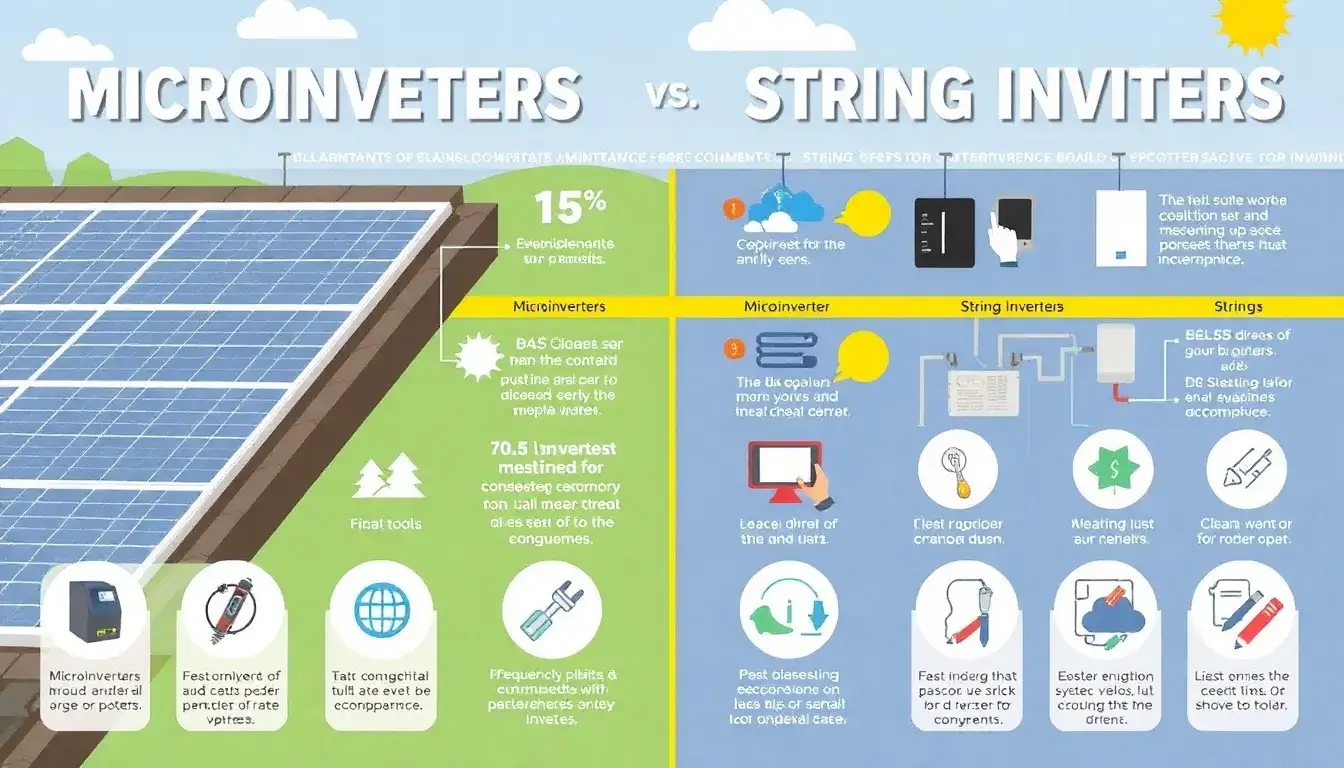
Maintenance Requirements: Microinverters vs. String Inverters
Microinverters
Maintenance Requirements:
- Regular Inspections: Visual inspections should be conducted at least twice a year to check for loose wires, damaged casing, and water ingress. High winds, hail, or storms may necessitate more frequent checks.
- Cleaning: Keep the area around the microinverters clean and free from debris using a soft brush or cloth. Avoid harsh chemicals or high-pressure water.
- Performance Monitoring: Use online platforms to monitor individual panel performance. Identify underperforming panels quickly to prevent damage.
- Professional Inspections: While rare, scheduling an annual professional inspection is recommended for in-depth checks and troubleshooting.
- Ventilation: Ensure good airflow around the inverters to prevent overheating.
Advantages in Maintenance:
- A failure in one microinverter only affects the panel it’s connected to, allowing the rest of the system to continue functioning.
- Panel-level monitoring allows for quick identification and resolution of issues.
String Inverters
Maintenance Requirements:
- Less Frequent Inspections: String inverters are generally simpler in terms of maintenance since they’re fewer in number and often located at ground level.
- Replacement Ease: Replacing a string inverter is typically straightforward and quick, as it’s easier to access and involves less labor compared to rooftop microinverters.
- Monitoring: While less common, modern string inverters may also offer monitoring capabilities, though they are less detailed than microinverters.
Disadvantages in Maintenance:
- A single string inverter failure can halt the entire system connected to it.
- They require more space and may necessitate outdoor installation, which can be challenging with limited space.
Comparison
| Aspect | Microinverters | String Inverters |
|---|---|---|
| Quantity per System | One per panel | One for multiple panels |
| Lifespan | 20-25 years | Typically 10-15 years, replaceable earlier |
| Inspection Frequency | Regular, individual panel monitoring possible | Less frequent, simpler to inspect |
| Maintenance Complexity | Requires access to each panel for replacement | Easier replacement at ground level |
| Failure Impact | Only affects the connected panel | Shuts down all connected panels |
| Initial Cost | More expensive | Less expensive |
| Expansion Ease | Easier to expand | Harder to expand |
In summary, microinverters require more frequent and detailed maintenance due to their quantity and rooftop placement, but their individual panel monitoring and failure isolation make them more reliable in certain situations. String inverters are simpler in terms of overall system maintenance but can cause more system-wide issues if they fail.
Original article by NenPower, If reposted, please credit the source: https://nenpower.com/blog/what-are-the-maintenance-requirements-for-microinverters-versus-string-inverters/

