

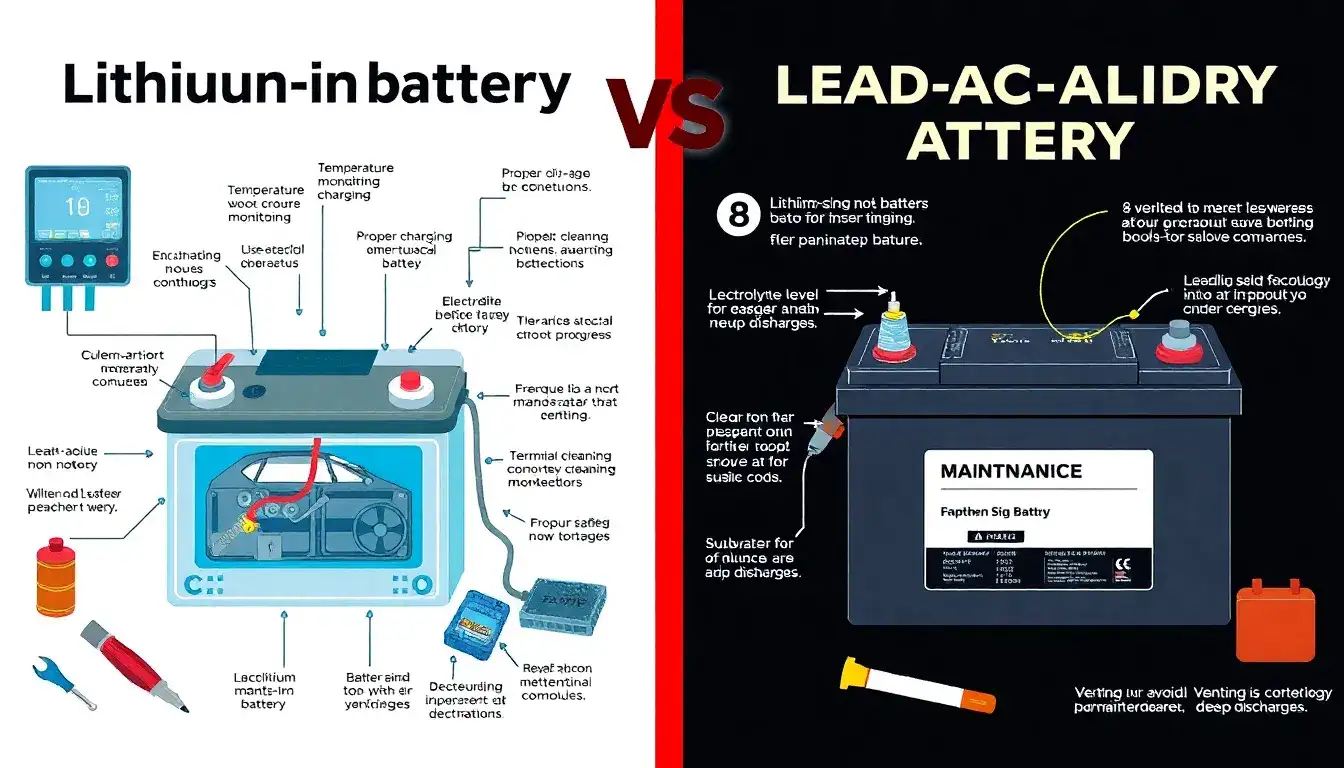
Maintenance Requirements for Lithium-Ion vs. Lead-Acid Batteries
Lithium-Ion Batteries
- Minimal Maintenance: Lithium-ion batteries require almost no maintenance, as they do not need watering and routine checks are minimal.
- Proper Charging: Use lithium-specific chargers to optimize charging and prevent overcharging.
- Charge Monitoring: Regularly check charge status to prevent overcharging or deep discharging.
- Storage Conditions: Store in a cool, dry place at around 50% charge.
- Handling and Transportation: Handle with care to prevent physical stress and comply with transportation regulations.
Lead-Acid Batteries
- High Maintenance: Lead-acid batteries require frequent maintenance, including watering to maintain electrolyte levels, cleaning to prevent corrosion, and regular inspections.
- Charging Time: Charging and cooling periods are lengthy, taking around 16 hours in total.
- Specialized Care: Requires specialized training due to the need for precise watering and servicing.
- Ventilation Needs: Charging areas must have adequate ventilation to prevent gas buildup.
Key Differences and Considerations
| Feature | Lead-Acid | Lithium-Ion |
|---|---|---|
| Maintenance | High | Minimal |
| Charging Time | 8 hours + 8 hours cool-down | 1-4 hours |
| Energy Efficiency | Lower | Up to 50% more efficient |
| Use Case | Suitable for single-shift operations | Ideal for multi-shift operations |
In summary, lithium-ion batteries offer superior efficiency and require less maintenance compared to lead-acid batteries. However, proper care is still necessary to maximize their performance and lifespan.
Original article by NenPower, If reposted, please credit the source: https://nenpower.com/blog/what-are-the-maintenance-requirements-for-lithium-ion-batteries-versus-lead-acid-batteries/

