

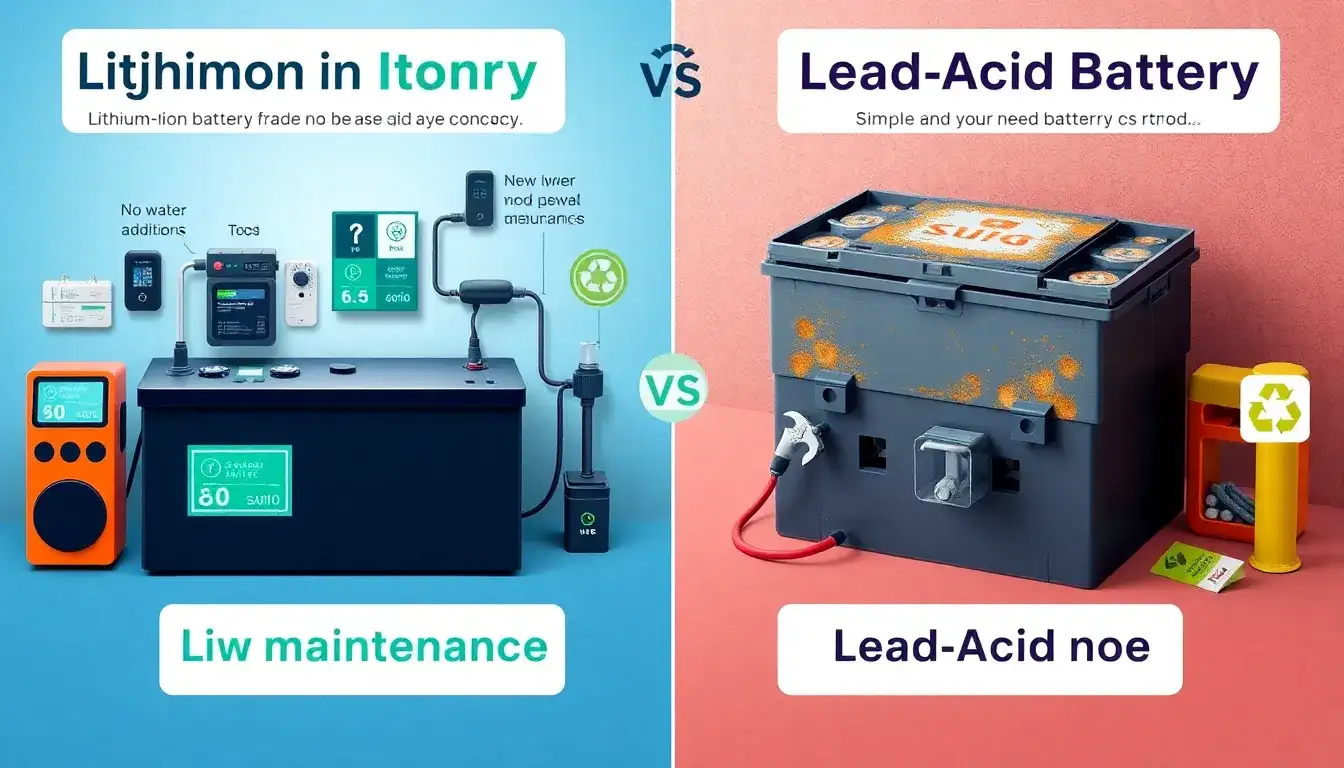
Maintenance Requirements for Lithium-Ion vs. Lead-Acid Batteries
Overview of Maintenance Needs
- Lithium-Ion Batteries:
- Charging: Charge to approximately 50% of capacity before long-term storage.
- Maintenance: Minimal maintenance is required. Monitor charge status regularly to avoid overcharging and full discharging.
- Self-Discharge: Batteries slowly self-discharge when not in use, necessitating periodic checks and recharging every six months.
- Handling and Storage: Store in a cool, dry environment between 5°C and 20°C (41°F and 68°F).
- Lead-Acid Batteries:
- Charging: Typically requires trickle charging or float charging to maintain the state of charge when not in use.
- Maintenance: Regular maintenance involves checking and topping up electrolyte levels, cleaning terminals to prevent corrosion, and ensuring proper storage conditions.
- Self-Discharge: Has a higher self-discharge rate compared to lithium-ion batteries.
- Handling and Storage: Store in a well-ventilated area and keep the terminals clean and dry.
Comparison of Key Aspects
| Feature | Lithium-Ion | Lead-Acid |
|---|---|---|
| Maintenance | Minimal; routine checks for charge status | Regular electrolyte checks, cleaning |
| Charging Time | 2–4 hours | 6–8 hours plus cool-down time |
| Self-Discharge | Slow; every six months check required | Higher self-discharge; constant charging |
| Storage Conditions | Cool, dry, 50% SoC | Well-ventilated, clean terminals |
| Longevity | 2–5 years with proper care; 300–500 cycles | Typically shorter lifespan |
| Energy Efficiency | High (50%+ more efficient) | Lower efficiency |
Best Practices for Use
- Lithium-Ion: Avoid full discharge and overcharging; keep within the 20–80% charge range for optimal lifespan.
- Lead-Acid: Regularly check electrolyte levels and ensure proper charging and storage conditions to prolong life.
Conclusion
Lithium-ion batteries offer higher efficiency and require less maintenance but need careful charging and storage practices. Lead-acid batteries demand more maintenance, including regular checks of electrolyte levels and terminal cleaning, but are often less expensive upfront.
Original article by NenPower, If reposted, please credit the source: https://nenpower.com/blog/what-are-the-maintenance-requirements-for-lithium-ion-batteries-compared-to-lead-acid-batteries/

