

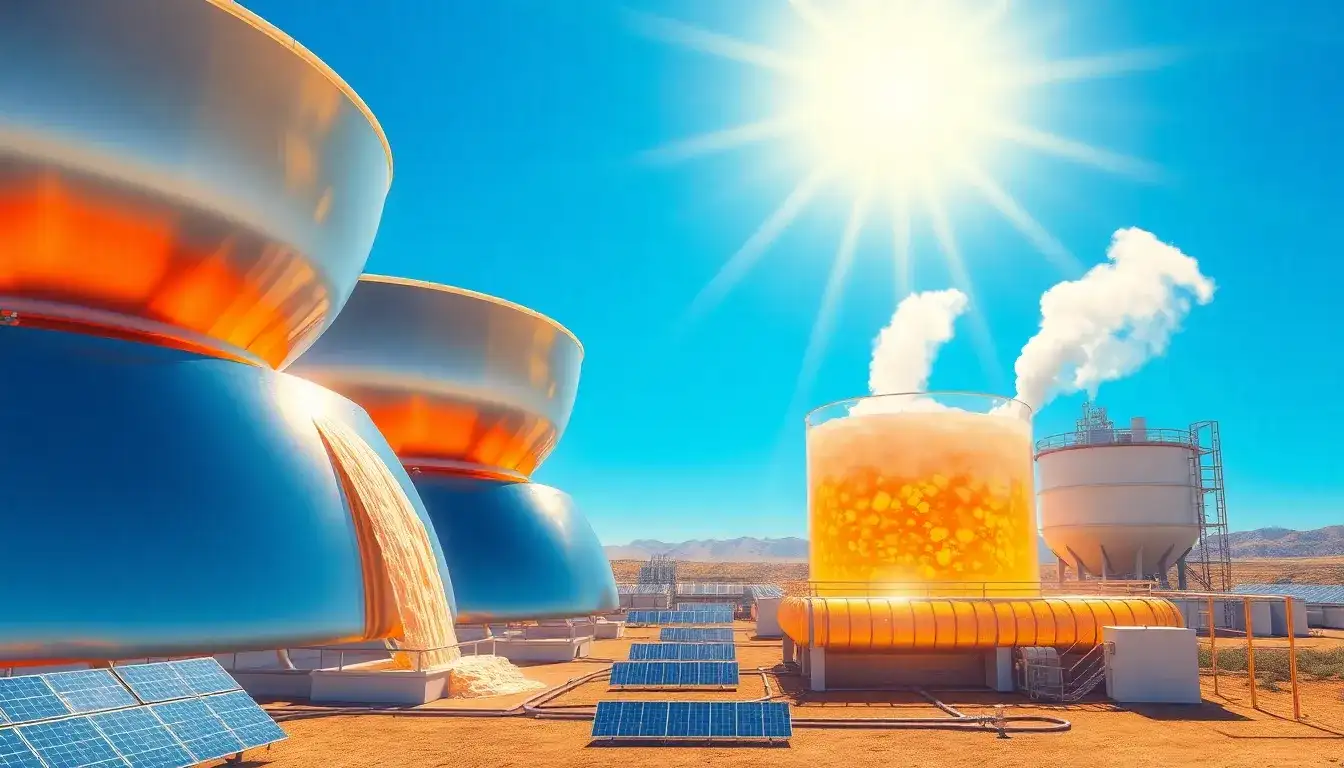
1. Sensible Heat Storage Systems
These systems store thermal energy by raising the temperature of a storage medium without changing its phase. There are several common configurations:
- Two-Tank Direct System: The solar heat transfer fluid is stored directly in two tanks—one hot and one cold. The cold fluid is heated in the solar receiver and then stored in the hot tank. When electricity generation is needed, the hot fluid passes through a heat exchanger to produce steam, then returns to the cold tank for reheating. This system uses the same fluid for both heat collection and storage, commonly molten salt.
- Two-Tank Indirect System: Similar to the direct system, but the fluid used to collect heat is different from the fluid stored. Heat is transferred via heat exchangers between fluids.
- Single-Tank Thermocline System: This system uses a single tank with a temperature gradient (thermocline) to store heat, typically with solid filler material inside the tank that helps maintain the gradient and reduce costs.
2. Latent Heat Storage Systems (Phase Change Materials)
These systems store energy by changing the phase of a material, such as melting or solidifying, which can store large amounts of energy at nearly constant temperature. Molten salts like a mixture of sodium nitrate and potassium nitrate are widely used as phase change materials storing latent heat or high sensible heat energy at high temperature. This allows CSP plants to store thermal energy efficiently for later use.
3. Molten Salt Storage
Molten salt storage is a key technology in many modern CSP plants, especially tower and trough configurations. Molten salt, typically a nitrate salt mixture, is heated by concentrated sunlight to around 565°C and stored in insulated tanks. This allows energy to be stored during sunny periods and used to generate electricity on demand, including after sunset or during cloudy conditions. Molten salt storage is considered a sensible heat storage system but is often highlighted due to its thermal stability and high energy density.
Summary Table of Main Thermal Energy Storage Types in CSP
| Storage Type | Description | Common Medium | Typical Use Case |
|---|---|---|---|
| Two-Tank Direct Sensible Heat | Storage fluid is same as heat transfer fluid; two tanks (hot/cold) | Molten salt or thermal oil | Commercial CSP plants (tower, trough) |
| Two-Tank Indirect Sensible Heat | Separate fluids for heat transfer and storage, using heat exchangers | Molten salt, oils | Some CSP designs requiring fluid separation |
| Single-Tank Thermocline Sensible Heat | One tank with temperature gradient using filler material | Molten salt, solid fillers | Cost-reduced storage variation |
| Latent Heat Storage (Phase Change) | Stores energy via phase change of materials at constant temperature | Molten salts and phase change materials | Emerging and specialized CSP applications |
In conclusion, sensible heat storage with molten salts in two-tank configurations (especially the direct system) is the predominant and mature thermal storage technology in CSP plants, enabling flexible, dispatchable solar power generation.
Original article by NenPower, If reposted, please credit the source: https://nenpower.com/blog/what-are-the-main-types-of-thermal-energy-storage-systems-used-in-csp-plants/

