

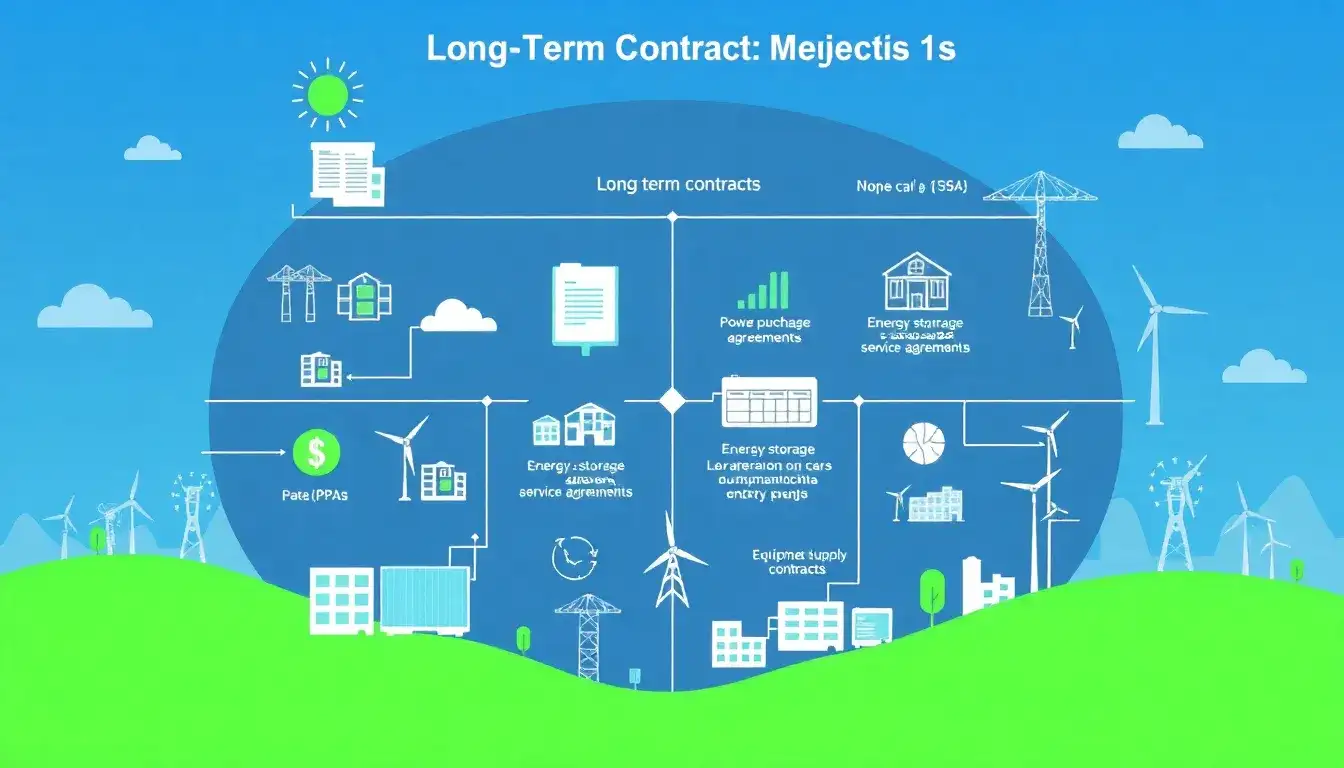
The main types of long-term contracts used in battery projects include:
Types of Contracts
- Power Purchase Agreements (PPAs) or Energy Storage Services Agreements: These agreements are commonly used for utility-scale energy storage projects. They allow for long-term commitments to purchase energy or energy storage services from a developer or supplier.
- Tolling Agreements: These are similar to PPAs but involve a different structure where the toller (seller) owns and operates the system, and the offtaker supplies the energy for charging. The energy stored belongs to the offtaker, who can dispatch the system for ancillary services.
- Engineering, Procurement, and Construction (EPC) Agreements: These agreements cover the full design, purchase of materials, construction, and commissioning of battery systems by a contractor.
- Build-Transfer Agreements (BTAs): In these agreements, one party builds the project and transfers ownership to another party at a specified point, usually after construction is completed.
- Master Supply Agreements (MSAs): MSAs outline terms for purchasing batteries over time, allowing for individual purchase orders with specific commercial terms for each project.
- Capacity Reservation Agreements (CRAs): These agreements provide buyers with guaranteed availability of battery capacity over a set period. They ensure supply and pricing certainty by reserving capacity in the supplier’s production pipeline.
- Long-Term Services Agreements (LTSAs): These are used to ensure long-term performance guarantees and warranties for battery systems, often negotiated alongside supply agreements.
Each of these contracts plays a crucial role in managing risks, ensuring project financing, and optimizing revenue streams for battery storage projects.
Original article by NenPower, If reposted, please credit the source: https://nenpower.com/blog/what-are-the-main-types-of-long-term-contracts-used-in-battery-projects/

