

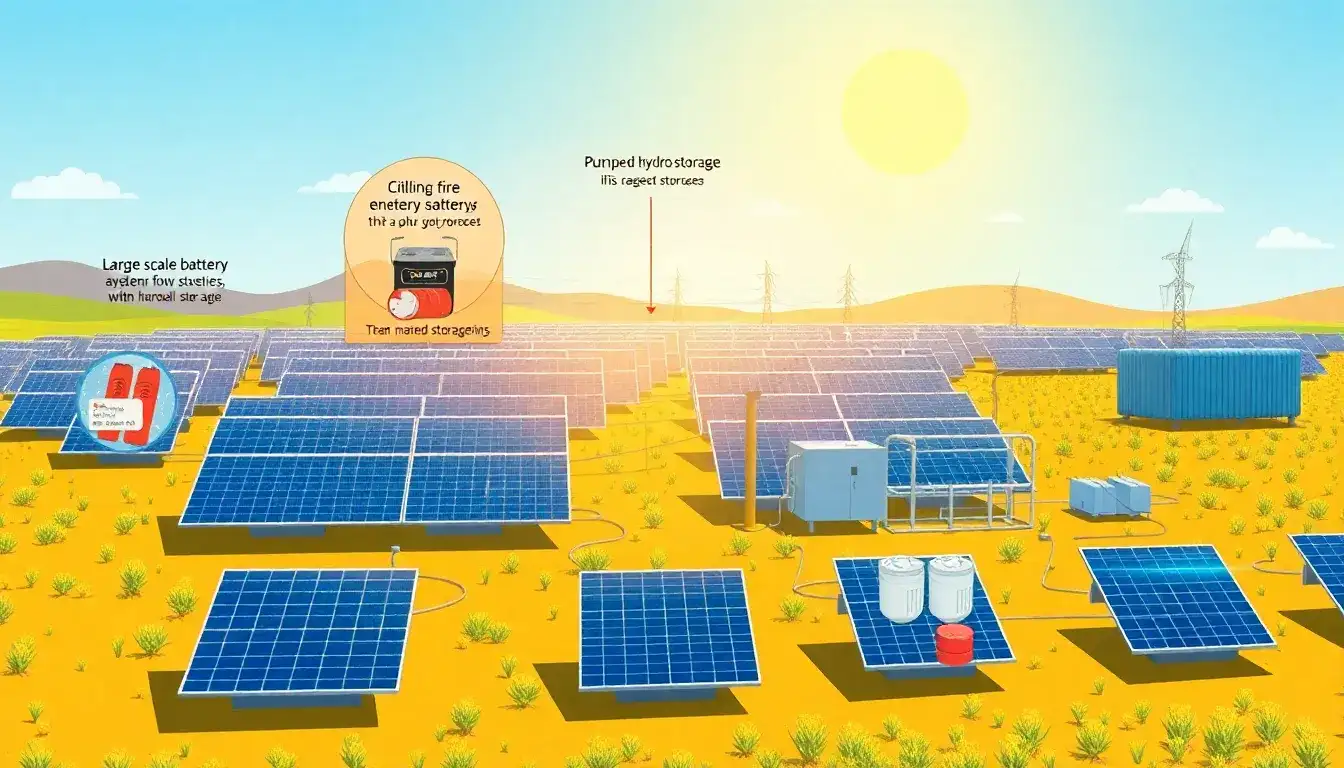
1. Battery Storage
- Lead-Acid Batteries: These are more affordable but have a shorter lifespan compared to other options.
- Lithium-Ion Batteries: Widely used for both residential and commercial applications, they offer a longer lifespan and better performance. Common lithium-ion types include Lithium Iron Phosphate (LFP) and Nickel Manganese Cobalt (NMC).
- Flow Batteries: Suitable for longer duration storage, they store energy in liquid electrolytes.
2. Thermal Energy Storage
- Molten Salt Systems: Used primarily with Concentrated Solar Power (CSP) systems to store heat, which can later generate electricity.
- Solar Thermal Systems: Store heat for domestic hot water or space heating.
3. Mechanical Storage
- Flywheel Energy Storage: Uses spinning rotors to store energy kinetically, releasing it rapidly when needed.
- Compressed Air Energy Storage (CAES): Stores energy by compressing air in underground caverns.
- Pumped Hydro Storage: Although not exclusively for solar, it’s the most common form of large-scale energy storage, using excess energy to pump water into elevated reservoirs.
Each type of storage serves different needs based on scale, duration of storage, and integration with solar systems.
Original article by NenPower, If reposted, please credit the source: https://nenpower.com/blog/what-are-the-main-types-of-energy-storage-used-in-solar-power-systems/

