

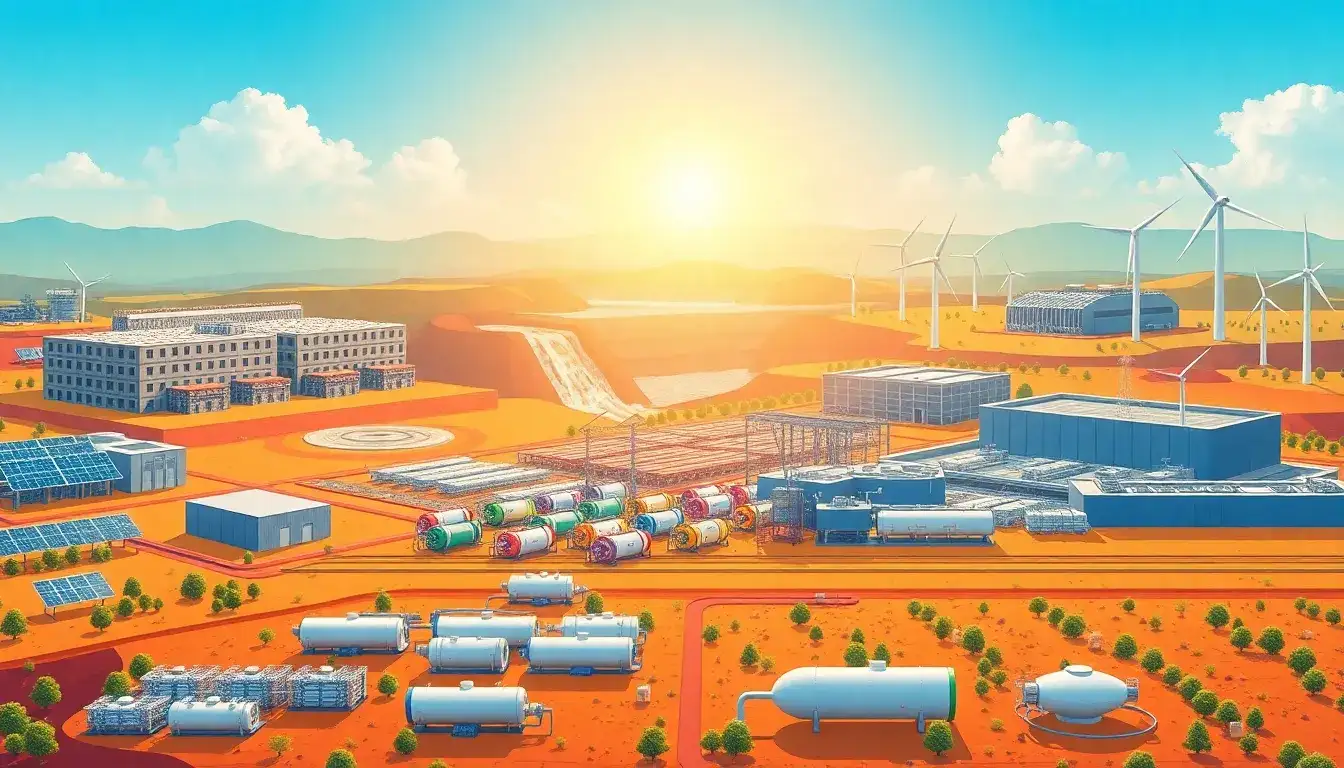
The main types of energy storage technologies used in grid-scale applications include:
1. Pumped Hydro Storage (PHS)
- Description: PHS involves pumping water from a lower reservoir to a higher reservoir during periods of low electricity demand. During high demand, the water is released to generate electricity by flowing back through turbines.
- Advantages: It remains the largest form of grid storage capacity globally due to its ability to handle large amounts of energy over long durations.
2. Grid Scale Battery Storage
- Description: This includes large-scale use of batteries, particularly lithium-ion batteries, due to their efficiency and high energy density. Other types like flow batteries and sodium-sulfur batteries are also used.
- Advantages: Lithium-ion batteries are suitable for shorter duration storage, while flow batteries can offer long lifetimes with minimal performance degradation.
3. Compressed Air Energy Storage (CAES)
- Description: CAES involves compressing air in underground caverns during low-demand periods. This compressed air is heated and expanded to drive turbines when electricity is needed.
- Advantages: Suitable for large-scale energy storage and integration with renewables to enhance grid stability.
4. Long-Duration Storage Technologies
- Description: Technologies like green hydrogen (produced via electrolysis) and thermal energy storage are used for long-duration energy storage.
- Advantages: These technologies are essential for grids with high levels of variable renewables (beyond 90%) to provide stability and flexibility.
Original article by NenPower, If reposted, please credit the source: https://nenpower.com/blog/what-are-the-main-types-of-energy-storage-technologies-used-in-grid-scale-applications/

