

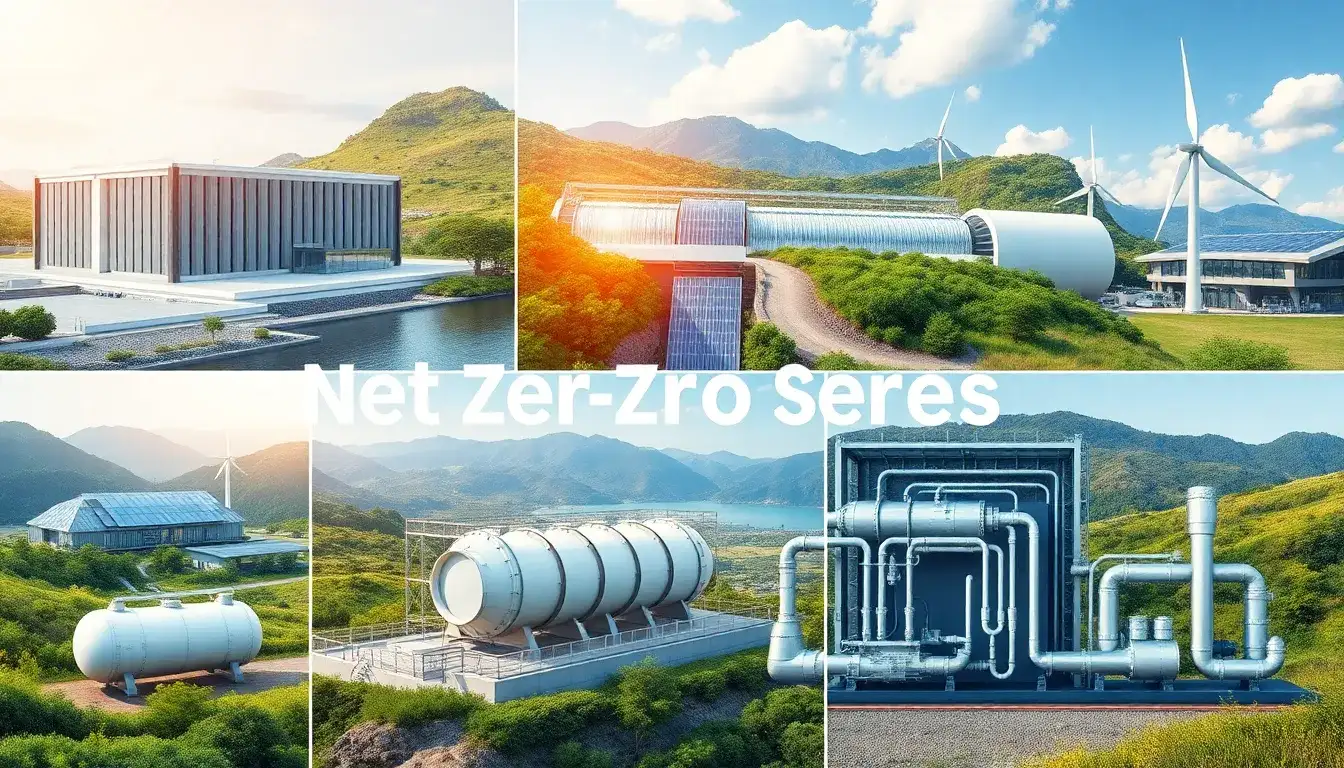
Major Energy Storage Technologies for Net-Zero Emissions
- Lithium-Ion Batteries: These are widely used for both short-term and long-term energy storage applications. They are versatile but have limitations in terms of cost and material availability for large-scale applications.
- Pumped Hydro Storage (PHS): This is the largest and oldest form of energy storage, where water is pumped between two reservoirs during off-peak hours to generate power during peak demand.
- Long-Duration Energy Storage (LDES): LDES technologies, such as hydrogen storage, compressed air energy storage, and flow batteries, are becoming increasingly important for storing energy over extended periods, typically beyond six hours. They are vital for ensuring grid stability and reliability as renewable energy sources become more prevalent.
- Zinc-Ion Batteries: These are emerging as a promising alternative to lithium-ion batteries, offering advantages in cost and sustainability. They are being developed to support renewable energy systems.
- Flow Batteries: Designed for long-duration energy storage, flow batteries store energy in liquid electrolytes in external tanks, which can be scaled up according to the energy needs.
- Compressed Air Energy Storage (CAES) and Underground Thermal Energy Storage (UTES): These technologies store energy by compressing air in underground caverns or using thermal energy in underground reservoirs, respectively. They are used for grid-scale applications to balance energy supply and demand.
These technologies help stabilize the grid, enhance energy security, and reduce the reliance on fossil fuels, which are crucial steps toward achieving net-zero emissions by 2050.
Original article by NenPower, If reposted, please credit the source: https://nenpower.com/blog/what-are-the-main-types-of-energy-storage-technologies-used-for-net-zero-emissions/

