

1. Electrochemical Storage
- Battery Storage: This includes a variety of battery types such as lithium-ion, lead-acid, nickel-cadmium, sodium-sulfur, flow batteries, and supercapacitors. These systems store energy using electrochemical processes and are widely used for applications that demand responses from several minutes to a few hours.
2. Chemical Energy Storage
- Hydrogen Storage: Hydrogen is produced through electrolysis and can be used to generate electricity when needed. It is considered a form of energy storage, particularly useful for power generation and industrial processes.
3. Mechanical Energy Storage
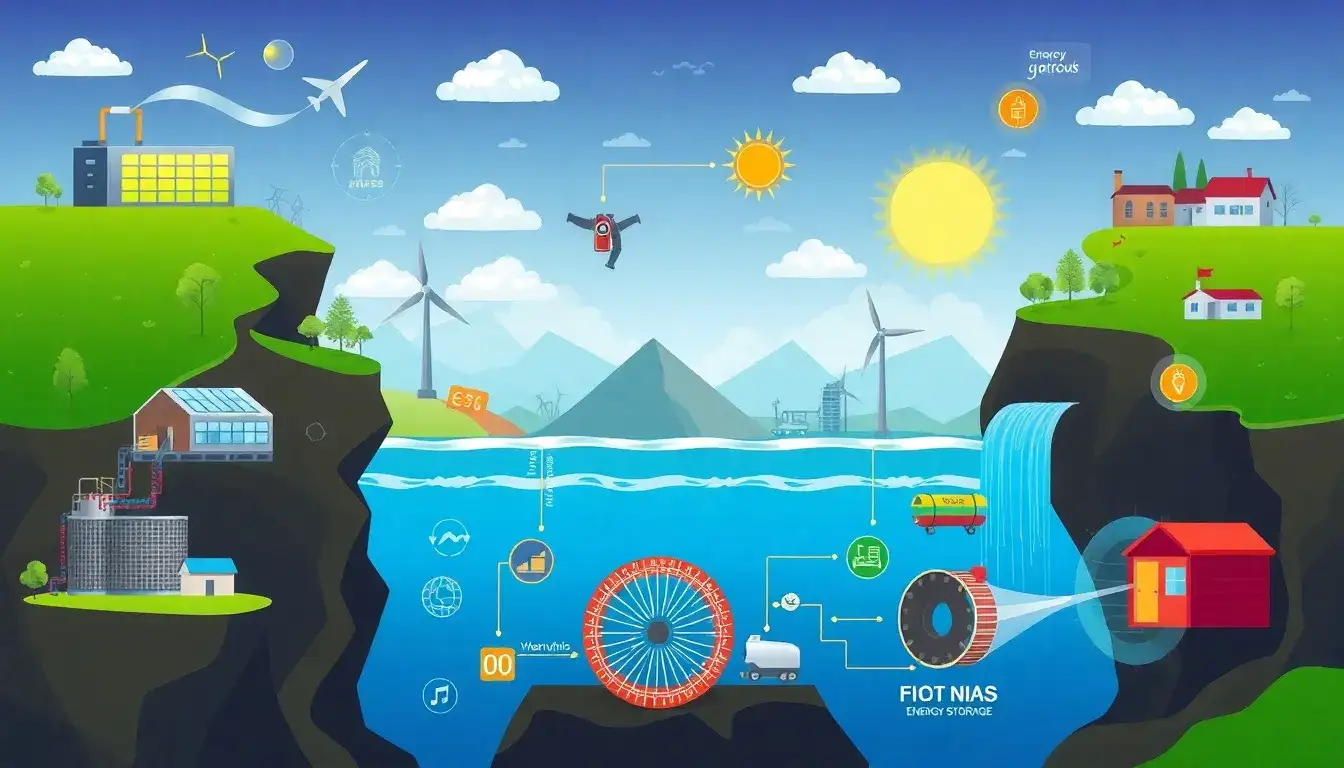
- Pumped Hydro Storage: This is one of the most common forms of utility-scale energy storage. It involves pumping water from a lower reservoir to an upper reservoir during off-peak hours, which is then released to generate electricity during peak demand.
- Compressed Air Energy Storage (CAES): CAES stores energy by compressing air into underground caverns, which is then expanded to generate electricity using a turbine.
- Flywheels: These systems store energy by rotating at high speeds and can provide rapid power and grid stabilization services.
4. Thermal Energy Storage
- Thermal Storage: This category involves storing energy in the form of heat or cold. Examples include molten salt storage in solar power plants and other phase-change materials that can manage both heat and cooling energy.
5. Electrical Energy Storage Systems
- Supercapacitors: These devices store electrical energy through electrostatic charges and offer high power density but suffer from high self-discharge rates.
- Superconducting Magnetic Energy Storage (SMES): Stores energy in a magnetic field created by a superconducting coil. SMES offers rapid response times and high efficiency but requires expensive materials and equipment.
Original article by NenPower, If reposted, please credit the source: https://nenpower.com/blog/what-are-the-main-types-of-energy-storage-technologies/

