

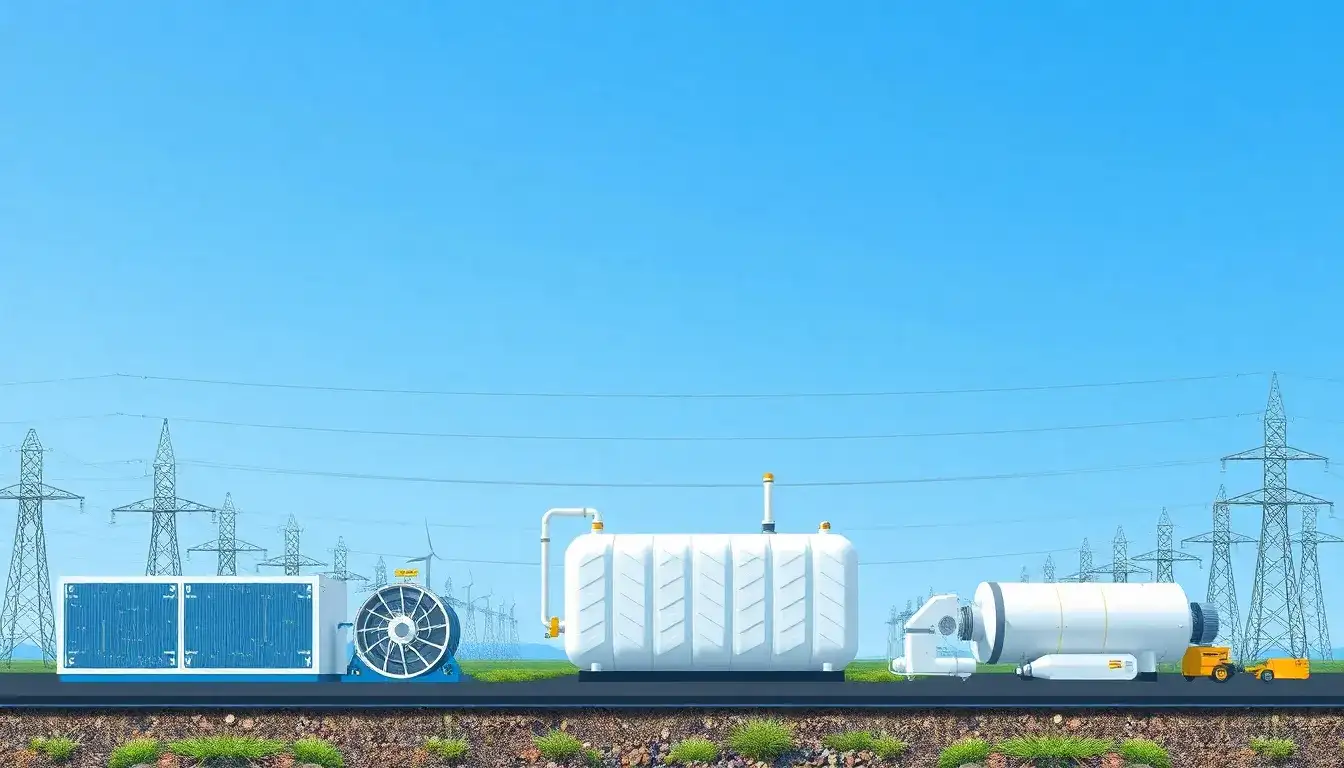
Energy Storage Types
-
Pumped-Storage Hydroelectric (PSH)
- This is the largest and most common form of energy storage globally, accounting for over 95% of the world’s installed storage capacity.
- PSH systems store energy by pumping water between two reservoirs during off-peak hours and generating electricity by releasing it during peak demand.
-
Batteries
- Lithium-ion batteries are widely used for short-duration storage, making them suitable for daily balancing needs.
- Flow batteries are ideal for medium-duration storage and can store energy for several hours.
-
Thermal Energy Storage
- Systems like molten salt thermal storage are used to store thermal energy generated by solar power plants and are typically used with concentrated solar power (CSP) systems.
- Ice storage systems use excess energy to create ice at night, which is used for cooling buildings during the day.
-
Mechanical Systems
- Flywheels store energy through rapid mechanical rotation and can provide high power output for short durations (minutes).
- Compressed Air Energy Storage (CAES) involves compressing air in underground caverns and using the expansion of air to generate electricity.
-
Hydrogen Storage
- Hydrogen is produced via electrolysis and can be stored for long-duration energy needs. It can be converted back into electricity or used as fuel in various applications.
These energy storage systems play crucial roles in supporting grid stability, managing demand, and incorporating renewable energy sources more effectively into the power grid.
Original article by NenPower, If reposted, please credit the source: https://nenpower.com/blog/what-are-the-main-types-of-energy-storage-systems-used-in-the-grid/

