

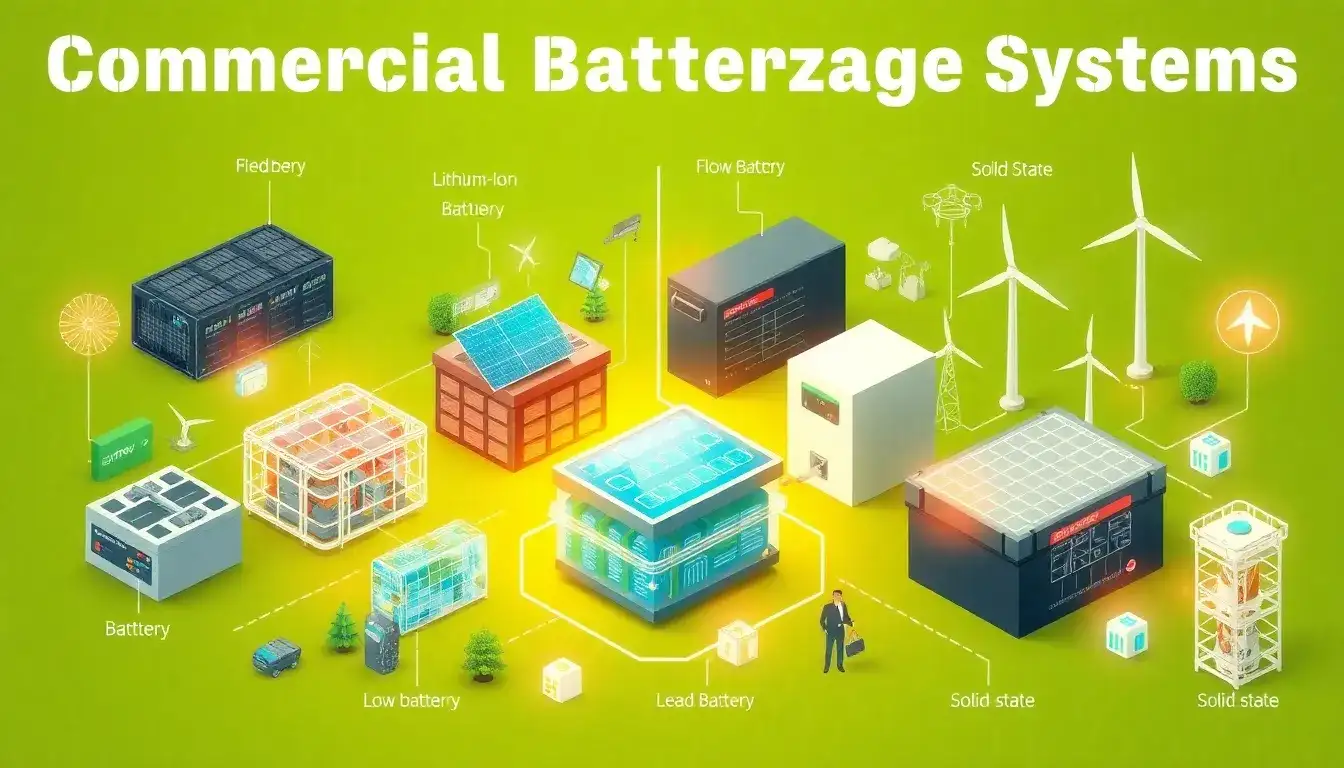
Commercial battery storage systems are crucial for managing energy needs efficiently, particularly in enhancing grid stability, reducing energy costs, and incorporating renewable energy sources. Here are the main types of commercial battery storage systems:
1. Lithium-ion Batteries
- Characteristics: High energy density, fast charge/discharge, and long lifespan (up to 20 years).
- Pros: Ideal for scalable applications from residential to commercial use, high efficiency.
- Cons: Higher upfront cost, sensitive to extreme temperatures.
- Applications: Widely used in both small and large-scale energy storage, often in conjunction with solar panels.
2. Lead-Acid Batteries
- Characteristics: Low cost, widely available, but with a shorter lifespan (5-10 years) and lower energy density.
- Pros: Inexpensive, recyclable.
- Cons: Less efficient than lithium-ion, slower charging.
- Applications: Mainly used for backup power systems and uninterruptible power supplies (UPS).
3. Flow Batteries
- Characteristics: Use liquid electrolytes for energy storage, highly scalable and suitable for long-duration applications.
- Pros: Long lifespan (up to 25 years), safer with non-flammable electrolytes, well-suited for grid-scale storage.
- Cons: Lower energy density, higher initial cost.
- Applications: Ideal for grid-scale storage where long-duration energy storage is required.
4. Sodium-ion Batteries
- Characteristics: Emerging as an alternative to lithium-ion, particularly where sodium is abundant.
- Pros: More environmentally friendly, safer, and potentially cost-effective.
- Cons: Still in early development, lower energy density than lithium-ion.
- Applications: Currently under development for areas where cost and safety are prioritized.
5. Nickel-Cadmium (NiCd) Batteries
- Characteristics: Known for robustness and reliability, suitable for extreme temperatures.
- Pros: Long cycle life, ideal for specific industrial applications.
- Cons: Generally phased out due to environmental concerns about cadmium.
- Applications: Mainly used in niche industrial and off-grid applications.
Additional Components of Commercial Battery Storage Systems
- Battery Management System (BMS): Ensures safe operation by monitoring and controlling battery parameters.
- Inverter or Power Conversion System (PCS): Converts DC from batteries to AC for grid or commercial use.
- Energy Management System (EMS): Controls and optimizes the overall performance of the energy storage system.
Original article by NenPower, If reposted, please credit the source: https://nenpower.com/blog/what-are-the-main-types-of-commercial-battery-storage-systems/

