

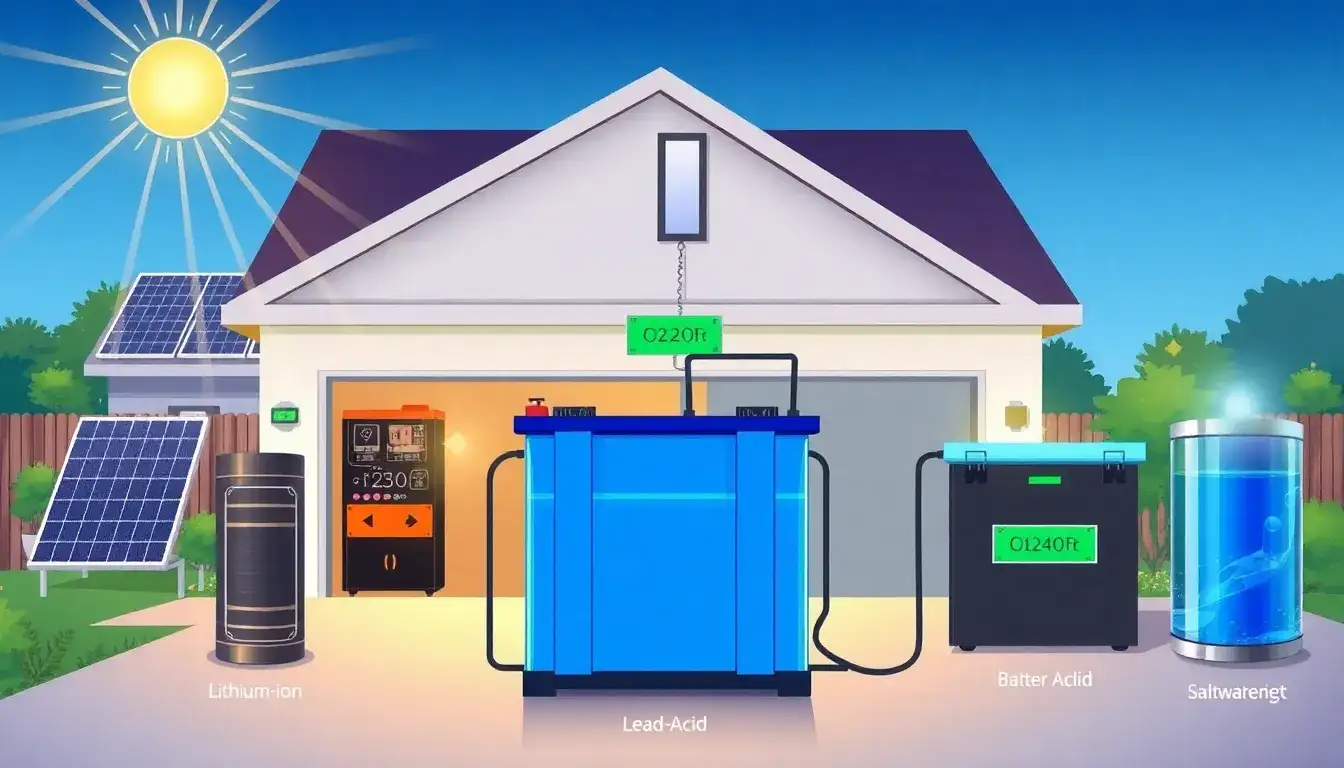
The main types of batteries used in residential energy storage systems are:
-
Lithium-Ion Batteries:
- Pros: High energy density, long lifespan (often over 10 years), low maintenance, high efficiency.
- Cons: Higher upfront cost, risk of thermal runaway if improperly installed.
- Best For: Residential solar installations due to their compact size, high efficiency, and long lifespan.
-
Lead-Acid Batteries:
- Pros: Low upfront cost, reliable technology, recyclable.
- Cons: Lower energy density, shorter lifespan (typically 5-10 years), requires regular maintenance.
- Best For: Off-grid systems or backup power where cost is a priority.
-
Flow Batteries:
- Pros: Long cycle life (up to 25 years), highly scalable, non-flammable electrolytes, deep discharge capability.
- Cons: Low energy density, large footprint, expensive.
- Best For: Large-scale energy storage applications due to their longevity and scalability.
-
Nickel-Cadmium Batteries:
- Though less common in residential use, they are robust and reliable, performing well in extreme temperatures.
- Typically used in industrial or commercial settings rather than residential applications.
Other emerging technologies, such as sodium-ion and solid-state batteries, are being developed but are not yet widely used in residential settings.
Original article by NenPower, If reposted, please credit the source: https://nenpower.com/blog/what-are-the-main-types-of-batteries-used-in-residential-energy-storage-systems/

