

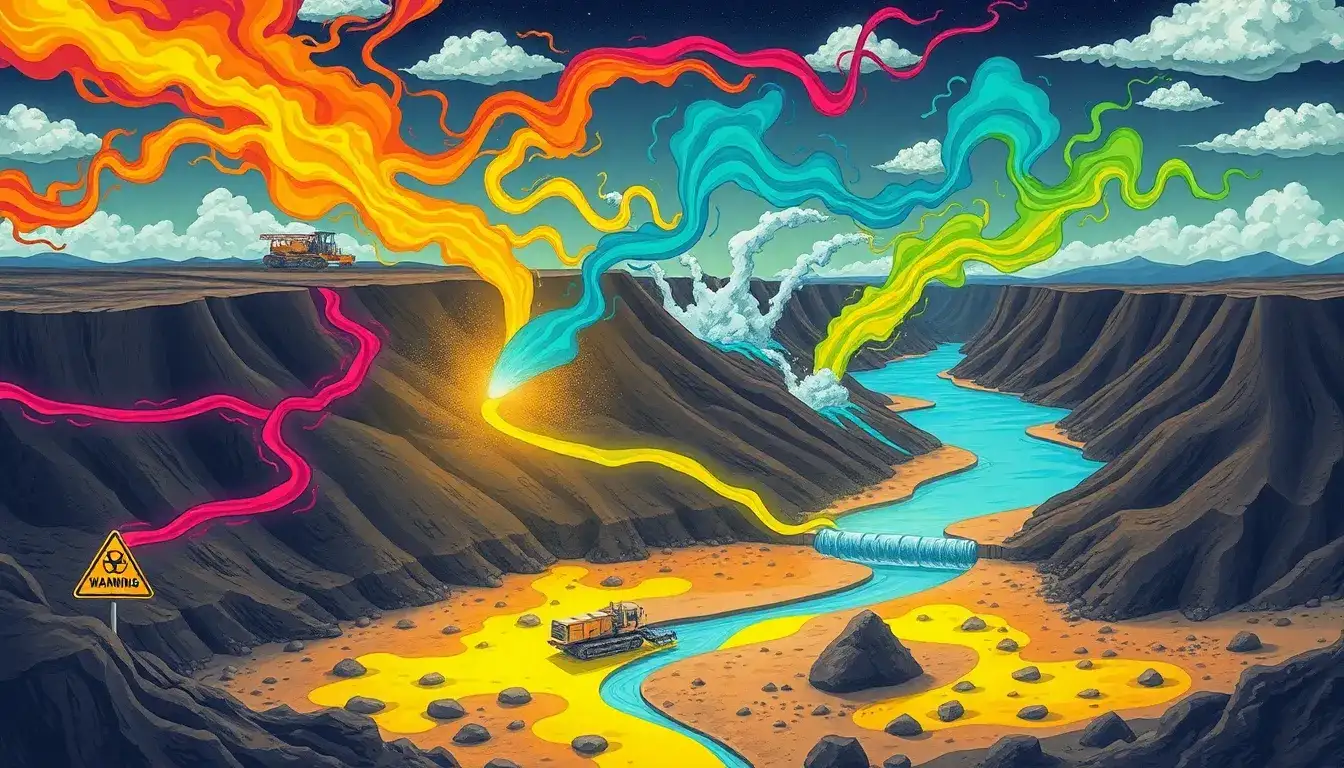
Lithium mining operations employ several toxic chemicals and produce hazardous byproducts:
1. Sulfuric acid and sodium hydroxide
Used extensively in lithium extraction from ores, these chemicals can contaminate soil and water systems. Sulfuric acid in particular poses risks of groundwater contamination and ecosystem disruption.
2. Lithium hydroxide
Formed when lithium reacts with water or moisture, generating hydrogen gas. This corrosive compound is toxic to aquatic life and presents inhalation hazards.
3. Explosive hydrogen gas
Produced during lithium’s water-exposed extraction processes through violent chemical reactions, requiring strict safety protocols.
4. Heavy metals
While studies show regulated contaminants (arsenic, lead, etc.) often remain below EPA limits in some historic mines, extractive processes risk mobilizing other metals into water systems. Recent research identifies elevated levels of non-regulated elements near mining sites.
5. Reaction byproducts
Lithium reacts dangerously with oxidizers like nitrates, chlorates, and halogens, creating toxic compounds during extraction and storage. The combination with acids or alcohols generates additional hazardous substances requiring containment.
Modern lithium extraction consumes ~500,000 liters of water per ton of lithium, concentrating these contaminants in local water supplies. While newer studies suggest reduced levels of certain toxins compared to legacy mines, the chemical-intensive process remains a significant environmental challenge.
Original article by NenPower, If reposted, please credit the source: https://nenpower.com/blog/what-are-the-main-toxic-chemicals-used-in-lithium-mining/

