

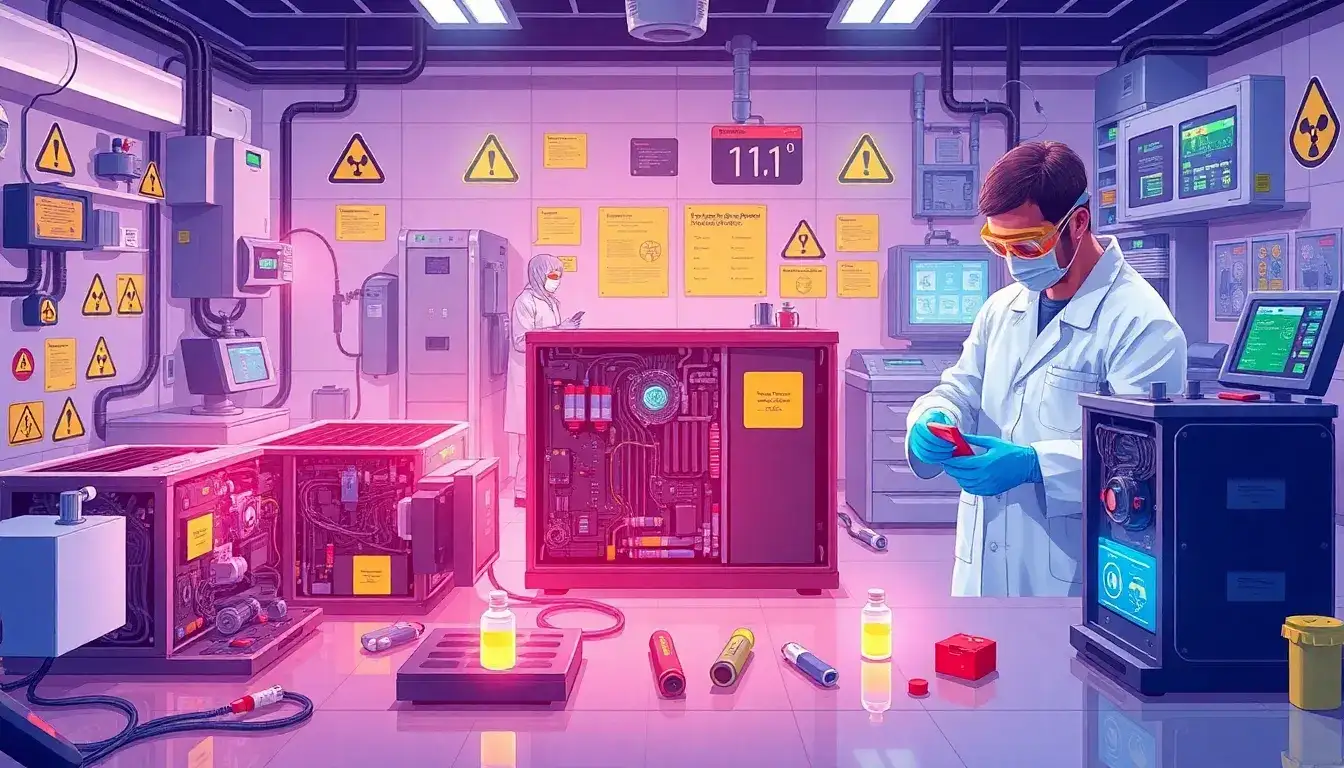
Hybrid solar batteries can vary in chemistry, but the main toxic chemicals potentially released by them largely depend on the specific battery type used. Here are the primary toxic chemicals associated with common hybrid solar battery chemistries:
Lead-Acid Batteries
- Lead: A heavy metal that is highly toxic to humans and the environment.
- Sulfuric Acid: A corrosive and hazardous acid that can cause chemical burns and environmental damage.
Lead-acid batteries are often used in solar applications but pose risks if damaged, leaking, or improperly disposed of, releasing these harmful substances.
Nickel-Cadmium Batteries
- Cadmium: A toxic heavy metal that poses serious health and environmental hazards.
Due to these risks, cadmium-containing batteries have restrictions in many regions, including bans in the EU except for specialized applications.
Lithium-Ion Batteries
While generally safer than lead-acid or nickel-cadmium batteries, lithium-ion batteries still contain:
- Lithium compounds
- Other chemical electrolytes that can be hazardous if the battery catches fire or ruptures.
These chemicals pose risks primarily during thermal runaway, fire, or improper disposal.
Other Potential Toxic Chemicals in Solar Supply Chain and Disposal
- Some toxic byproducts related to the broader solar battery and panel lifecycle include:
- Arsenic
- Hydrofluoric acid
- Phosphoryl chloride
- Tetrachloride
These are often byproducts from panel assembly or solar material processing and may end up in landfills or the environment due to inadequate recycling infrastructure.
Summary Table:
| Battery Type | Main Toxic Chemicals Released |
|---|---|
| Lead-Acid | Lead, Sulfuric acid |
| Nickel-Cadmium | Cadmium |
| Lithium-Ion | Lithium compounds, other electrolytes (in fire/leak) |
In hybrid solar battery systems, the most common toxic chemicals of concern tend to be lead and sulfuric acid from lead-acid batteries or cadmium if nickel-cadmium batteries are used. Lithium-ion types present less toxicity risk but still can release hazardous chemicals during fires or damage.
Proper battery management, professional installation, and responsible recycling are crucial to mitigating the release of these toxic substances.
Original article by NenPower, If reposted, please credit the source: https://nenpower.com/blog/what-are-the-main-toxic-chemicals-released-by-hybrid-solar-batteries/

