

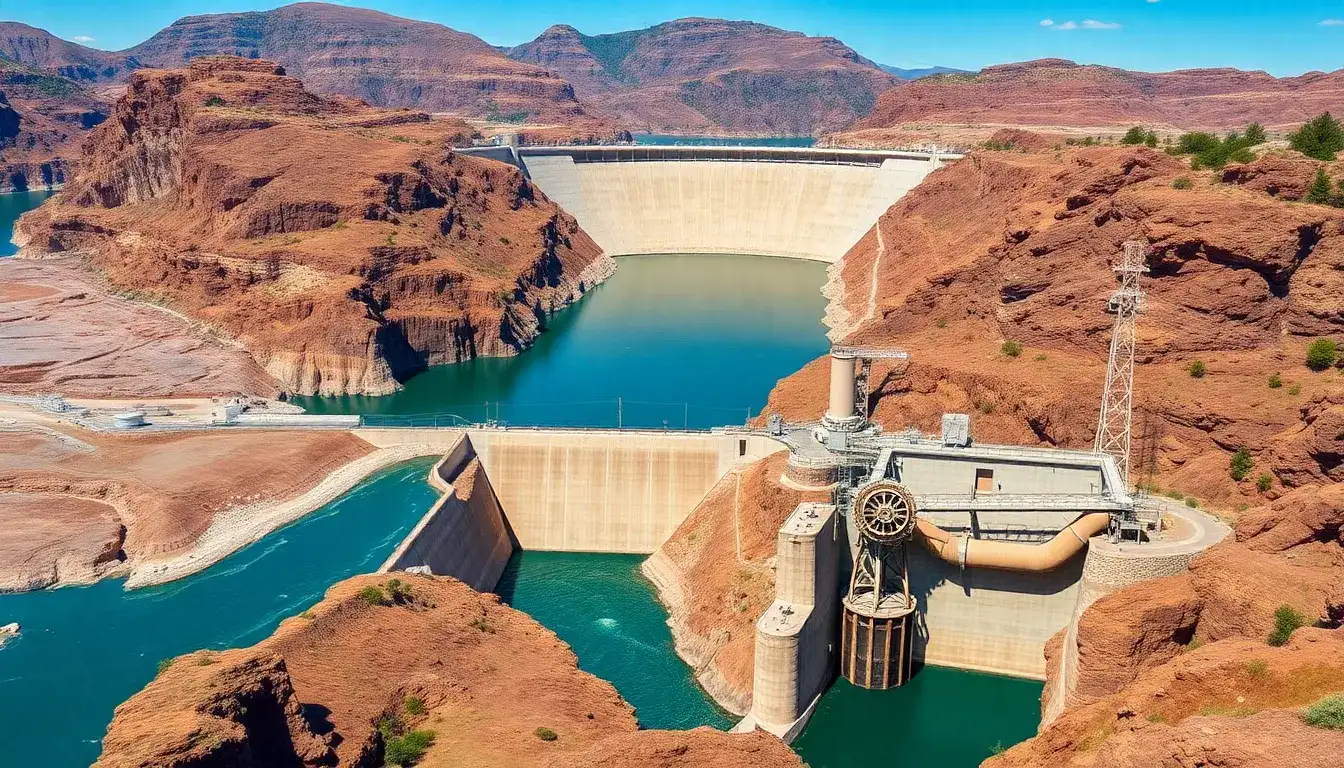
Pumped hydroelectric energy storage (PHES) systems face several key technological limitations:
Geographical Constraints
These systems require two reservoirs at different elevations with sufficient vertical separation (“head”) and water volume to store meaningful energy. Suitable sites are geographically limited, especially in flat regions or areas with competing land uses.
Efficiency Losses
PHES loses 10-20% of energy during the pumping and generation cycle, primarily due to mechanical inefficiencies and water evaporation. This round-trip efficiency (typically 80-90%) lags behind newer battery technologies in small-scale applications.
Infrastructure Challenges
- Long development timelines: Permitting and construction often take 5-10 years due to environmental reviews, regulatory hurdles, and complex civil engineering requirements.
- High upfront costs: Reservoir/dam construction and transmission infrastructure require billion in capital investment.
- Sedimentation: Over decades, accumulated sediment reduces reservoir capacity and turbine efficiency.
Environmental Impact Mitigation
While cleaner than fossil fuels, PHES can disrupt local ecosystems through habitat flooding, altered water flows, and downstream sedimentation. Modern projects must incorporate fish ladders, sediment management systems, and ecological flow regimes, increasing technical complexity.
Grid Compatibility
- Response time: Although faster than fossil peaker plants, PHES cannot match the sub-second response of battery storage systems.
- Transmission dependency: Remote mountainous sites often require new power lines, increasing costs and community opposition.
Climate Vulnerability
Droughts and shifting precipitation patterns due to climate change may reduce water availability, compromising storage capacity in some regions.
Original article by NenPower, If reposted, please credit the source: https://nenpower.com/blog/what-are-the-main-technological-limitations-of-pumped-hydroelectric-energy-storage-systems/

