

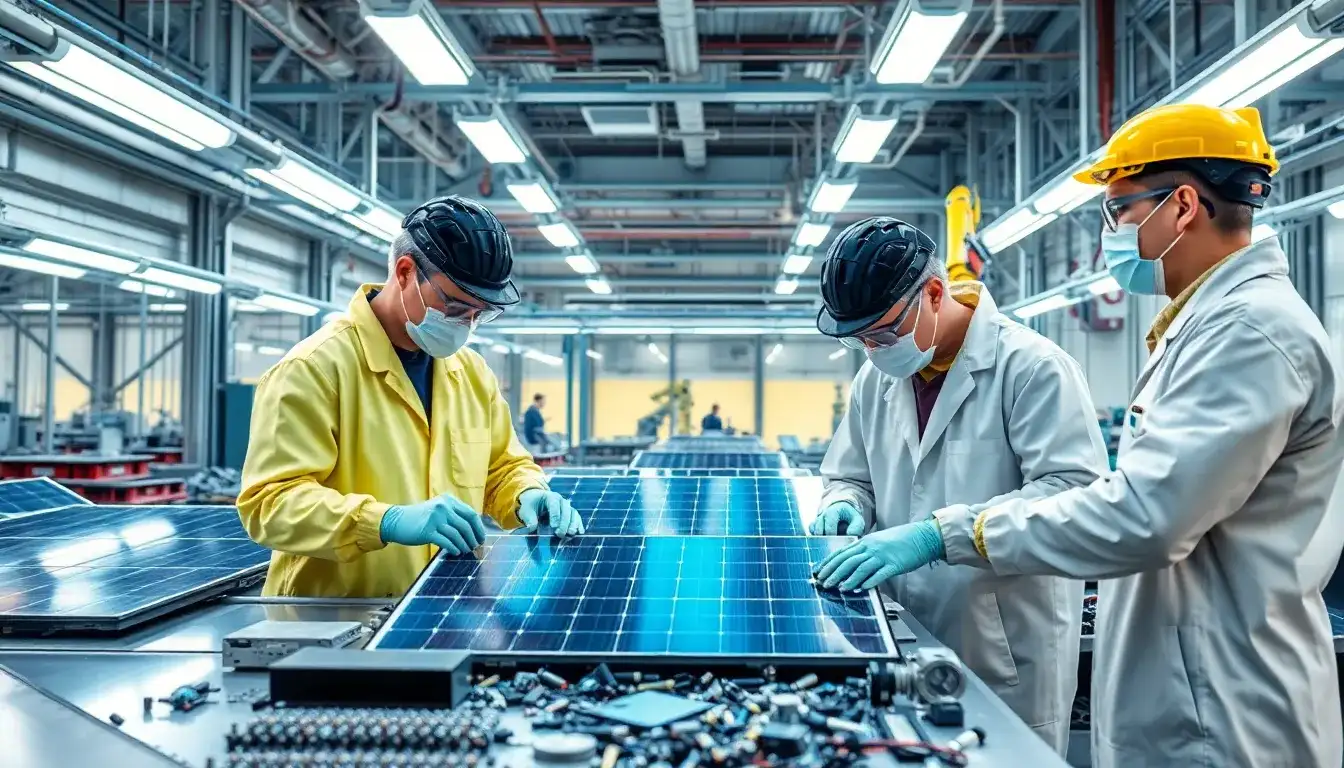
The main technological challenges in solar panel recycling can be summarized as follows:
Main Technological Challenges
- Efficient Disassembly: One significant challenge is effectively separating the glass from the solar cells within a module, as bonding them is a critical step in the manufacturing process. This separation is crucial for high-quality material recovery but remains a technical obstacle.
- Material Complexity: Solar panels contain a variety of materials, including metals and semiconductor materials like silicon. Recovering these materials at high purity is complicated due to the layers and bonds involved, making the process costly and inefficient.
- Thin-Film Panels: These panels contain hazardous materials and have complex structures, making their recycling particularly difficult. The chemical makeup and design of these panels require specialized techniques, which are still under development.
- Energy Consumption and Efficiency: Current recycling methods are often energy-intensive and laborious, which can offset the environmental benefits of recycling if not optimized. Improving the efficiency of these processes is essential for reducing costs and environmental impact.
- Scalability and Infrastructure: Scaling up recycling processes to handle the growing volume of solar panel waste is a challenge. Developing extensive recycling infrastructure that can economically process large quantities of solar panels is necessary but faces technical and financial hurdles.
Emerging Solutions
New technologies such as chemical leaching, robotic disassembly, and advanced material separation techniques are being explored to improve efficiency and reduce costs in solar panel recycling. Additionally, designing solar panels with recyclability in mind from the outset is becoming a focus for future improvements.
Original article by NenPower, If reposted, please credit the source: https://nenpower.com/blog/what-are-the-main-technological-challenges-in-solar-panel-recycling/

