

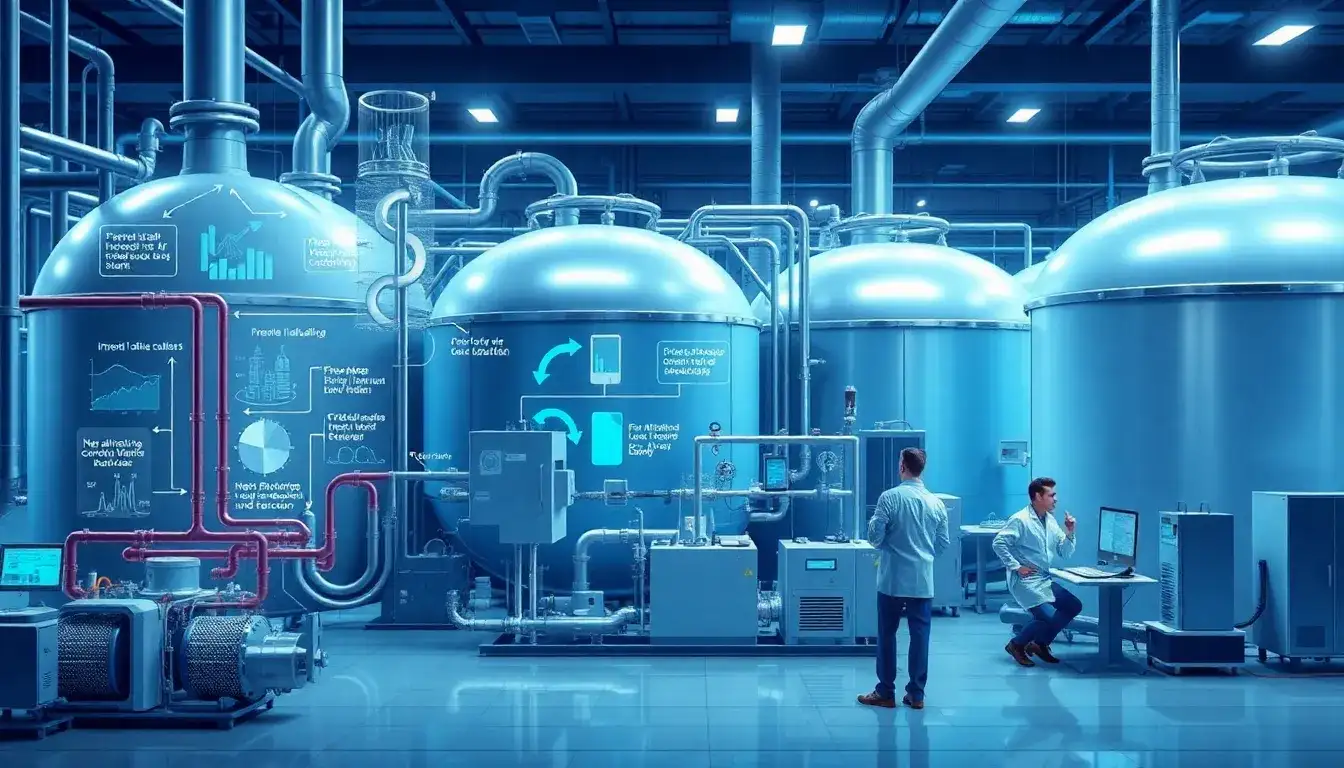
The main technical challenges in increasing the energy efficiency of Liquid Air Energy Storage (LAES) systems stem primarily from their thermodynamic and system integration characteristics:
1. Low Round-Trip Efficiency Due to Cryogenic Processes
LAES involves liquefying air through compression and cooling to cryogenic temperatures, which is energy-intensive. Significant energy losses occur due to waste heat generated during air compression and liquefaction. Moreover, during discharge, inefficient heat utilization in the gasification (re-vaporization) of liquid air further reduces efficiency. Together, these processes limit round-trip efficiency to around 50–60%, substantially lower than other storage technologies like pumped hydropower or batteries.
2. Managing and Utilizing Thermal Energy
Maximizing efficiency requires effective integration of thermal energy management. Capturing and reusing heat generated during compression and providing heat during expansion are essential. However, integrating LAES with external thermal sources such as industrial waste heat or high-temperature heat systems can create logistical and location constraints, undermining LAES’s advantage of flexible siting. This also limits the simultaneous use of such heat for other industrial processes.
3. Dependency on External Fuels or Heat Sources
While external fuels or heat sources can improve efficiency, their use introduces CO2 emissions, which counteract the clean energy goals of LAES. This creates a trade-off between improving performance and maintaining environmental sustainability. Eliminating or minimizing reliance on external fuels without sacrificing efficiency remains a challenge.
4. System Complexity and Response Time
The LAES cycle involves multiple steps—charging (air liquefaction), storage, and discharging (pumping, heating, and expansion). These mechanical and thermal processes lead to moderate response times (several minutes) compared to near-instantaneous battery discharge, which may limit LAES’s applicability in certain grid balancing scenarios requiring rapid response.
Summary Table
| Technical Challenge | Description | Impact |
|---|---|---|
| Cryogenic Liquefaction Energy Losses | Significant energy input and heat waste in compressing and cooling air to liquid phase | Low round-trip efficiency (~50–60%) |
| Thermal Energy Management | Need to capture and reuse heat during compression and expansion; integration constraints | Efficiency limited; reduces siting flexibility |
| External Fuels for Heat Supply | Use improves efficiency but causes CO2 emissions | Environmental and sustainability concerns |
| System Complexity and Delayed Response | Multiple mechanical/thermal steps cause slower power delivery than batteries | Limits grid service flexibility |
In summary, increasing LAES energy efficiency hinges on overcoming the inherent thermodynamic losses in air liquefaction and vaporization, optimizing thermal energy integration without compromising siting or sustainability, and improving system design to reduce response times.
Original article by NenPower, If reposted, please credit the source: https://nenpower.com/blog/what-are-the-main-technical-challenges-in-increasing-the-energy-efficiency-of-laes/

