

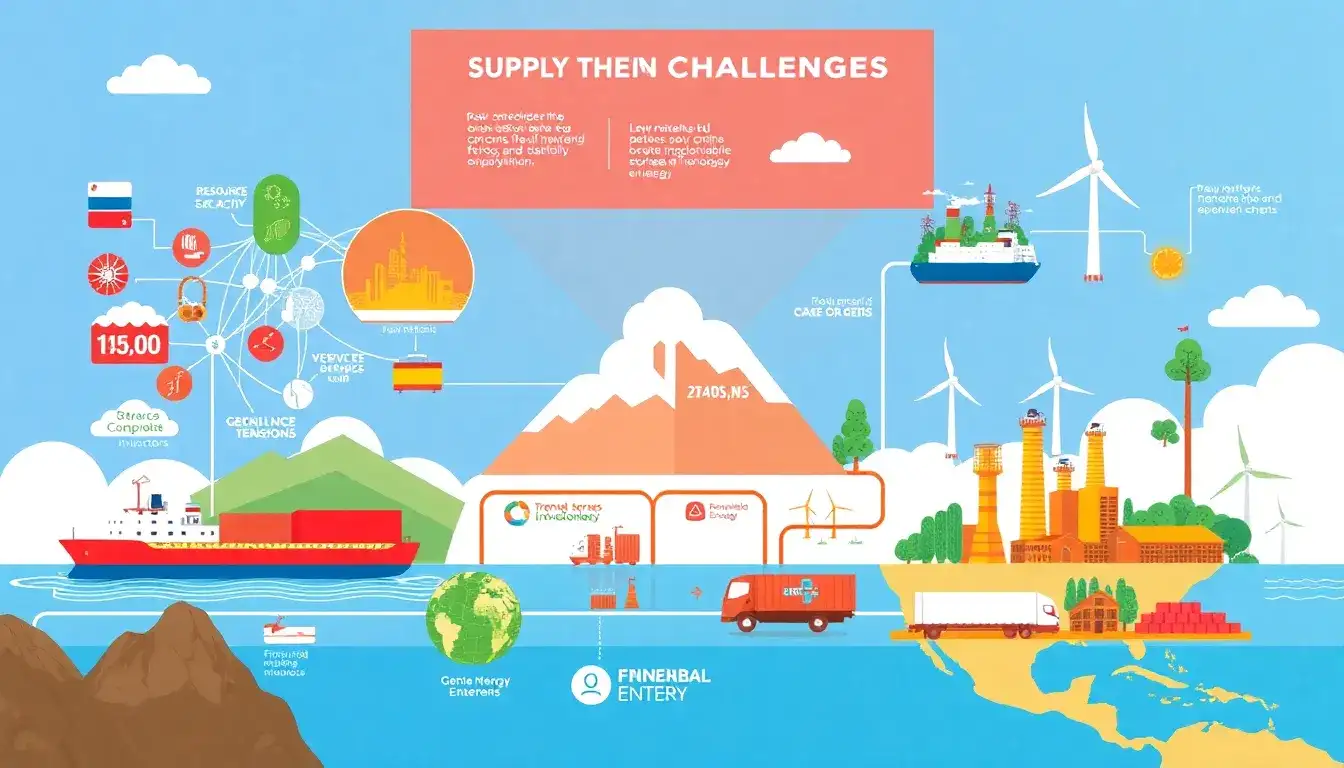
The main supply chain challenges facing energy storage technologies, particularly battery energy storage systems (BESS), encompass a range of issues from raw material scarcity to manufacturing and logistical constraints:
Key Supply Chain Challenges
1. Raw Material Constraints and Geopolitical Risks
- Critical battery minerals like nickel and cobalt are in limited supply, especially in regions like the U.S., creating bottlenecks for domestic battery manufacturing.
- The U.S. and other countries depend heavily on imports, particularly from Asia and China, which dominate the battery materials and component supply chain, raising concerns over geopolitical dependencies and potential disruptions.
2. Oversupply and Market Dynamics
- China’s battery manufacturing capacity has surged past immediate global demand, leading to oversupply and intense price competition. This places pressure on manufacturers and creates market uncertainty.
3. Manufacturing Capacity and Skilled Workforce Shortages
- Scaling up production is hindered by the lack of qualified workforce, particularly in the U.S., where there is hesitancy to build new factories amid workforce limitations.
- Large capital requirements and the need for continual R&D to keep pace with evolving technology raise barriers to entry for new manufacturers and suppliers.
4. Component Bottlenecks and Extended Lead Times
- Critical components like transformers and specialty steels face supply shortages and have seen delivery times increase dramatically (e.g., transformer lead times from 50 weeks to 150 weeks or more), slowing project development.
- Factory shutdowns and export restrictions further exacerbate these delays.
5. Competition from Other Sectors
- The transportation sector’s rapidly growing demand for lithium-ion batteries, especially for electric vehicles, competes with grid storage for battery materials and components, potentially constraining availability for energy storage deployments.
6. Pricing and Economic Pressures
- While oversupply leads to lower prices benefiting project developers, it also pressures manufacturers’ margins, complicating investment decisions and long-term supply stability.
- Additionally, “greenflation” — the rising costs of raw materials for renewable and storage technologies — impacts economic viability.
Additional Context on Challenges
- Intermittency of renewable energy demands reliable storage solutions, increasing urgency but also complexity in scaling supply chains.
- The need for grid interconnection and specialized equipment, such as transformers, adds layers to supply chain complexity beyond just battery supply.
- Environmental and climate considerations impose additional challenges on mining, manufacturing, and supply chain sustainability, often leading to regulatory and community hurdles.
In summary, energy storage supply chains face intertwined challenges: critical material scarcity and geopolitical exposure, manufacturing scale-up difficulties, competition for battery resources, component shortages, and economic pressures. Addressing these requires diversified sourcing, investment in domestic manufacturing and skilled labor, technological innovation, and policies enabling resilient supply chains aligned with rapidly expanding energy storage targets.
Original article by NenPower, If reposted, please credit the source: https://nenpower.com/blog/what-are-the-main-supply-chain-challenges-facing-energy-storage-technologies/

