

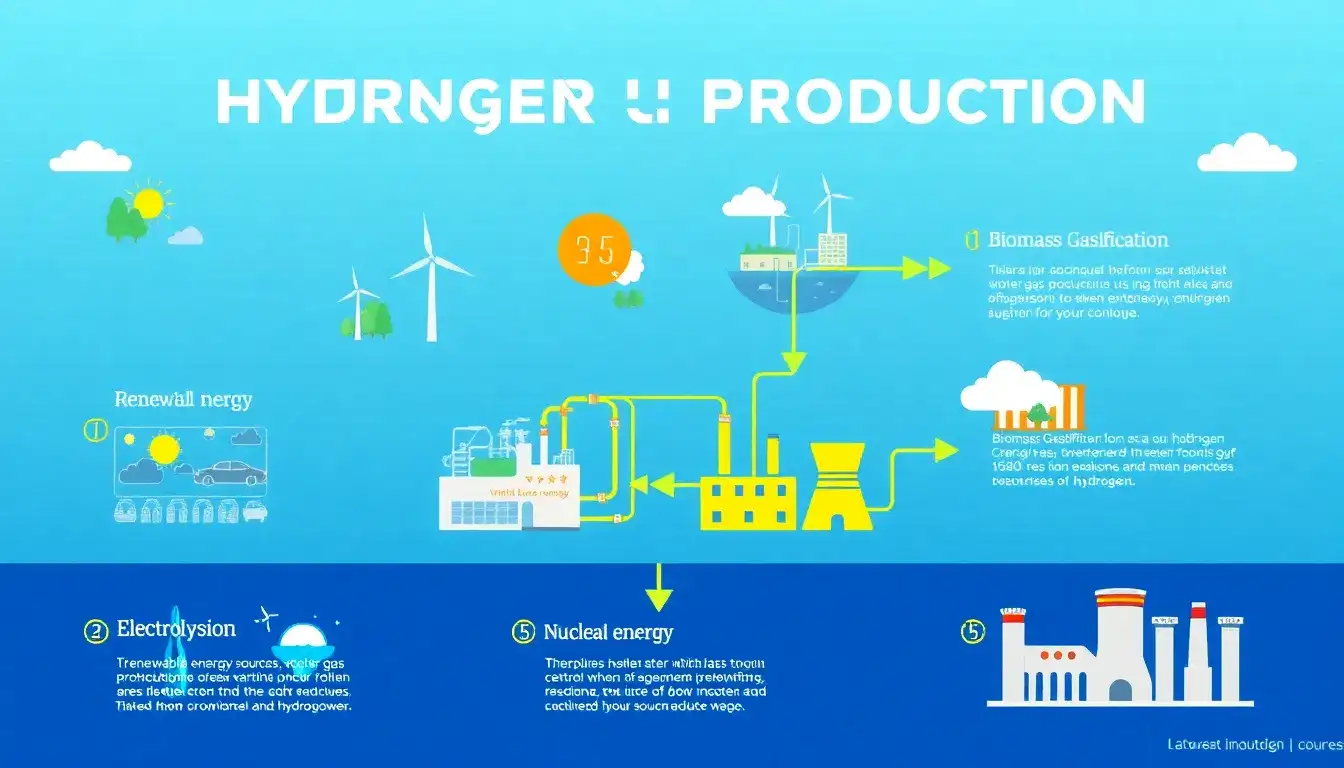
Hydrogen production primarily comes from fossil fuel-based processes, with emerging renewable and experimental methods gaining attention. Here’s a breakdown of the main sources:
1. Fossil Fuel-Based Methods
- Steam-methane reforming: Dominates global production (accounting for ~95% of current hydrogen), using natural gas heated with steam to produce hydrogen and carbon dioxide.
- Coal gasification: Supplies 27% of global hydrogen, converting coal into synthesis gas (hydrogen + carbon monoxide).
- Oil/naphtha reforming: Provides 22% of hydrogen as a byproduct of petroleum refining.
2. Electrolysis
- Water splitting: Uses electricity to separate hydrogen from water.
- Renewable-powered: When electricity comes from solar, wind, or hydro sources, this method produces “green hydrogen” with no direct emissions.
3. Emerging & Experimental Methods
- Biomass gasification: Converts agricultural/forestry waste into hydrogen-rich syngas.
- Microbial production: Uses bacteria/algae like Rhodobacter sphaeroides or Enterobacter aerogenes to generate hydrogen through fermentation.
- Solar-driven processes: Includes photoelectrochemical water splitting and artificial photosynthesis.
- Bio-catalyzed electrolysis: Combines microbial fuel cells with electrolysis using plants like reed sweetgrass or algae.
- Aluminum-water reactions: Nanogalvanic aluminum alloys produce hydrogen when exposed to water, though not yet economically viable.
Global production relies heavily on fossil fuels (96% from natural gas, coal, and oil combined), with electrolysis and bio-based methods representing less than 5% of current output.
Original article by NenPower, If reposted, please credit the source: https://nenpower.com/blog/what-are-the-main-sources-of-hydrogen-production/

