

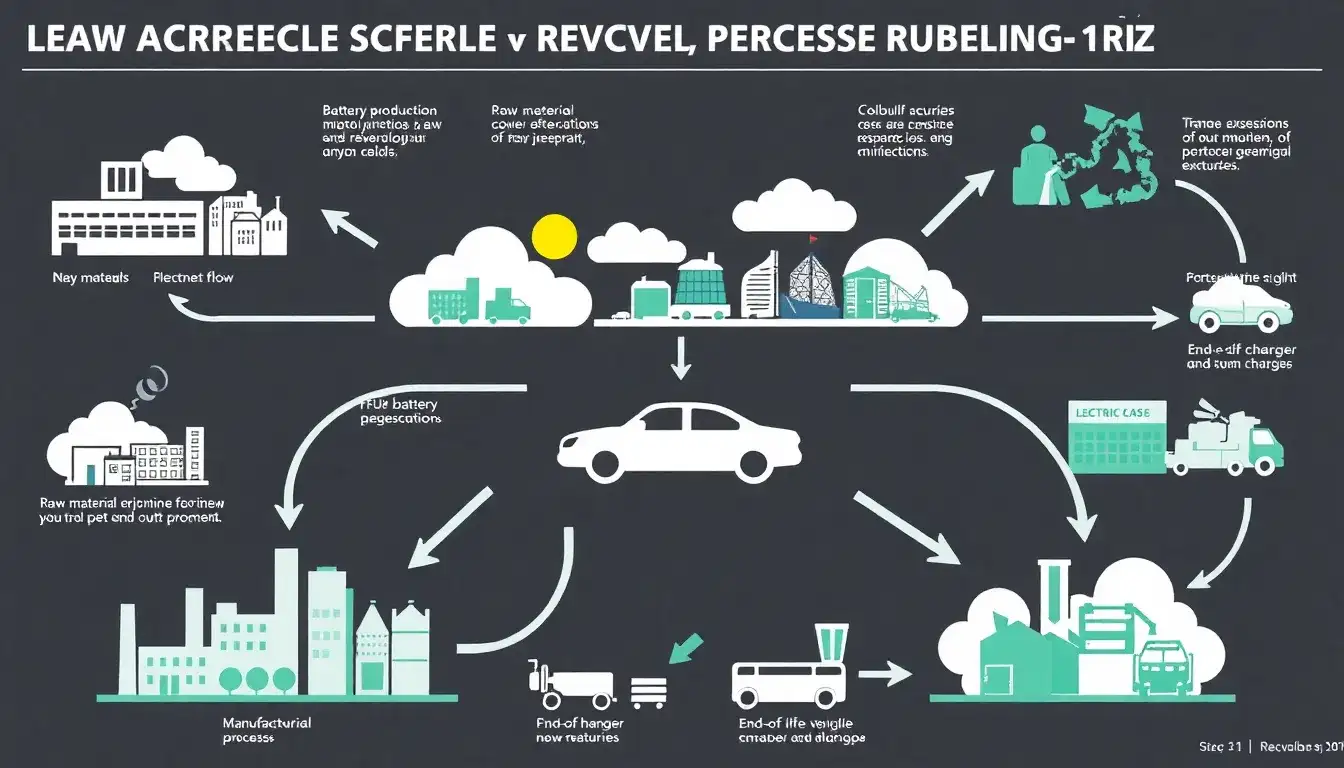
The main sources of greenhouse gas emissions in the manufacturing of electric vehicles (EVs) are primarily centered around the production of their batteries. Here are the key contributors to these emissions:
- Material Extraction and Processing: EV batteries contain materials such as nickel, manganese, cobalt, lithium, and graphite. The mining and refining of these materials emit substantial amounts of greenhouse gases due to the energy-intensive processes involved.
- Energy Used in Production: The production of anode and cathode active materials requires high temperatures, which often rely on fossil fuels, significantly increasing emissions. However, producers using renewable energies like solar and wind power have a smaller carbon footprint compared to those using fossil fuels.
- Cathode and Anode Production: The manufacturing processes for these battery components involve heating materials to high temperatures, typically fueled by fossil fuels, contributing to emissions.
- Supply Chain and Transportation: Decisions about raw-material suppliers and transportation routes can also impact emissions. Choosing suppliers with lower carbon footprints and efficient transportation methods can reduce overall emissions.
In summary, while EVs produce zero direct emissions during operation, their manufacturing process, especially battery production, is a significant source of greenhouse gas emissions.
Original article by NenPower, If reposted, please credit the source: https://nenpower.com/blog/what-are-the-main-sources-of-greenhouse-gas-emissions-in-electric-vehicle-manufacturing/

