

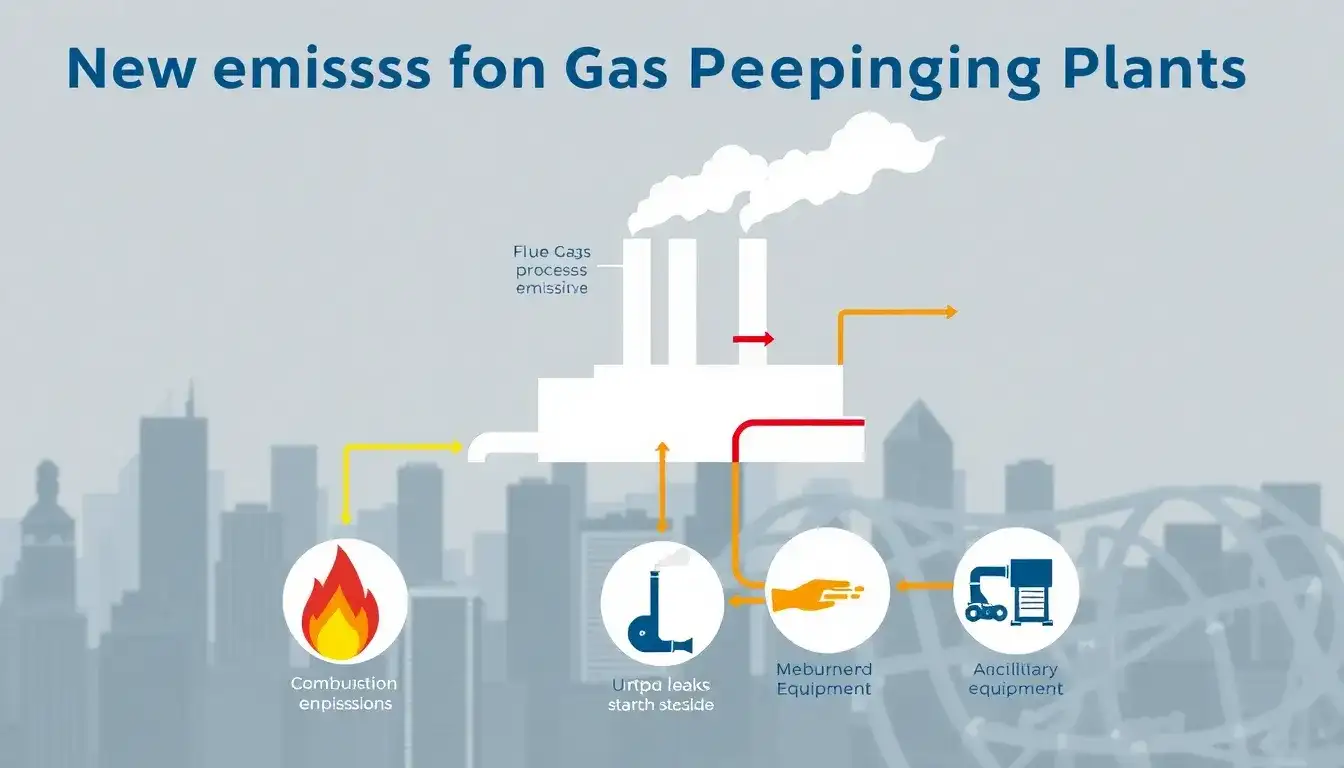
The main sources of emissions from natural gas peaking plants include:
- Carbon Dioxide (CO2): Natural gas peaking plants emit CO2, a greenhouse gas that contributes to global warming. These plants contribute significantly to carbon emissions, especially when they run during peak demand times.
- Nitrogen Oxides (NOx): These emissions can cause severe long-term damage to respiratory systems, particularly affecting individuals with asthma. NOx emissions are harmful to local air quality and health.
- Particulate Matter (PM2.5) and Other Pollutants: Although more commonly associated with other types of fossil fuels, natural gas plants can also emit particulate matter and other pollutants under certain conditions, contributing to local air pollution and health issues.
- Methane (CH4): Although not as frequently highlighted as CO2, methane leaks from gas infrastructure can significantly contribute to greenhouse gas emissions, as methane is a potent greenhouse gas.
These emissions highlight the environmental impact of relying on fossil fuels for power generation, even in peaking plants that operate intermittently.
Original article by NenPower, If reposted, please credit the source: https://nenpower.com/blog/what-are-the-main-sources-of-emissions-from-natural-gas-peaking-plants/

