

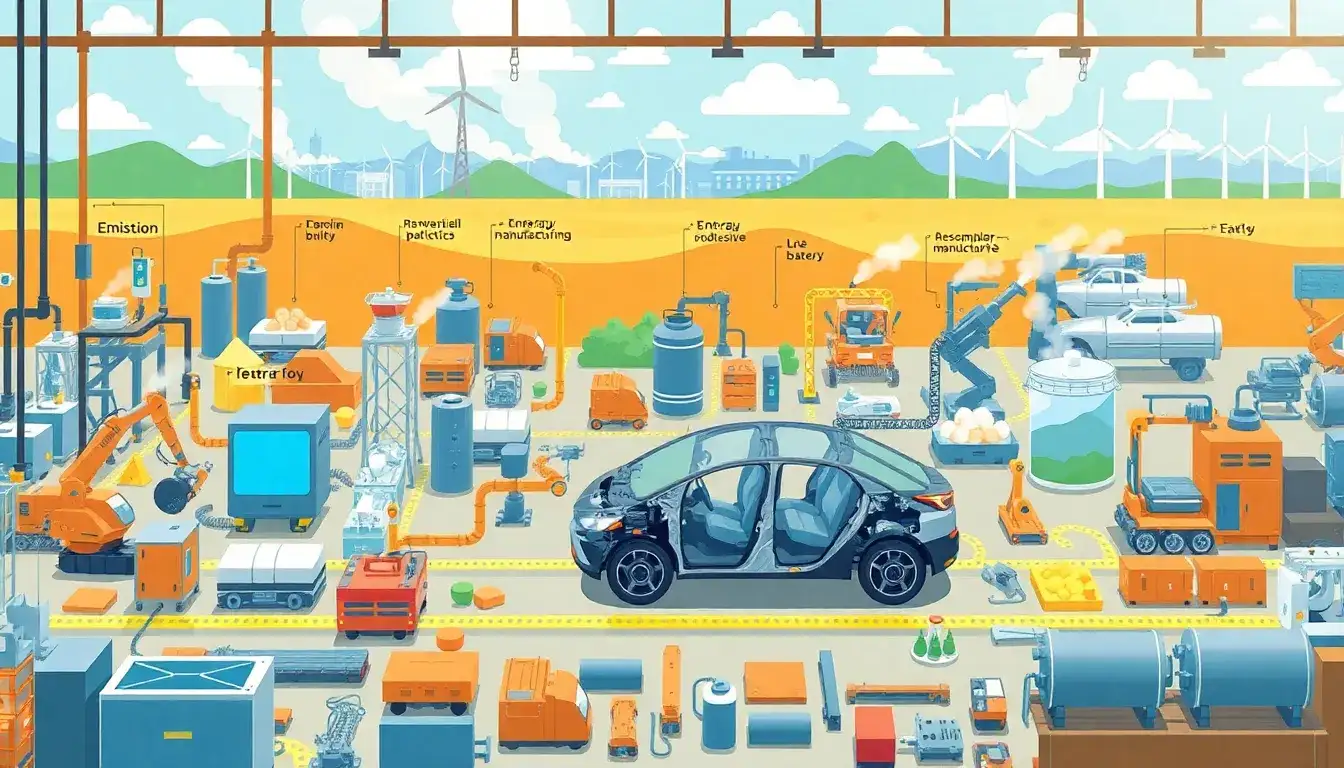
The main sources of emissions during the manufacturing process of electric vehicles (EVs) are primarily associated with the production of batteries and other components. Here are the key sources:
- Battery Production:
- Materials Sourcing: The mining and refining of materials like nickel, manganese, cobalt, lithium, and graphite contribute significantly to greenhouse gas emissions.
- Energy Usage: The process of producing anode and cathode active materials is energy-intensive and requires high temperatures, contributing to emissions.
- Raw Material Extraction:
- Toxic Emissions: The extraction of these materials releases toxic fumes and is water-intensive.
- Manufacturing of Non-Battery Components:
- Vehicle Assembly: While similar to internal combustion engine vehicles in terms of body production, EVs may have additional emissions from manufacturing specialized components.
- Energy Source for Production:
- The carbon footprint can vary significantly depending on whether renewable energy sources (like solar or wind) or fossil fuels are used during production.
The breakdown of emissions suggests that about 18% of EV emissions are from the battery manufacturing process itself, with another 17% coming from the manufacturing of the rest of the vehicle.
Original article by NenPower, If reposted, please credit the source: https://nenpower.com/blog/what-are-the-main-sources-of-emissions-during-the-manufacturing-process-of-evs/

