

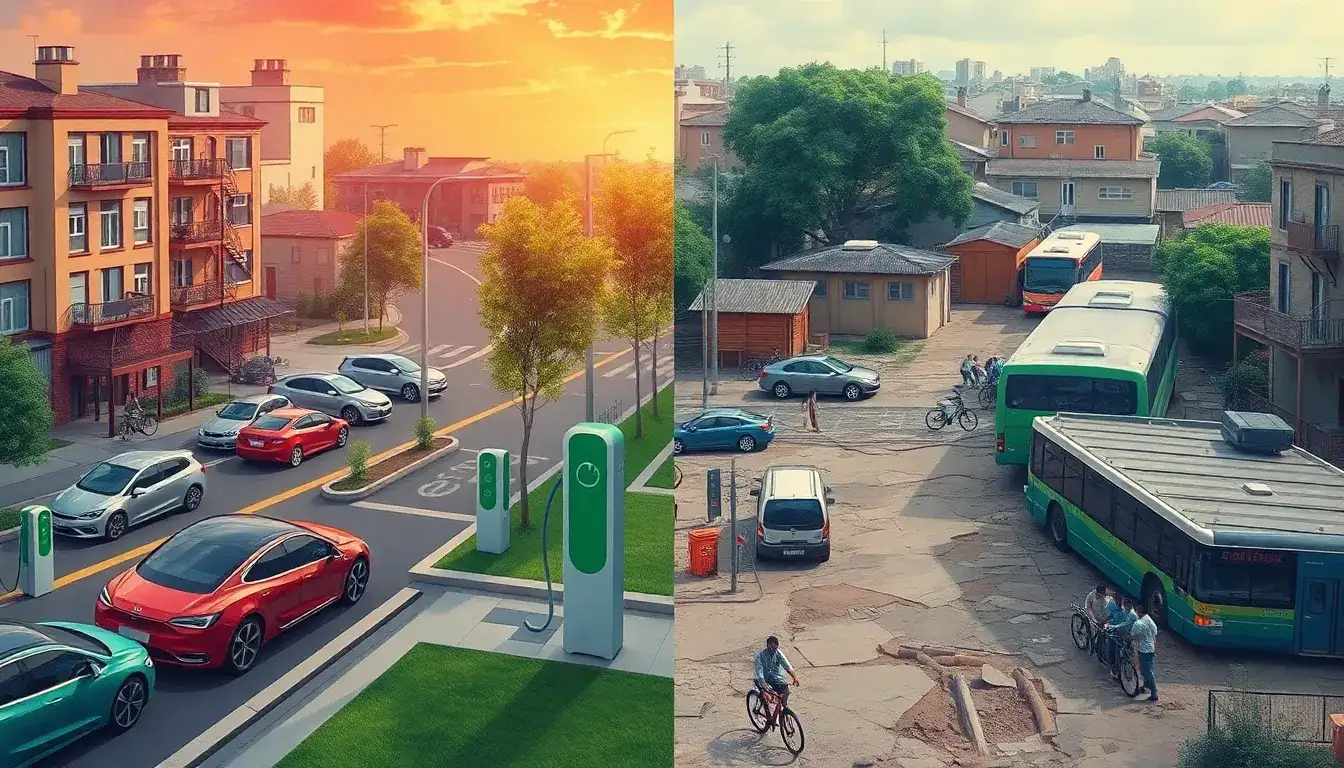
The adoption of electric vehicles (EVs) has highlighted several social inequalities, particularly across income and racial lines. Here are the main inequalities exacerbated by EV adoption:
Main Social Inequalities
- Income-Based Disparities:
- Affordability of EVs: Electric vehicles are generally more expensive than their gasoline counterparts, making them less accessible to low-income individuals and families.
- Financing Barriers: Low-income individuals often face difficulties in securing the necessary financing to purchase EVs.
- Charging Infrastructure: Public charging stations are often scarce in low-income neighborhoods, further limiting EV adoption in these areas.
- Racial and Ethnic Disparities:
- Access to Charging Infrastructure: Black households in lower-income communities often have to travel farther to access EV charging infrastructure compared to white households.
- Ownership Patterns: The majority of EV owners are white, indicating racial disparities in EV adoption.
- Geographic Disparities:
- Urban vs. Rural Access: Public EV charging infrastructure is often less accessible in rural areas, exacerbating disparities for those living outside urban centers.
- Socioeconomic Barriers:
- Home Ownership and Charging: EV owners are more likely to be homeowners, allowing them to install home charging stations. Low-income households often cannot afford these installations.
- Workplace Charging Access: Low-income households may not have access to workplace charging if they do not have a regular place of work.
Addressing the Inequalities
To mitigate these disparities, policymakers are exploring strategies such as increasing public charging infrastructure in low-income and minority communities and tailoring incentives to support equitable EV adoption.
Original article by NenPower, If reposted, please credit the source: https://nenpower.com/blog/what-are-the-main-social-inequalities-exacerbated-by-ev-adoption/

