

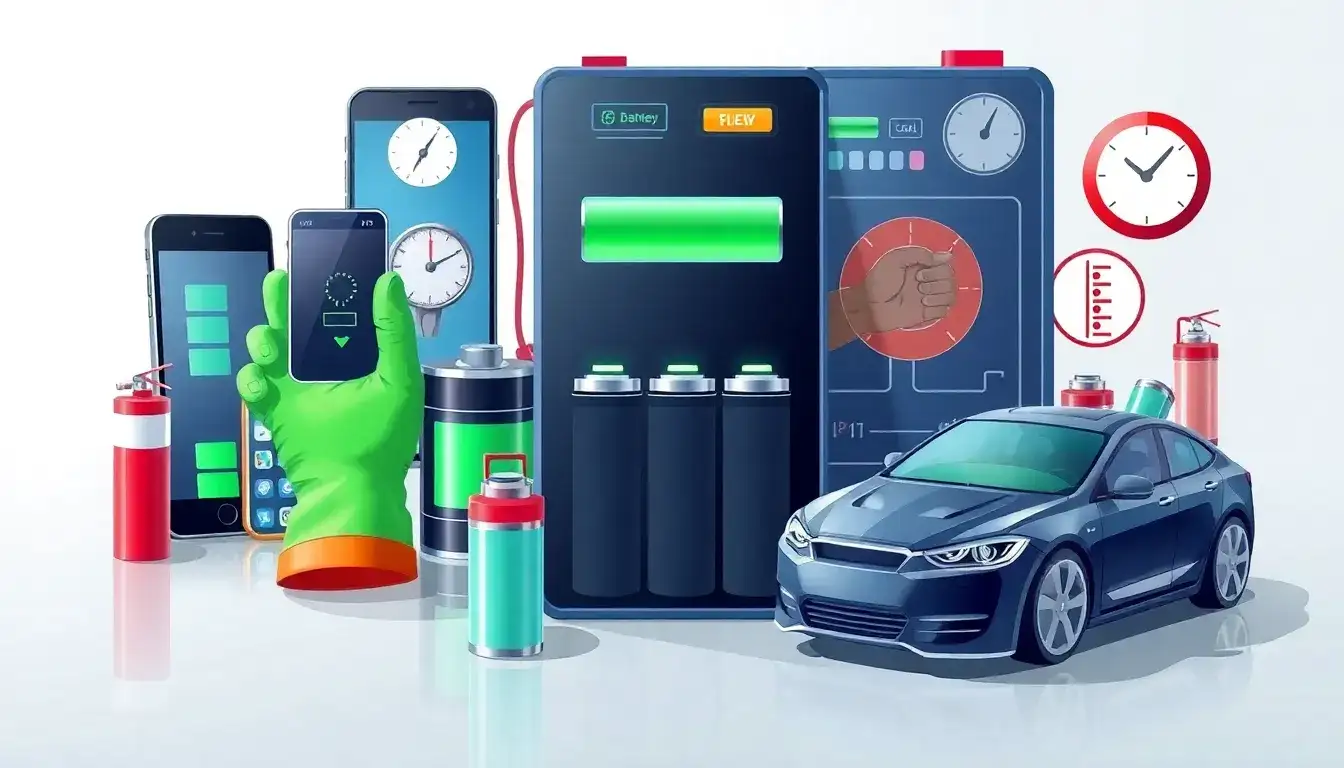
Safety Tips for Lithium-Ion Batteries
Handling and Storage
- Avoid Physical Damage: Do not drop or puncture lithium-ion batteries, as this can cause internal shorts and increase the risk of fires.
- Proper Storage Conditions: Store batteries in a cool, dry, well-ventilated area away from direct sunlight and heat sources.
Charging Safety
- Use Appropriate Chargers: Always use the manufacturer’s recommended charger to avoid overcharging or undercharging.
- Charge Safely: Charge batteries on non-combustible surfaces and avoid charging near flammable materials.
Monitoring and Maintenance
- Inspect Batteries: Regularly check batteries for signs of damage such as swelling, heat, or leaking, and dispose of them if damaged.
- Avoid Overcharging: Prevent overcharging by unplugging batteries once fully charged.
Disposal
- Proper Disposal Methods: Recycle lithium-ion batteries correctly by taking them to designated recycling centers; do not dispose of them in regular trash.
Additional Measures
- Follow Manufacturer Instructions: Always follow the device manufacturer’s guidelines for charging and storage.
- Be Prepared for Emergencies: Have a plan in place for dealing with battery fires, including knowing emergency procedures and having fire extinguishers nearby.
Original article by NenPower, If reposted, please credit the source: https://nenpower.com/blog/what-are-the-main-safety-tips-for-handling-lithium-ion-batteries/

