

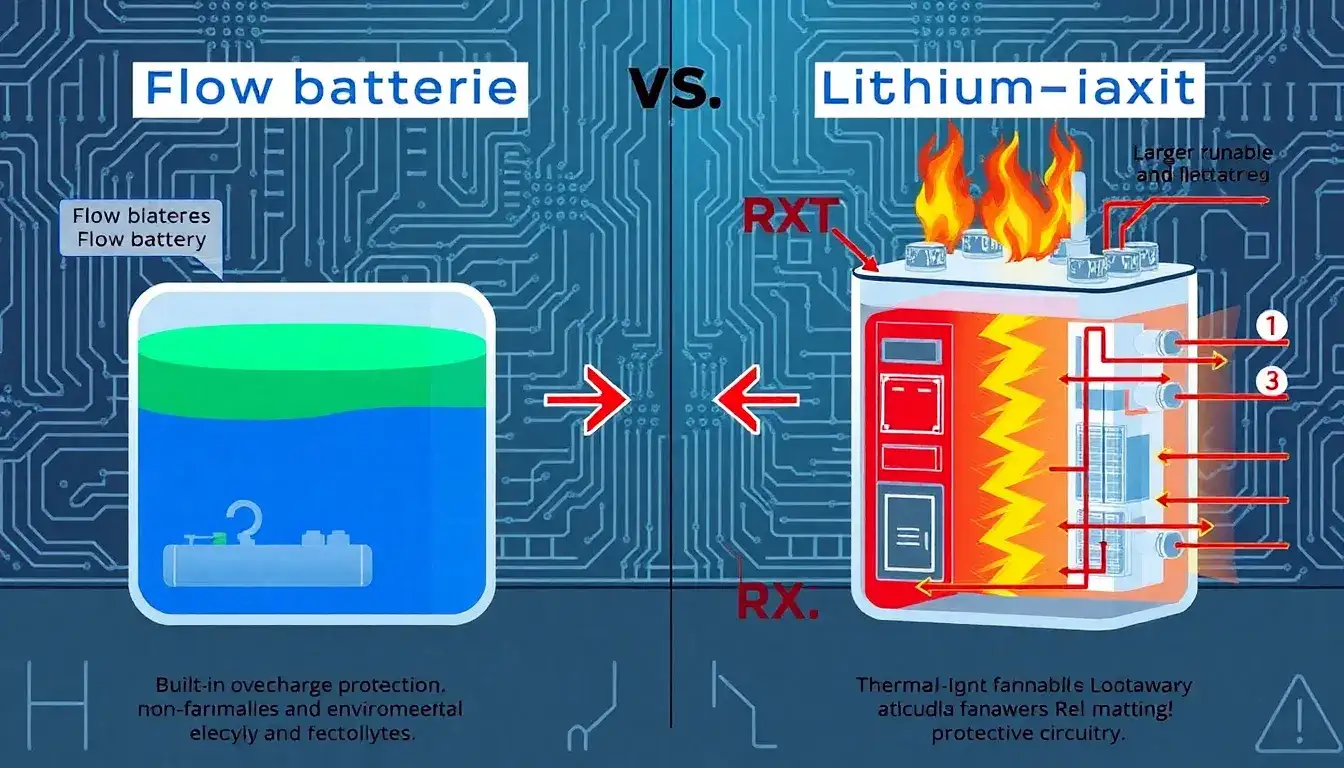
Main Safety Differences Between Flow Batteries and Lithium-Ion Batteries
1. Fire Risk
- Flow Batteries: They are generally non-flammable, using aqueous electrolytes that reduce the risk of fire or explosion significantly. Vanadium flow batteries, in particular, have been shown to have zero risk of thermal runaway, making them safer than lithium-ion batteries in this regard.
- Lithium-Ion Batteries: Lithium-ion batteries can pose a significant fire risk due to thermal runaway and flammable electrolytes. There have been numerous incidents of lithium-ion battery fires in various applications.
2. Stability and Thermal Management
- Flow Batteries: Flow batteries are stable under external shorts and do not generate smoke or fire in realistic scenarios. They manage heat effectively by transferring it to large electrolyte reservoirs, which helps in maintaining a safe temperature level.
- Lithium-Ion Batteries: Lithium-ion batteries can experience thermal runaway if improperly managed, leading to overheating and potential fires.
3. Chemical Safety
- Flow Batteries: Flow batteries do not emit harmful gases like chlorine during operation, ensuring a safer chemical environment for both personnel and the environment.
- Lithium-Ion Batteries: While lithium-ion batteries do not typically emit chlorine gas, their electrolytes can be hazardous if leaked or exposed during a fire.
4. Design and Operational Safety
- Flow Batteries: Flow batteries are designed with safety features like redundant systems, non-pressurized tanks, and true power-off capabilities, which reduce the risk of electrical shocks and ensure safer maintenance conditions.
- Lithium-Ion Batteries: While lithium-ion batteries have safety mechanisms, they often require more complex thermal management systems to mitigate the risk of overheating.
5. Sustainability and Recyclability
- Flow Batteries: Flow batteries offer better recyclability and material reuse capabilities, contributing to a more sustainable production cycle.
- Lithium-Ion Batteries: Lithium-ion batteries are being improved in terms of recyclability, but they still present challenges compared to the straightforward recycling of flow battery components.
Overall, flow batteries provide a safer alternative to lithium-ion batteries, especially for large-scale energy storage applications where fire safety is a critical concern.
Original article by NenPower, If reposted, please credit the source: https://nenpower.com/blog/what-are-the-main-safety-differences-between-flow-batteries-and-lithium-ion-batteries-2/

