

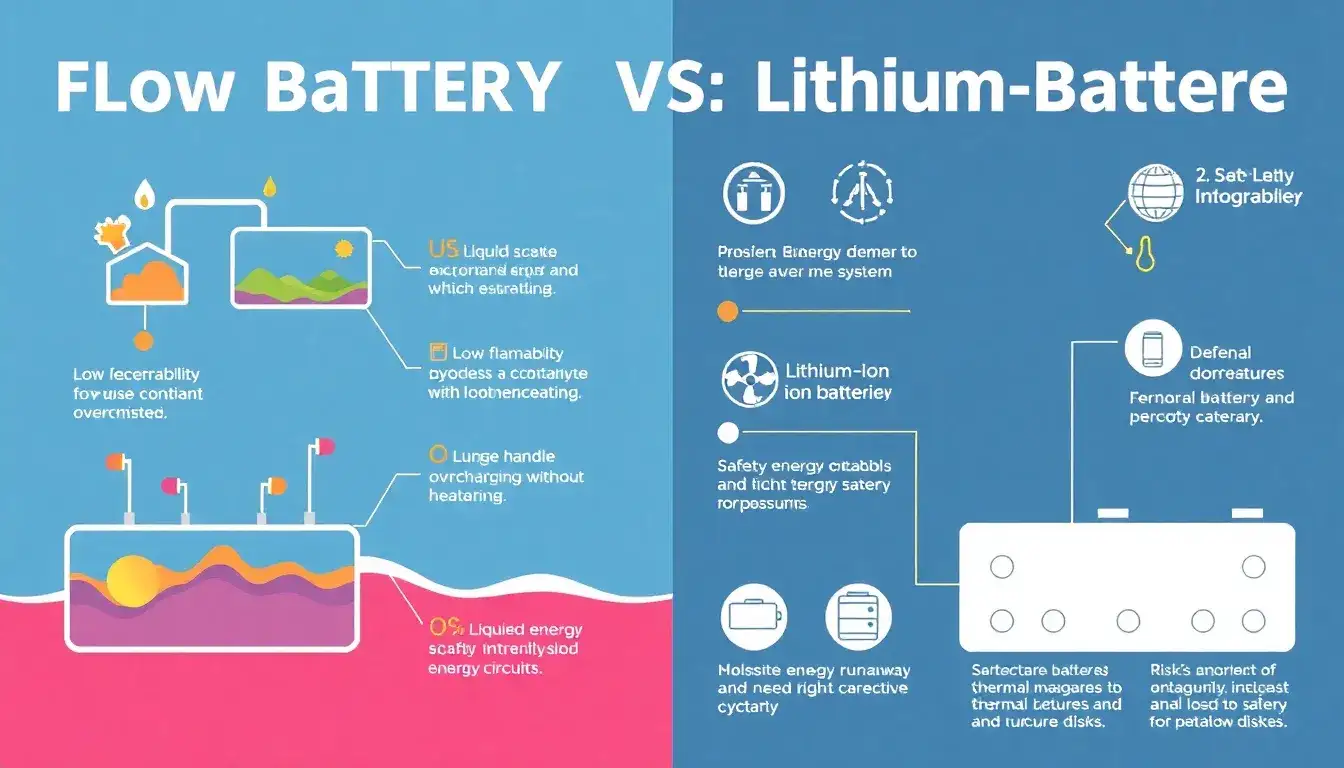
Safety Differences
1. Fire and Explosion Risk
- Flow Batteries: Flow batteries, particularly vanadium flow batteries, are generally safer and have a much lower risk of fires or explosions. They do not support thermal runaway, which is a major cause of fires in lithium-ion batteries.
- Lithium-Ion Batteries: Lithium-ion batteries are prone to thermal runaway, which can lead to fires or explosions. This risk is significant, especially in grid-scale applications.
2. Chemical Stability and Materials
- Flow Batteries: Flow batteries use aqueous electrolytes, which are less flammable and more stable than the electrolytes in lithium-ion batteries. The separation of energy storage and power generation reduces the risk of uncontrolled reactions.
- Lithium-Ion Batteries: Lithium-ion batteries use organic electrolytes that are highly flammable and can lead to severe chemical reactions.
3. Short Circuit and Electrical Fault Risks
- Flow Batteries: Even in the event of a short circuit, flow batteries are designed to manage heat effectively. The thermal mass of the electrolyte limits temperature increases, reducing the risk of damage or fire.
- Lithium-Ion Batteries: Short circuits in lithium-ion batteries can lead to rapid heat buildup and increased risk of thermal runaway.
4. Toxicity and Chemical Hazards
- Flow Batteries: While the electrolytes are generally non-flammable, they can be corrosive. However, flow batteries do not produce the same level of toxic gases as lithium-ion batteries in a fire scenario.
- Lithium-Ion Batteries: Lithium-ion batteries may release toxic gases during a fire, posing health risks.
5. System Design and Safety Features
- Flow Batteries: Flow batteries can be more easily managed in case of emergencies, as they do not retain voltage when the system is shut down, reducing electrical shock hazards.
- Lithium-Ion Batteries: Lithium-ion battery systems often cannot be fully “turned off,” which poses challenges for safety and emergency response.
In summary, flow batteries offer significant safety advantages over lithium-ion batteries, primarily due to their lower risk of fire and explosion, better chemical stability, and more manageable safety features in the event of a fault.
Original article by NenPower, If reposted, please credit the source: https://nenpower.com/blog/what-are-the-main-safety-differences-between-flow-batteries-and-lithium-ion-batteries/

