

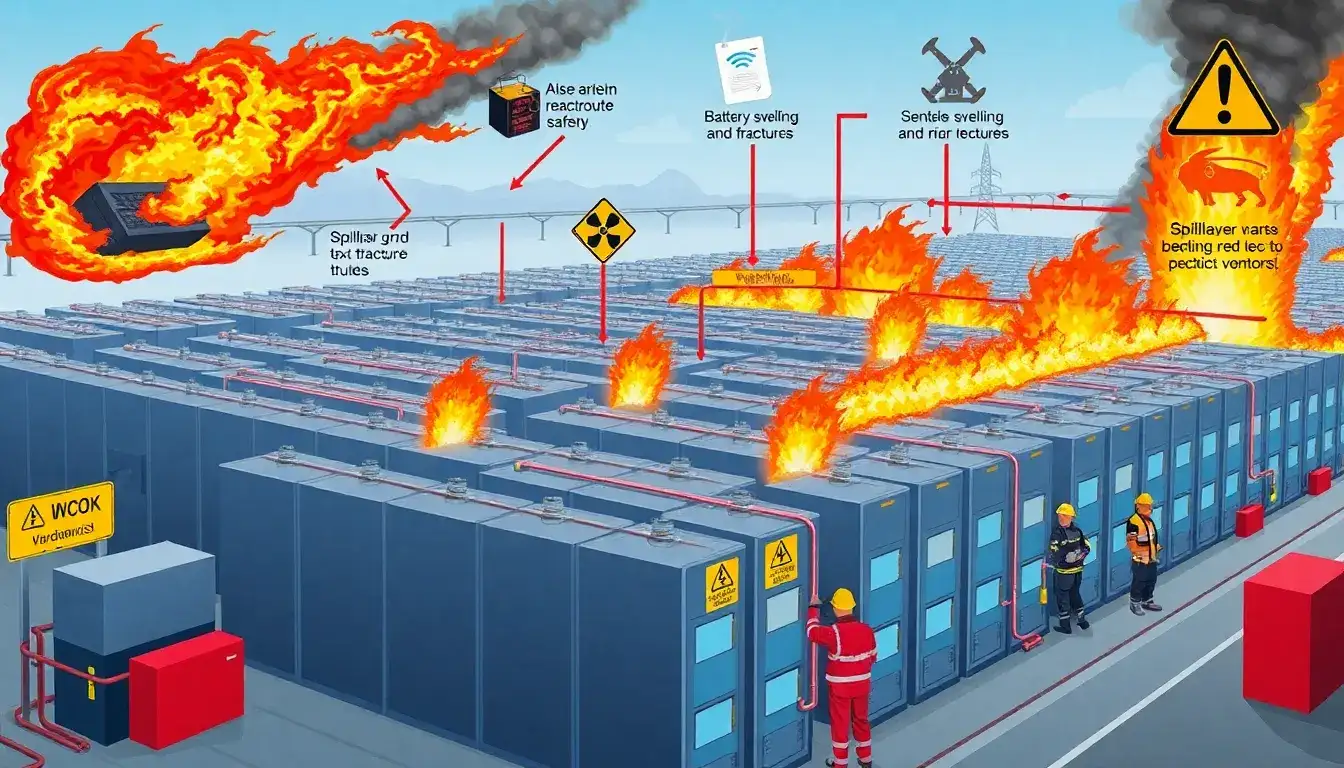
Lithium-ion batteries play a crucial role in grid-scale energy storage, but they also pose several significant safety concerns:
Main Safety Concerns
- Thermal Runaway and Fire Risks:
- Cause: Often triggered by overcharging, overdischarging, or physical damage.
- Effects: Leads to uncontrollable heat release, causing fires that are difficult to extinguish, extremely hot, and potentially persistent due to latent heat.
- Complications: Fires may require specialized extinguishing agents, as water can exacerbate the situation.
- Electrical Safety:
- Risk Factors: High voltage and electrical shorts can lead to accidents.
- Impact: High energy density of lithium-ion batteries amplifies the risks associated with electrical malfunctions.
- State of Charge (SOC) Safety Variability:
- Impact: The safety of lithium-ion cells varies at different states of charge. High temperatures and internal shorts can have different effects depending on SOC.
- Complexity and Regulatory Challenges:
- Issue: Grid-scale systems involve complex designs and numerous standards, making it challenging to implement uniform health and safety practices.
- Design and Manufacturing Variability:
- Risk: Differences in battery chemistries and manufacturing quality can lead to unpredictable field failures.
Mitigation Strategies
- Robust Design and Testing: Ensuring high-quality manufacturing processes and rigorous testing can reduce the risk of failures.
- Regulatory Clarity: Clear and consistent guidelines are crucial for ensuring that grid-scale systems are designed and operated with safety in mind.
- Advanced Safety Measures: Implementing advanced monitoring systems and safety protocols, such as gas sensing capabilities, can help detect potential issues early.
Original article by NenPower, If reposted, please credit the source: https://nenpower.com/blog/what-are-the-main-safety-concerns-associated-with-lithium-ion-batteries-in-grid-scale-applications/

