

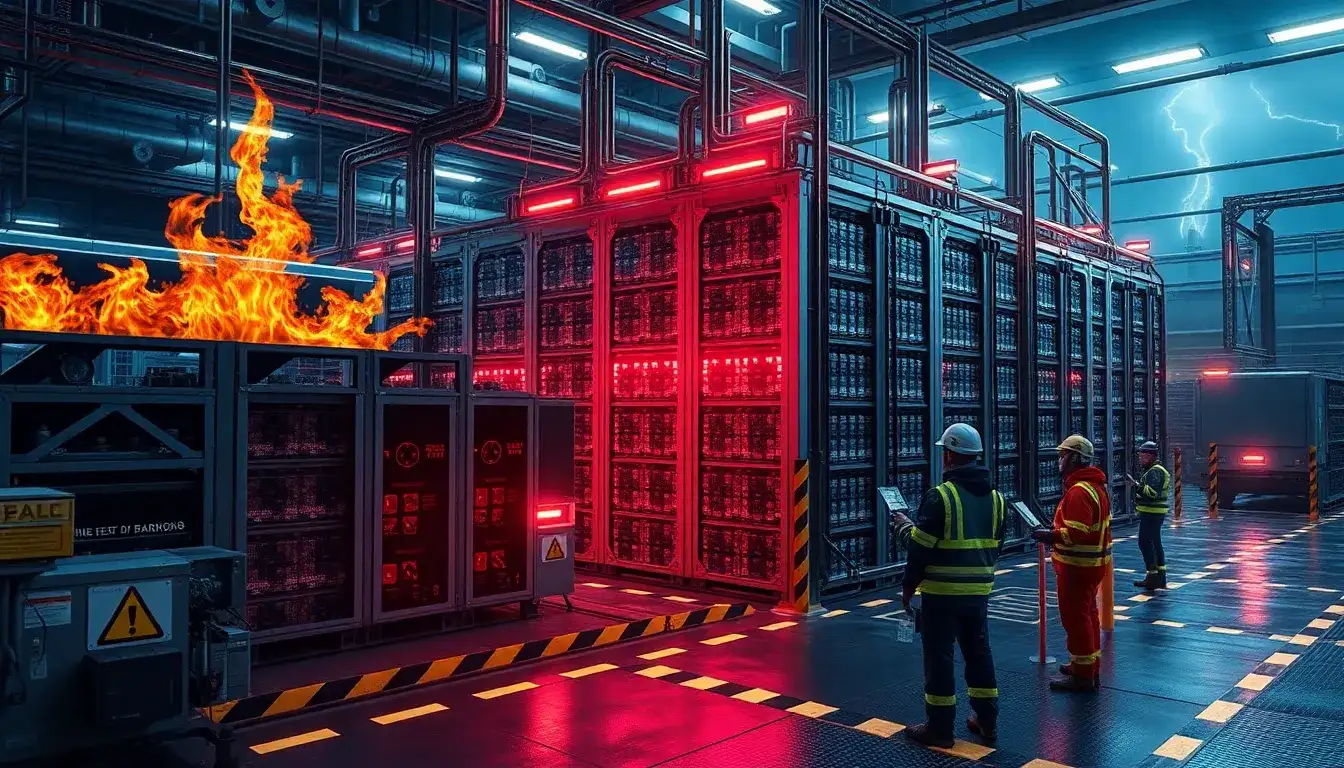
Large-scale battery energy storage systems (BESS)
Large-scale battery energy storage systems (BESS), particularly those using lithium-ion batteries, present several safety concerns despite advancements in technology and regulation:
Thermal Runaway and Fire Risks
Lithium-ion batteries are prone to thermal runaway—a self-sustaining chain reaction causing rapid overheating, fires, and potential explosions. Triggers include manufacturing defects, electrical faults, or external damage. High energy density in modern cells exacerbates this risk, with temperatures exceeding 1,000°C during thermal runaway. Close proximity of battery modules in BESS installations can accelerate fire spread.
Toxic Emissions and Air Quality
Battery fires release toxic gases, including hydrogen fluoride and carbon monoxide, posing health risks to first responders and nearby communities. While air quality near incidents like the Moss Landing Tesla Megapack fire remained within safe limits, shelter-in-place orders (e.g., Lyme, New York, 2023) highlight persistent public concern.
Explosion Hazards
Deflagration or electrical arc explosions have caused injuries, notably at the 2019 McMicken, Arizona, incident where flammable gas buildup led to an explosion injuring firefighters. Delayed ignition of vented gases or inadequate electrical protection systems can contribute to these events.
Challenges for First Responders
Current protocols emphasize containment over suppression to avoid reignition and reduce explosion risks. However, thermal runaway’s unpredictable nature complicates firefighting, as seen in multi-day fires requiring specialized responses.
Regulatory Gaps and Site Location Concerns
While NFPA 855 and International Fire Code address safety design, critics argue standards lag behind risks. Proposed 2026 NFPA updates may ban ineffective suppression systems unless proven safe. Site placement near residential areas (e.g., Aldenham, UK) raises concerns about industrializing green spaces and exposing communities to hazards.
Mitigation and Industry Response
The failure rate for BESS dropped 97% (2018–2023) due to improved safety features like:
- Modular design with cell-level barriers and cooling.
- Battery management systems (BMS) monitoring operational parameters.
- Explosion-resistant enclosures and controlled venting.
- Stricter testing beyond mandatory requirements, including thermal runaway simulations.
Despite progress, high-profile incidents and evolving risks underscore the need for updated codes and community-informed siting practices.
Original article by NenPower, If reposted, please credit the source: https://nenpower.com/blog/what-are-the-main-safety-concerns-associated-with-large-scale-battery-energy-storage-systems/

