

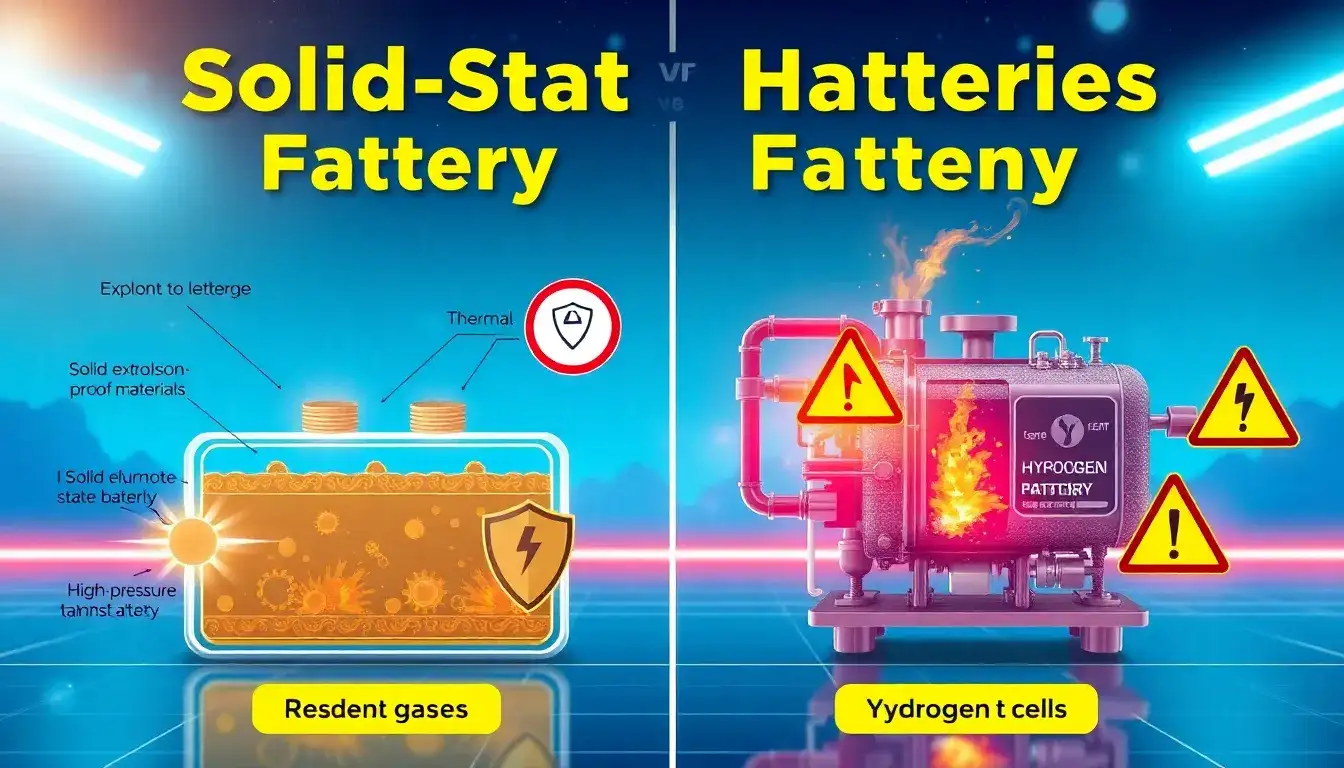
The main safety advantages of solid-state batteries over hydrogen fuel cells stem primarily from their design and materials, which significantly reduce fire and explosion risks.
1. Absence of Flammable Components
Solid-state batteries use a solid electrolyte instead of the flammable liquid electrolytes found in conventional lithium-ion batteries. This solid electrolyte greatly reduces the risk of fire or explosion, especially during malfunctions or physical damage. In contrast, hydrogen fuel cells store hydrogen gas, which is highly flammable and poses substantial risks of leaks and explosions if not properly contained.
2. Thermal Stability and Wider Operating Temperature Range
Solid-state batteries can operate safely at higher temperatures and have a wider temperature tolerance compared to hydrogen fuel cells. This reduces the likelihood of thermal runaway—a dangerous overheating event—thereby minimizing fire hazards. Hydrogen fuel cells require careful thermal management and flammable hydrogen storage, which increases safety concerns in extreme conditions.
3. Robustness and Mechanical Safety
Because solid-state batteries use solid materials, they tend to be more mechanically stable and resistant to damage under shocks or impacts, reducing safety risks. In contrast, the pressurized storage tanks used for hydrogen fuel cells must meet strict standards to safely contain hydrogen gas under high pressure, and any rupture could lead to catastrophic failure.
In summary, solid-state batteries provide enhanced safety primarily due to their solid, non-flammable electrolytes, better thermal stability, and robustness, which together reduce fire, explosion, and thermal runaway risks that are more prominent in hydrogen fuel cell systems relying on flammable hydrogen gas storage.
Original article by NenPower, If reposted, please credit the source: https://nenpower.com/blog/what-are-the-main-safety-advantages-of-solid-state-batteries-over-hydrogen-fuel-cells/

