

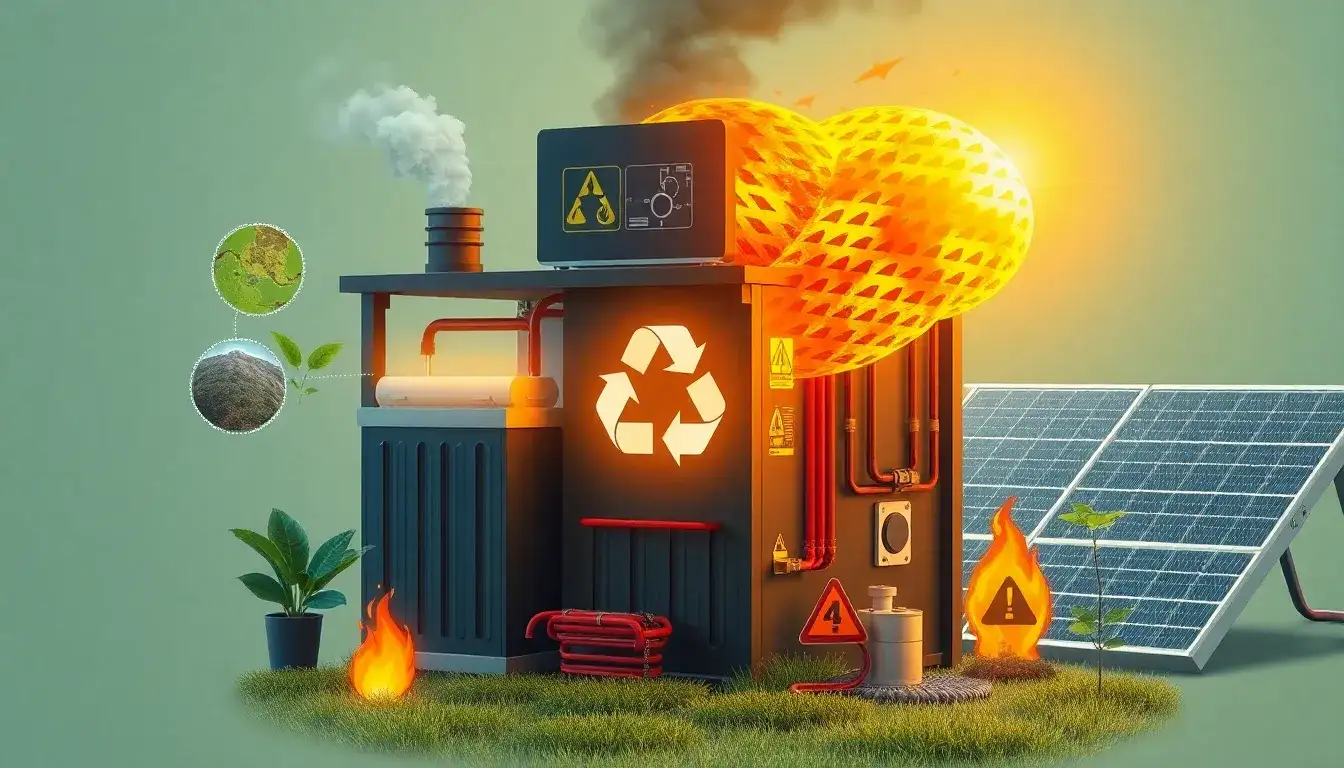
The main risks associated with using lithium-ion batteries for solar energy storage center primarily on safety concerns related to fire and thermal events:
- Fire Hazard and Thermal Runaway: Lithium-ion batteries contain highly flammable electrolytes and are susceptible to a dangerous condition called thermal runaway. Thermal runaway occurs when internal shorts within a battery cell cause uncontrollable heating, potentially leading to fires or explosions. This risk is amplified in large battery storage facilities due to the high energy density of lithium-ion cells and the close packing of many cells together.
- Overheating and Explosions: Lithium-ion batteries can overheat during charging or operation, which may lead to swelling, electrolyte leakage, venting, smoke, and in worst-case scenarios, violent explosions. Overheating can be triggered by electrical faults, manufacturing defects, or external thermal stress.
- Propagation Risk: Failure in one battery cell can propagate to adjacent cells, escalating the incident. Modern energy storage system designs incorporate features to prevent this propagation, improving safety, but the risk remains inherent due to the chemistry involved.
- System Scale and Complexity: Large-scale solar energy storage systems involve many thousands of lithium-ion cells. While individual cell failure rates are extremely low (estimated failure rates between 1 in 10 million to 1 in 40 million cells), the sheer number of cells increases the statistical chance of failure somewhere in the system.
Despite these risks, lithium-ion battery energy storage systems are generally safe, especially with the adoption of safer lithium-iron phosphate (LFP) chemistry in many solar storage installations. LFP cells tend to release less energy during failure and have a lower likelihood of fire compared to other lithium chemistries like nickel-manganese-cobalt (NMC) used in electric vehicles. Additionally, strict codes, standards (such as NFPA 855), and safety designs are applied to mitigate risks in stationary energy storage facilities, which have not resulted in fatalities in the U.S. to date.
In summary, the main risks are fire, thermal runaway, and potential explosions caused by internal cell failures in lithium-ion batteries, with mitigation strategies focused on chemistry choice, system design, and regulatory compliance to enhance safety in solar energy storage applications.
Original article by NenPower, If reposted, please credit the source: https://nenpower.com/blog/what-are-the-main-risks-associated-with-using-lithium-ion-batteries-for-solar-energy-storage/

