

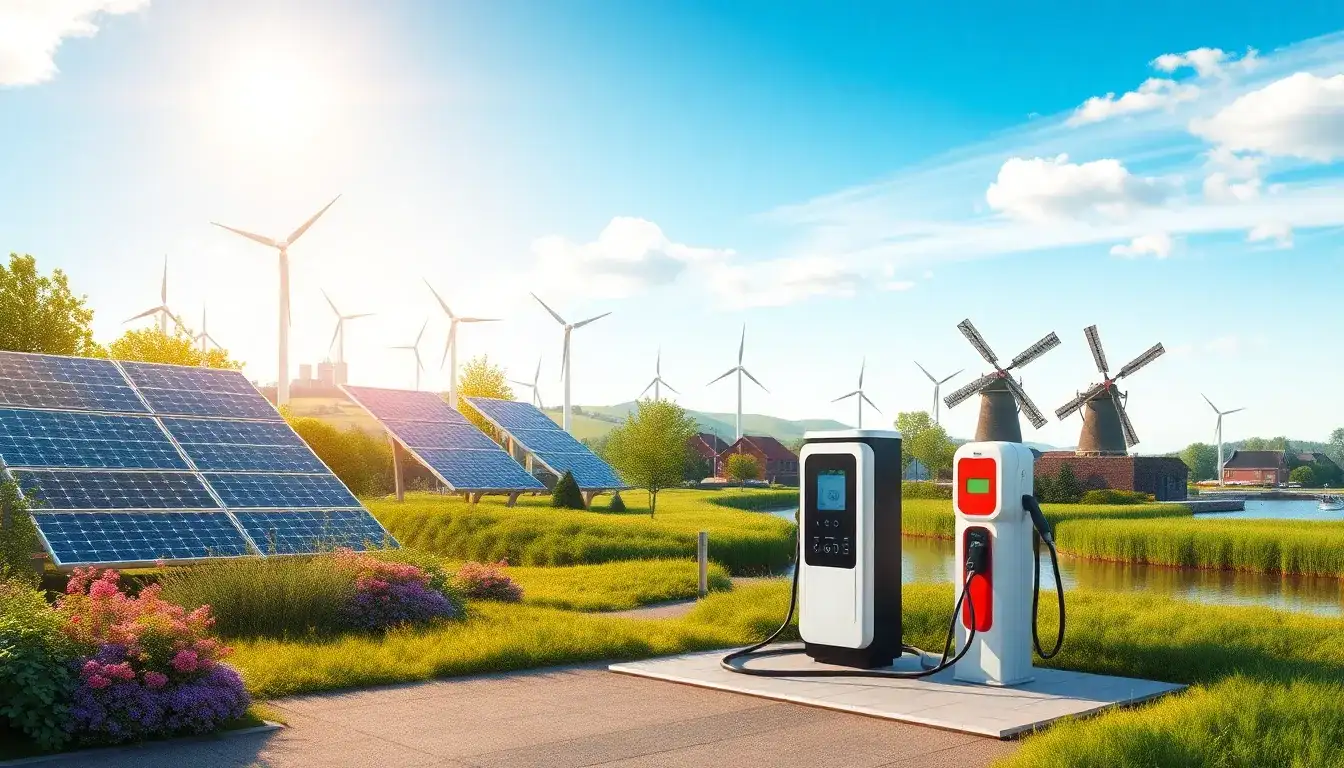
The main renewable energy sources powering EV charging stations in the Netherlands are primarily solar and wind energy.
- Solar panels are widely integrated at charging stations, often combined with local energy storage systems (batteries) to store excess solar energy. This stored energy can be used to charge EVs without adding additional demand on the electricity grid, especially during peak periods. Solar energy thus plays a critical role in enabling more sustainable and grid-friendly EV charging infrastructure.
- Wind energy is also a key renewable source combined with smart EV charging systems. ElaadNL, a Dutch center for smart charging innovation, actively balances the energy demand from multiple charge points by leveraging both solar and wind power, reducing overall grid strain and maximizing green energy usage.
- Additionally, innovative projects like the Smart Solar Charging (SSC) initiative in Utrecht incorporate solar-generated electricity and bidirectional (vehicle-to-grid) charging technology. This enables EV batteries to feed electricity back into the grid when not in use, effectively serving as flexible energy storage to support renewable energy integration and grid stability.
In summary, the Netherlands’ EV charging infrastructure benefits mainly from solar and wind renewable energy sources, supported by smart charging management systems and energy storage solutions to optimize green energy use and minimize grid impact. This aligns with the country’s strong national commitment to renewable energy and sustainable e-mobility development.
Original article by NenPower, If reposted, please credit the source: https://nenpower.com/blog/what-are-the-main-renewable-energy-sources-powering-ev-charging-stations-in-the-netherlands/

