

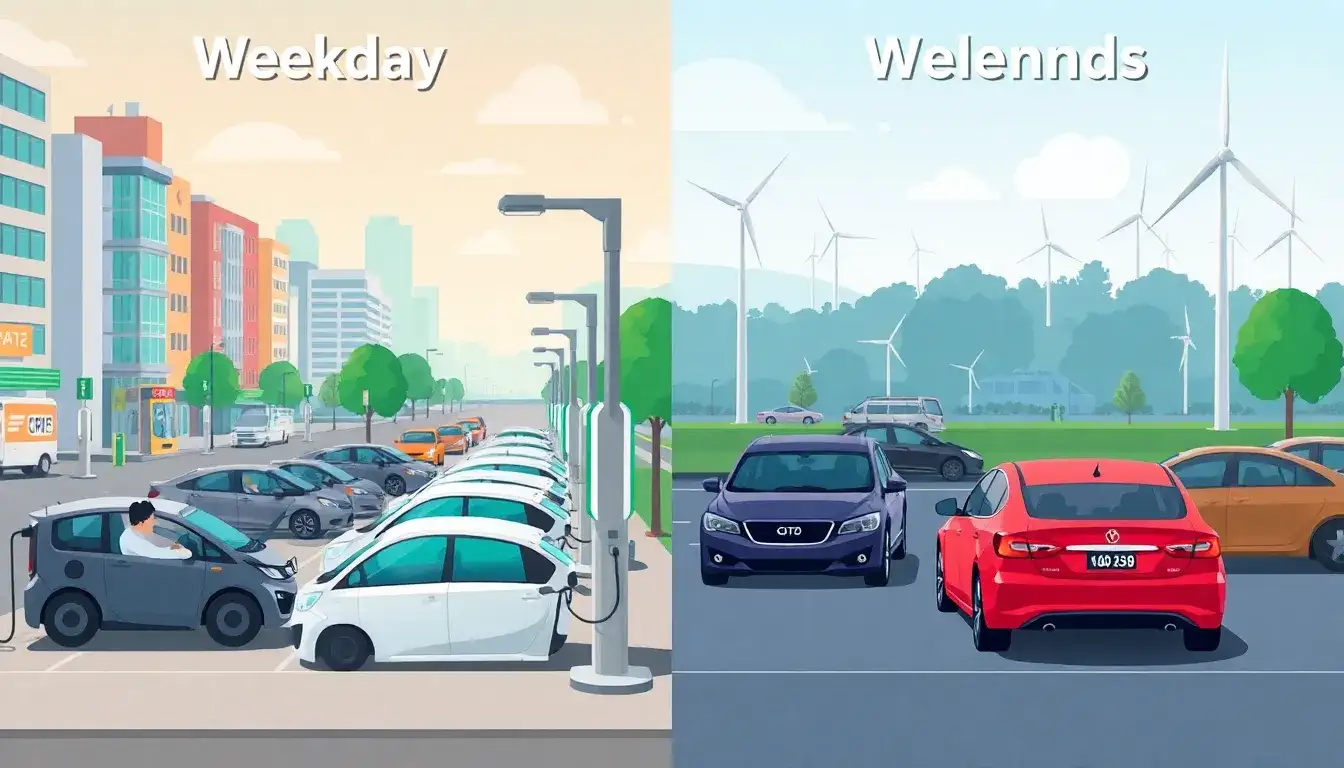
The main reasons for the weekday-to-weekend differential in L2 (Level 2) charging can be attributed to several factors:
- Usage Patterns at Different Venues:
- Business and Educational Venues: These locations show higher L2 charging use during weekdays due to the presence of people at offices, schools, and other places of work or study. The demand for charging decreases significantly over weekends as these facilities are less active.
- Residential Areas: While not explicitly mentioned in the weekday-to-weekend differential, residential areas may show more consistent or slightly increased charging on weekends due to longer dwell times at home.
- Energy Demand and Charging Needs:
- Weekday Peak Demand: Weekdays typically have higher overall energy demand due to commercial and industrial activities. However, L2 charging profiles follow a daily curve that can help match energy demand with supply, especially in areas with high solar penetration.
- Weekend Charging Benefits: Weekends offer cleaner energy due to lower overall demand, making them ideal for charging electric vehicles. This lower demand can lead to more energy-efficient charging practices.
- Dwell Time and Charging Efficiency:
- L2 charging is often more practical for extended dwell times, such as those found during weekends when vehicles are parked for longer periods. This makes L2 charging efficient for venues like residential areas or entertainment spots where vehicles are not moving for extended hours.
In summary, the differential is largely driven by the varying usage patterns across different venues and the inherent efficiency of L2 charging for longer dwell times, which are more common on weekends.
Original article by NenPower, If reposted, please credit the source: https://nenpower.com/blog/what-are-the-main-reasons-for-the-weekday-to-weekend-differential-in-l2-charging/

