

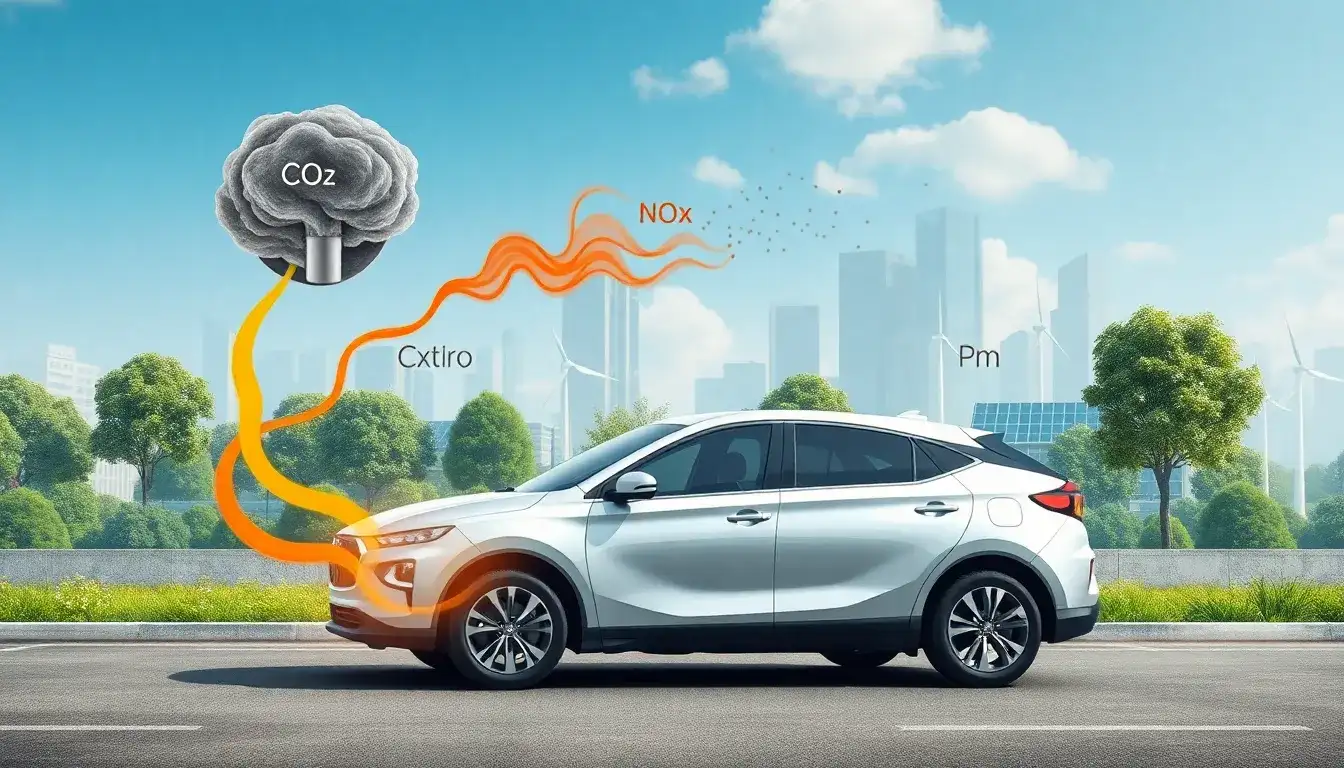
Hybrid vehicles primarily reduce carbon dioxide (CO₂) emissions, a major greenhouse gas contributing to climate change. By combining internal combustion engines with electric propulsion, hybrids achieve lower tailpipe emissions compared to conventional vehicles.
Key pollutants reduced:
- CO₂: Hybrids emit less CO₂ due to improved fuel efficiency and regenerative braking, with full hybrids reducing emissions by up to 34% compared to gasoline-only vehicles.
- Nitrogen oxides (NOx) and particulate matter (PM): While not explicitly quantified in the sources, reduced fuel consumption generally correlates with lower combustion-related pollutants like NOx and PM, especially in urban driving conditions where electric mode dominates (implied by lower fuel use).
Important distinctions:
- Tailpipe vs. life cycle emissions: Hybrids reduce tailpipe CO₂ directly, but their overall environmental impact depends on electricity sources (for plug-in hybrids) and manufacturing processes.
- Hybrid types: Mild hybrids offer smaller reductions (~11% for gasoline variants), while full hybrids achieve significantly greater CO₂ cuts.
Though not explicitly mentioned in the sources, hybrids also likely reduce carbon monoxide (CO) and hydrocarbons (HC) due to optimized combustion and reduced fuel consumption. However, zero-tailpipe-emission benefits are most prominent in all-electric and plug-in hybrid modes.
Original article by NenPower, If reposted, please credit the source: https://nenpower.com/blog/what-are-the-main-pollutants-reduced-by-hybrid-vehicles/

