

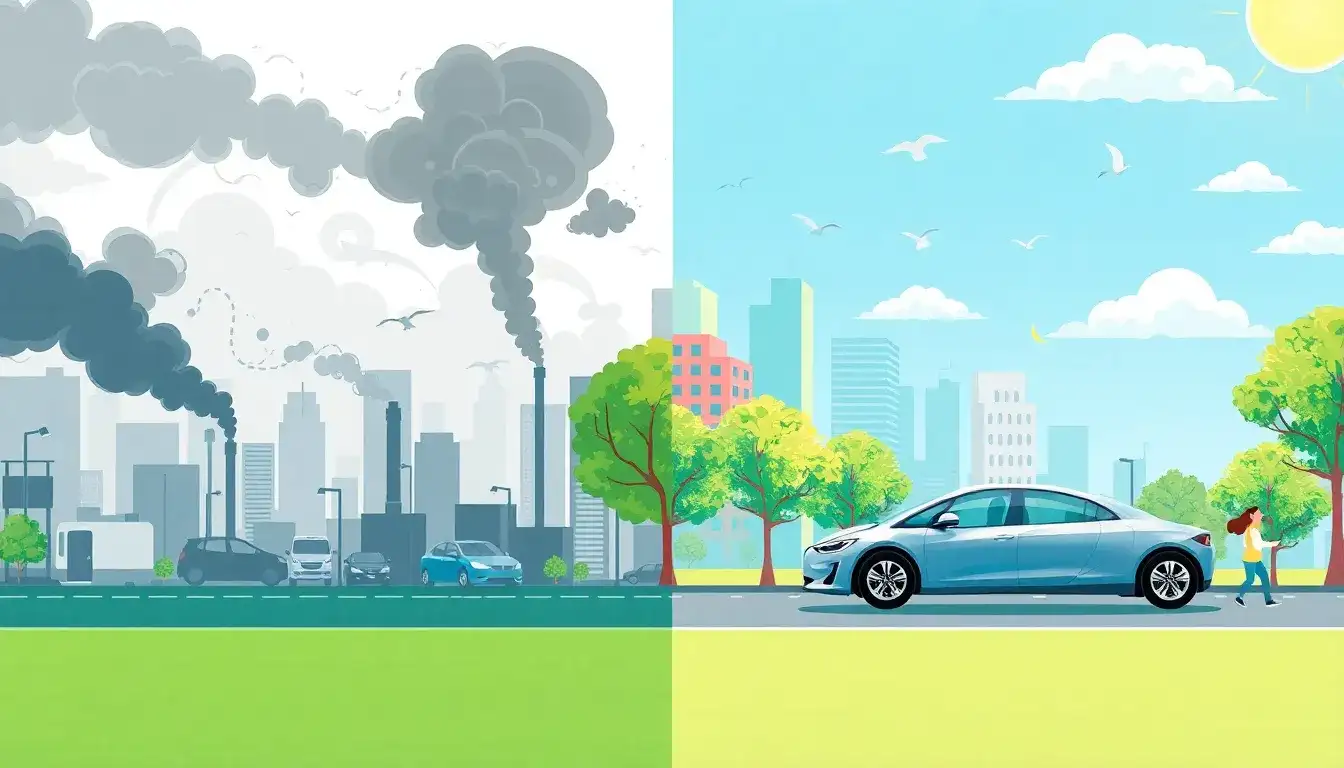
Electric vehicles (EVs) significantly reduce several key pollutants compared to traditional combustion engine vehicles. The main pollutants reduced by EVs include:
- Nitrogen Oxides (NOx): EVs eliminate NOx emissions directly from the vehicle, as there is no combustion process. NOx is a major contributor to air pollution and has significant negative impacts on respiratory health.
- Particulate Matter (PM2.5 and PM10): While EVs do not emit PM directly from their tailpipes, they can indirectly reduce PM emissions. Regenerative braking in EVs minimizes brake wear, which is a source of particulates. However, heavier EVs might increase tire wear and road dust, but overall, PM emissions are still reduced when switching from internal combustion engine vehicles to EVs.
- Carbon Monoxide (CO) and Hydrocarbons (HC): These are also eliminated in EVs due to the absence of combustion.
Overall, EVs offer substantial improvements in air quality by reducing or eliminating these pollutants.
Original article by NenPower, If reposted, please credit the source: https://nenpower.com/blog/what-are-the-main-pollutants-reduced-by-electric-vehicles/

