

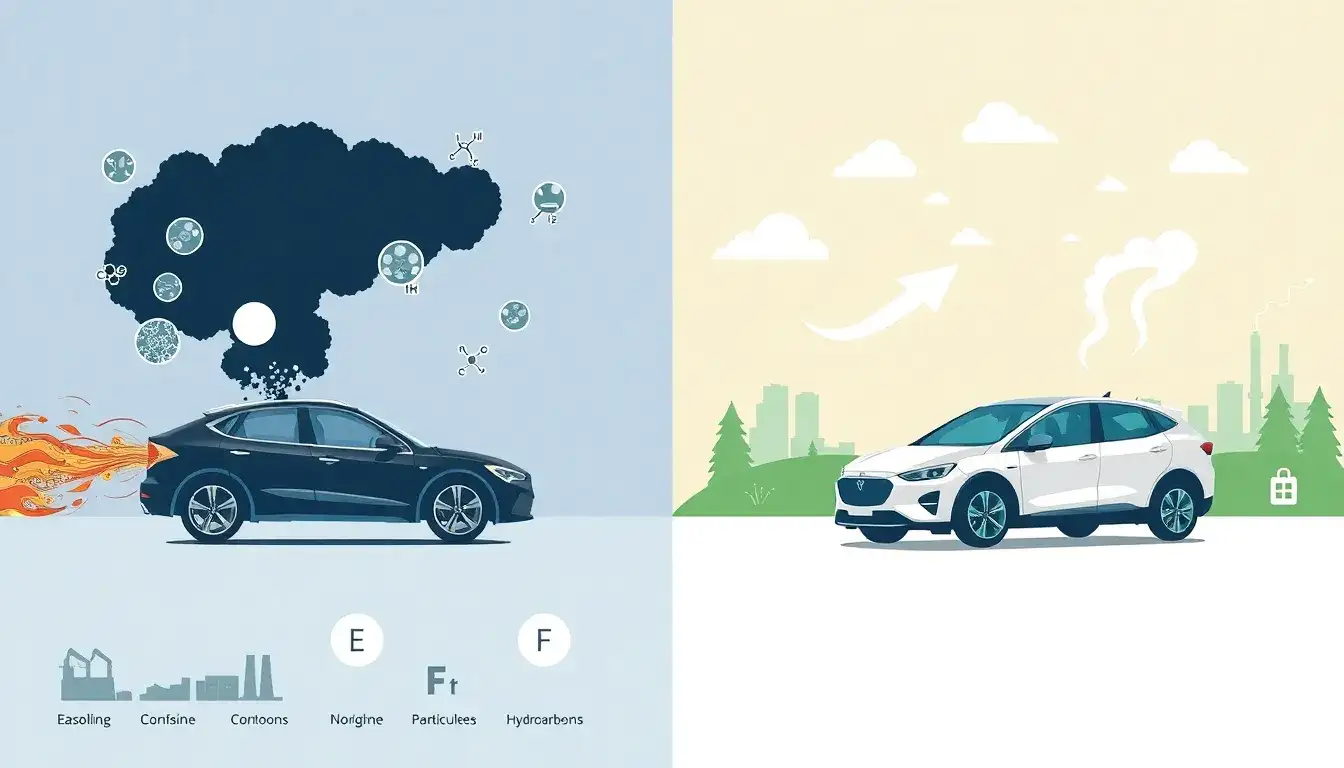
Gasoline-powered vehicles emit multiple harmful pollutants that electric vehicles (EVs) eliminate entirely:
- Carbon dioxide (CO₂)
A typical passenger vehicle emits ~4.6 metric tons of CO₂ annually, with every gallon burned producing ~19-20 pounds of CO₂. EVs produce zero tailpipe CO₂ emissions. - Toxic air pollutants
Gasoline combustion releases:- Carbon monoxide (interferes with oxygen transport in blood)
- Nitrogen oxides (contribute to smog and respiratory issues)
- Hydrocarbons (react with sunlight to form ground-level ozone)
- Benzene and formaldehyde (carcinogenic compounds)
- Sulfur dioxides (linked to acid rain and lung irritation)
- Particulate matter (exacerbates asthma and heart disease)
- Health impacts avoided
Exposure to these pollutants increases risks of asthma, lung disease, cancer, and developmental delays, contributing to ~63,600 U.S. deaths annually from air pollution. EVs eliminate all tailpipe emissions that directly expose drivers and pedestrians to these toxins.
Original article by NenPower, If reposted, please credit the source: https://nenpower.com/blog/what-are-the-main-pollutants-emitted-by-gasoline-powered-cars-that-electric-vehicles-avoid/

