

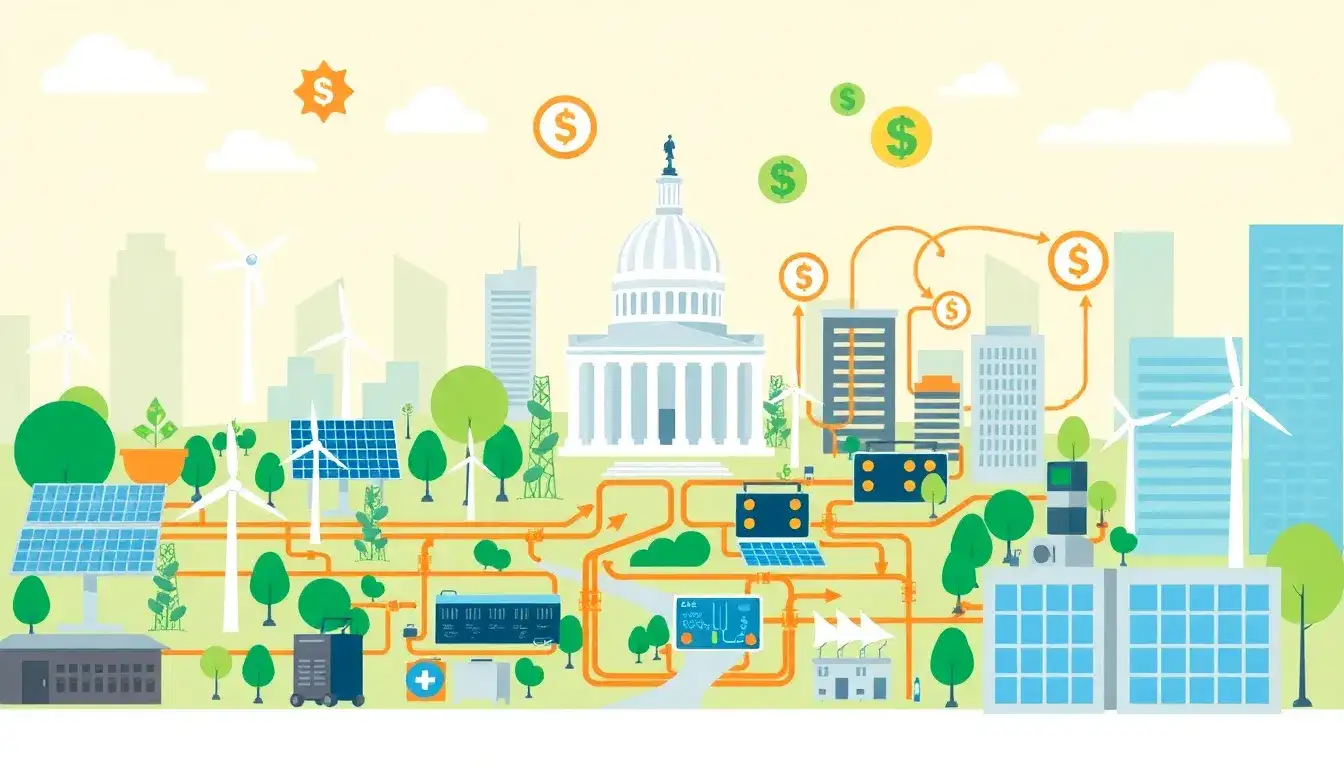
The main policy incentives supporting the deployment of energy storage include:
Federal Tax Credits and Investments
- The Inflation Reduction Act (IRA) provides a 30% investment tax credit (ITC) for residential energy storage systems over 3 kWh in size.
- The Clean Electricity Investment Credit (CEIC), effective from 2025, offers up to a 50% tax credit for commercial battery storage projects, with higher credits if projects use U.S.-based materials or are located in energy communities. This replaced the IRA incentive as a flexible, technology-neutral credit.
State-Level Rebates and Performance Incentives
- Many states have developed rebate programs providing upfront cash payments after battery installation and grid connection. These reduce the initial cost burden and encourage adoption.
- Some states offer performance-based incentives that pay based on the energy storage system’s contribution to grid stability or demand response.
Examples of State Incentive Programs
| State | Incentive Program | Details |
|---|---|---|
| California | Self-Generation Incentive Program (SGIP) | Offers a rebate per kilowatt of battery capacity, with extra funds for high fire threat zones and low-income households. |
| Connecticut | Energy Storage Solutions | Provides up to $16,000 for residential installations and 50% cost savings for businesses. |
| Massachusetts | Mass Save Connected Solutions | Includes financial incentives and financing options to lower battery installation costs and support grid stability. |
| New York | Long Island Energy Storage Incentive | Offers $250/kW rebate for battery storage, with limited remaining funds as of early 2025. |
Incentive Rate Setting and Policy Design
- States design incentive programs aligned with clean energy goals, such as reducing greenhouse gas emissions or enhancing grid reliability. Incentive structures include rebates, performance incentives, financing support, carve-outs for specific groups, and adders to encourage targeted deployment.
- Best practices involve tailoring incentives to support distributed (behind-the-meter) storage, balancing commercial and residential incentives, and ensuring equity considerations to make storage accessible across customer classes.
In summary, the deployment of energy storage is supported primarily by a combination of federal tax credits like the IRA and CEIC, supplemented by state-level rebates and performance incentives designed to reduce upfront costs and improve project economics, all structured to align with clean energy and grid policy objectives.
Original article by NenPower, If reposted, please credit the source: https://nenpower.com/blog/what-are-the-main-policy-incentives-that-support-the-deployment-of-energy-storage/

