

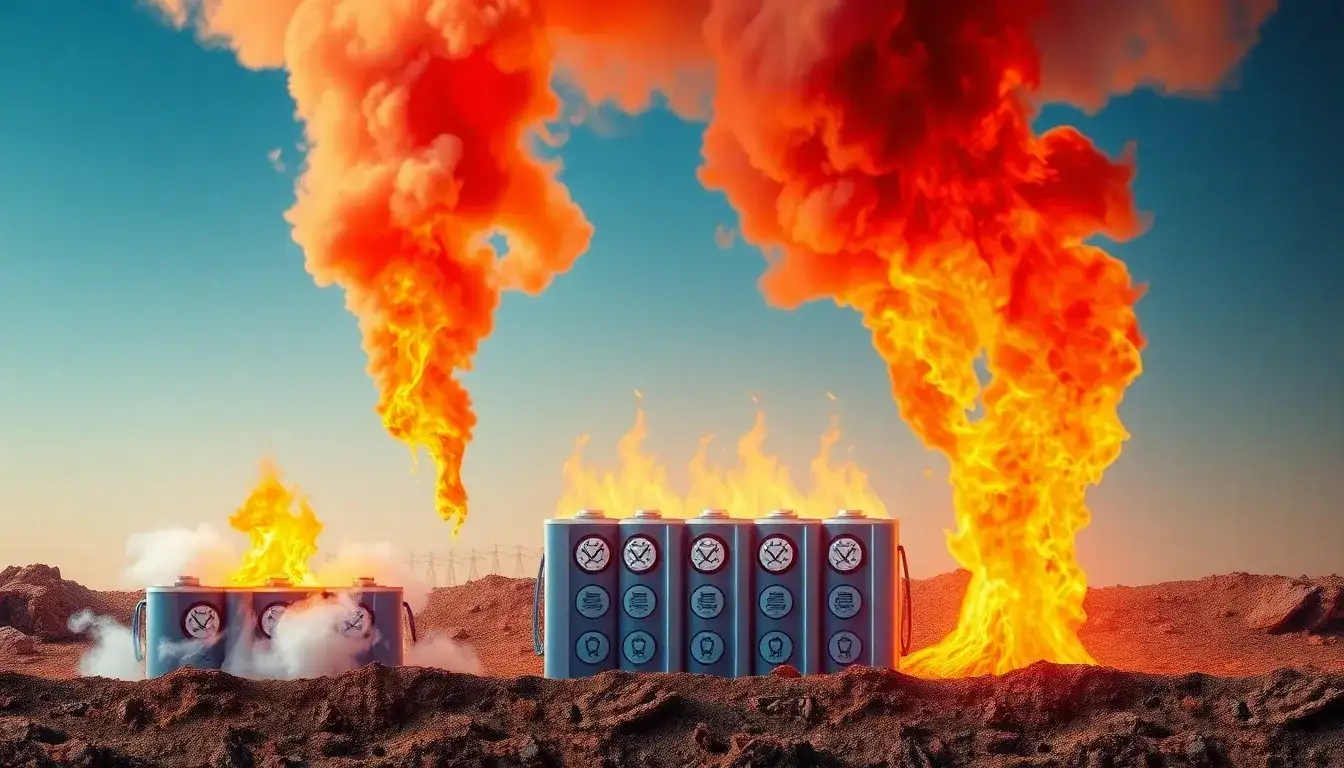
The main operating risks associated with lithium-ion batteries in energy storage projects include:
Key Risks
- Thermal Runaway and Fire Risk: Lithium-ion batteries can overheat, leading to thermal runaway, which may cause fires or explosions. This risk is heightened by factors such as overcharging, mechanical damage, or electrical faults.
- Flammable Electrolytes: The electrolytes in lithium-ion batteries are flammable and can release vapors that intensify fires once ignited. This makes it difficult to extinguish such fires as water cannot effectively cool the interior cells.
- Electrical Arc Explosions: High-energy arcs within electrical enclosures can lead to structural failures and explosions, particularly if electrical protection measures are inadequate.
- Gas Explosions: As batteries undergo thermal runaway, flammable gases can form, potentially leading to gas explosions if there is an ignition source.
- Over-Discharge Risks: Over-discharging can damage the battery’s internal structure, leading to reduced performance and safety concerns.
- Manufacturing Quality Issues: Although rare, faulty manufacturing can contribute to higher failure rates and safety issues.
- Internal Short Circuits: Prismatic cells, commonly used in Battery Energy Storage Systems (BESS), can be prone to internal short circuits due to their complex layered design.
Mitigation Strategies
- Enhanced Safety Codes and Standards: Implementing and adhering to updated safety standards like NFPA 855 can help reduce fire risks.
- Advanced Battery Management Systems: These systems can monitor and prevent overcharging or excessive discharging, minimizing thermal runaway risks.
- Robust Design and Materials: Using safer chemistries like lithium-iron phosphate (LFP) reduces the risk of fire compared to other types like NMC.
- Regular Risk Analysis and Prevention Measures: Companies like TÜV SÜD offer risk analysis services to mitigate fire and explosion hazards through proper handling and storage practices.
Original article by NenPower, If reposted, please credit the source: https://nenpower.com/blog/what-are-the-main-operating-risks-associated-with-lithium-ion-batteries-in-energy-storage-projects/

