

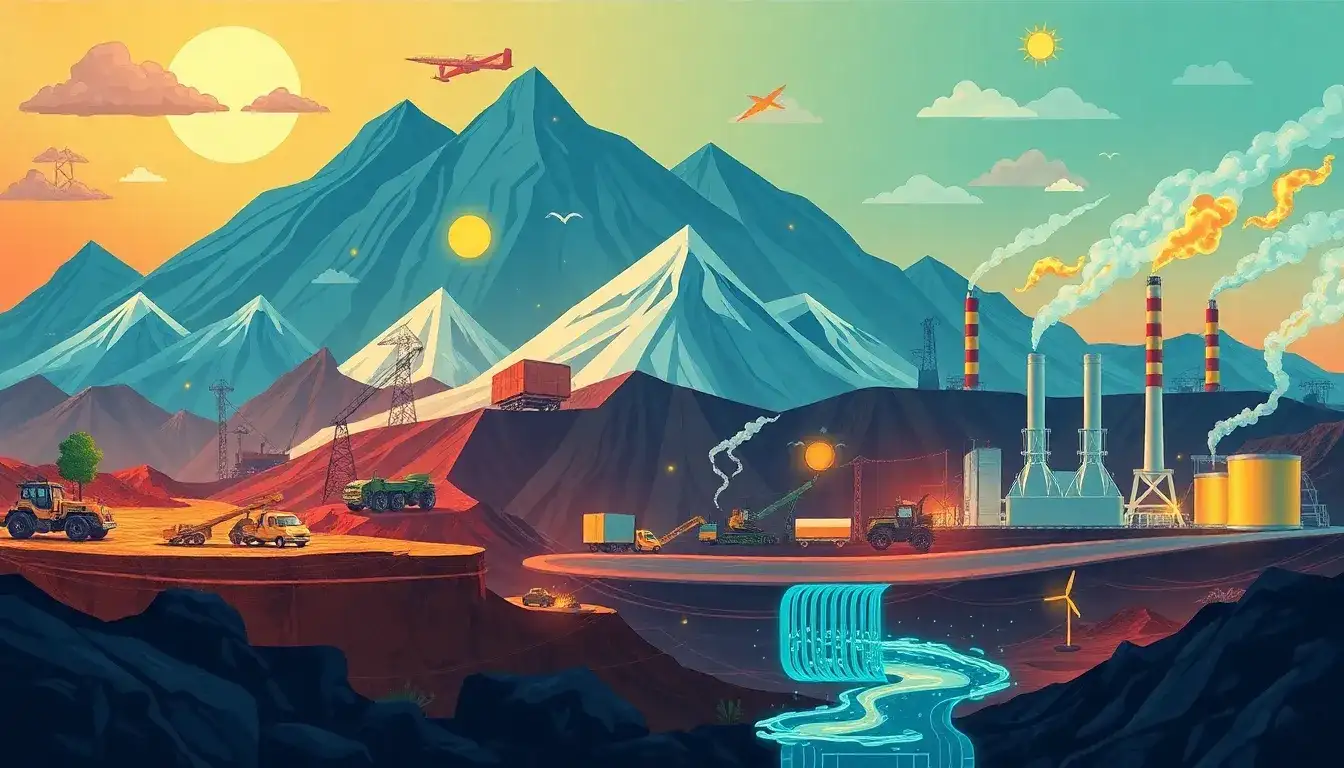
The main materials contributing to the high greenhouse gas emissions in electric vehicle (EV) battery production are nickel, manganese, cobalt, lithium, and graphite. These materials significantly drive the carbon footprint due to their intensive and energy-heavy mining and refining processes.
Key contributors to emissions:
- Lithium: Extracted mainly from hard rock mines or underground brine reservoirs, lithium mining is particularly carbon-intensive. For example, hard rock mining of lithium can emit about 15 tonnes of CO2 for every tonne of lithium extracted, largely due to fossil fuel use during extraction and processing.
- Cobalt: Often sourced from the Democratic Republic of the Congo, cobalt mining involves considerable environmental and social issues, including high energy use, toxic waste, and labor concerns. The mining and refining processes emit substantial greenhouse gases.
- Nickel and Manganese: Both require substantial energy to extract and refine. Nickel especially is a key material in EV battery cathodes, and its production contributes significantly to emissions.
- Graphite: Used in the anode of batteries, graphite production is energy-intensive and contributes to emissions from mining and processing activities.
In addition to material extraction, the production of anode and cathode active materials requires high-temperature and energy-intensive processes, often powered by fossil fuels, further increasing emissions. The carbon footprint varies based on sourcing decisions, production technologies, and the energy mix used in manufacturing; producers using renewable energy sources significantly reduce emissions relative to those relying on fossil fuels.
Overall, the mining and refining of these raw materials account for a major portion—about a quarter or more—of total battery production emissions. Recycling these materials from used batteries can significantly reduce emissions by cutting the need for primary mining and refining.
In summary, nickel, manganese, cobalt, lithium, and graphite are the primary materials causing the high emissions in EV battery production due to their energy-intensive and emission-heavy extraction and processing requirements. Efforts to decarbonize battery production focus heavily on sustainable sourcing, energy-efficient manufacturing, and recycling.
Original article by NenPower, If reposted, please credit the source: https://nenpower.com/blog/what-are-the-main-materials-contributing-to-the-high-emissions-in-ev-battery-production/

