

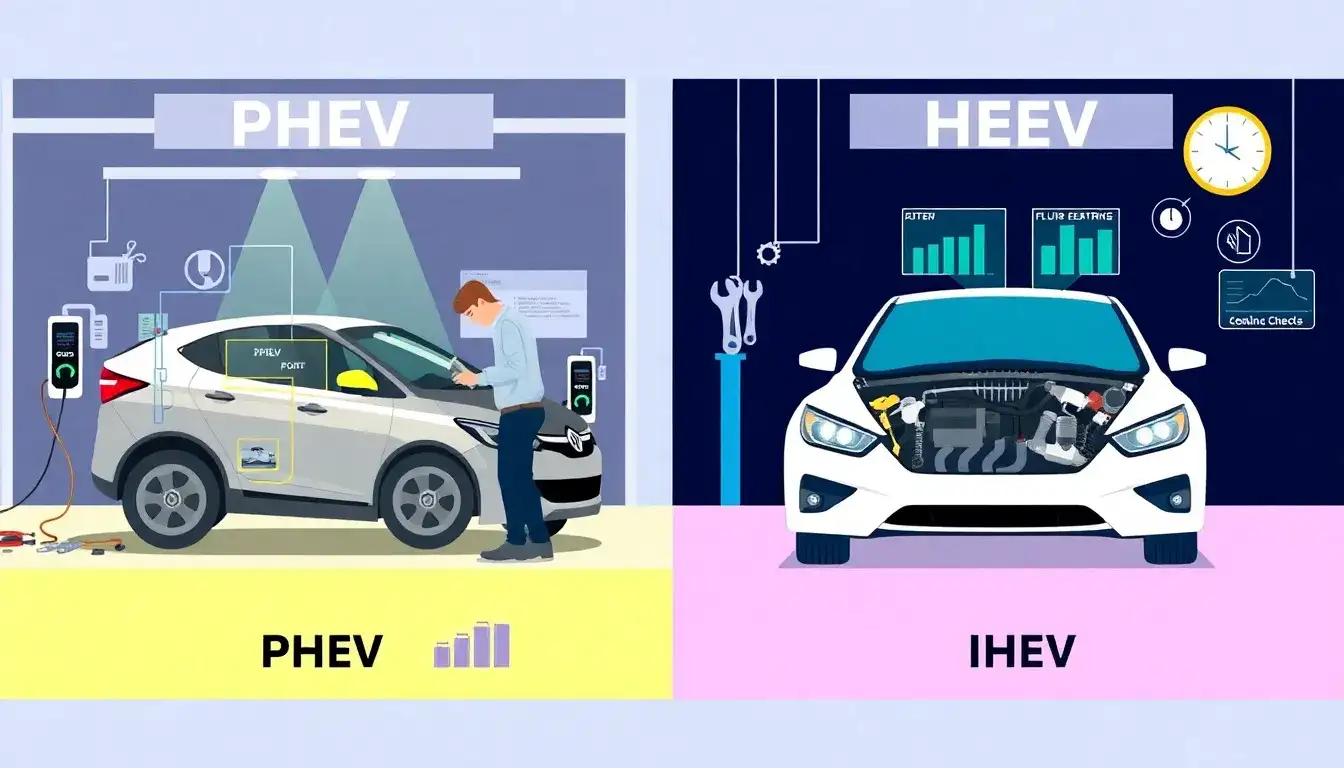
The main maintenance differences between Plug-in Hybrid Electric Vehicles (PHEVs) and Hybrid Electric Vehicles (HEVs) stem from their design and functionality:
PHEV and HEV Overview
- PHEVs have both an internal combustion engine and an electric drivetrain with a high-capacity battery, allowing them to operate entirely on electric power for longer distances before the engine kicks in.
- HEVs also have both an electric motor and an internal combustion engine but are designed to use regenerative braking to recharge the battery while driving. They do not need to be plugged into an electrical outlet to charge.
Maintenance Requirements
PHEVs
- Engine Maintenance: PHEVs require regular maintenance similar to conventional vehicles, including engine oil changes, filter replacements, transmission fluid checks, and cooling system maintenance.
- Battery and Electric Components: The large battery and electric system require minimal maintenance but may need periodic checks for optimal performance. The vehicle’s cooling system may also require maintenance for components like the battery pack.
- Brake System: Due to regenerative braking, brake wear is reduced, but components still need replacement over time.
HEVs
- Engine Maintenance: HEVs need similar engine maintenance to conventional vehicles, such as oil changes and tire rotations, which contribute to their higher maintenance costs compared to PHEVs in terms of engine upkeep.
- Battery and Electric Components: The smaller battery in HEVs generally requires less maintenance but still benefits from regenerative braking for recharging while driving.
- Brake System: Since HEVs also use regenerative braking, brake wear is reduced, but components may still need replacement over time.
Summary of Key Differences
- Engine Dependence: PHEVs and HEVs both have internal combustion engines, but PHEVs can run for longer distances on electric power alone.
- Battery Management: PHEVs have higher capacity batteries requiring more advanced management, while HEVs have smaller batteries that recharge through regenerative braking.
- Maintenance Costs: Overall, both PHEVs and HEVs generally have lower maintenance costs compared to conventional vehicles due to regenerative braking and fewer moving parts in the electric drivetrain. However, PHEVs might require less frequent engine maintenance compared to HEVs due to their ability to operate more often in electric-only mode.
Original article by NenPower, If reposted, please credit the source: https://nenpower.com/blog/what-are-the-main-maintenance-differences-between-phevs-and-hevs/

