

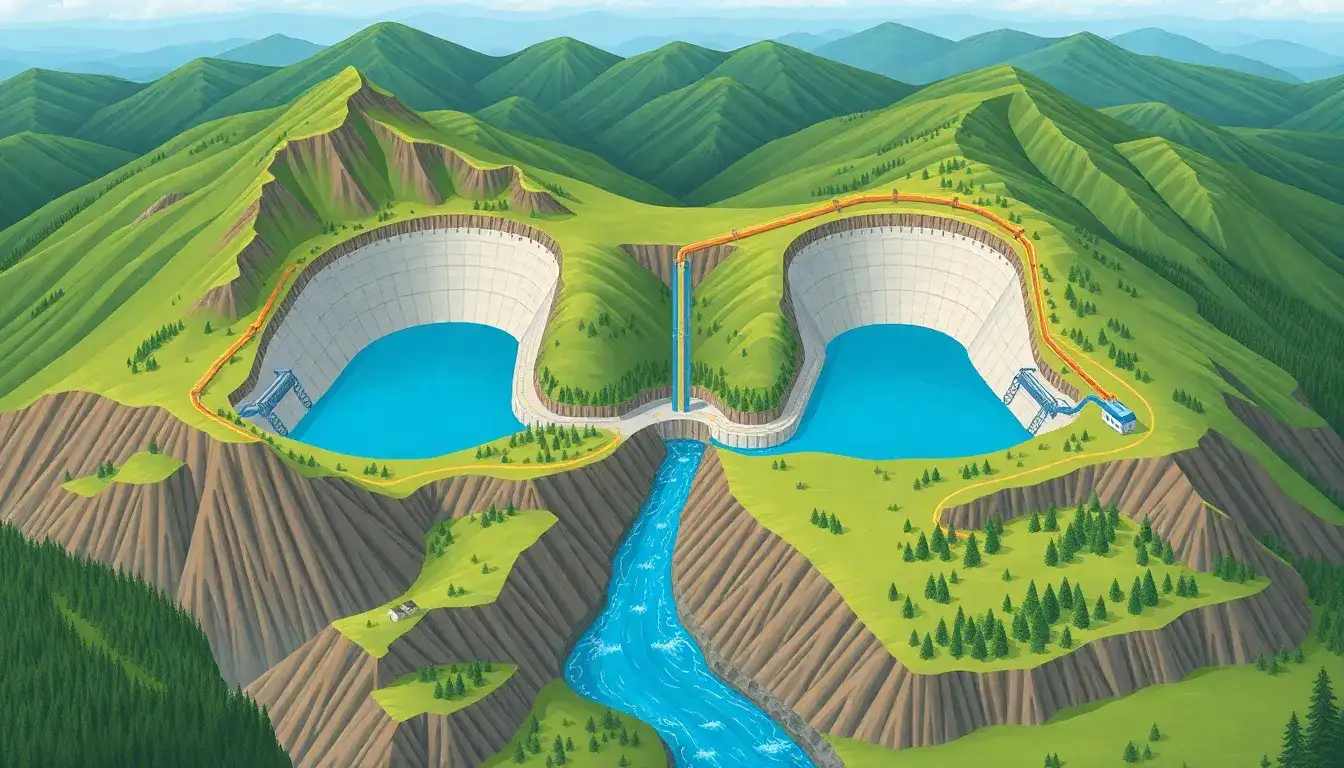
Key Geographical Factors
1. Elevation Difference (Head Height):
The vertical distance between the upper and lower reservoirs, known as the head height, is critical. A greater height difference allows more potential energy to be stored and converted into electricity, increasing the overall energy generation capacity and efficiency of the system.
2. Terrain and Topography:
Hilly or mountainous regions with natural elevation differences are ideal for PHS. These areas enable the creation of reservoirs at different heights with minimal earthworks and infrastructure costs. Regions lacking sufficient elevation, such as flat plains, are less suitable.
3. Availability of Suitable Reservoir Sites:
The presence of natural or artificial basins to serve as upper and lower reservoirs is essential. Sites that can use existing reservoirs, disused open-pit mines, or engineered off-river reservoirs (closed-loop systems) offer flexibility and minimize environmental impact.
4. Distance Between Reservoirs:
Efficiency declines as the horizontal distance between reservoirs increases, due to longer penstocks and increased water conveyance losses. Optimal sites have reservoirs relatively close horizontally but maintain a substantial vertical difference.
5. Water Supply and Hydrology:
While pumped storage mostly recycles water, initial filling and maintaining reservoir levels require water inputs. Regions with adequate rainfall or water sources are preferred to offset evaporation and seepage losses that would otherwise reduce system efficiency.
6. Environmental and Land Use Considerations:
Sites avoiding complex aquatic ecosystems and minimizing impact on natural river systems (closed-loop systems) can operate more efficiently by reducing regulatory constraints and operational limitations. Availability of land with minimal competing uses also influences site feasibility and efficiency.
Summary Table of Main Geographical Factors
| Factor | Impact on PHS Efficiency |
|---|---|
| Elevation Difference (Head) | Larger head increases energy storage and conversion efficiency |
| Terrain/Topography | Hilly/mountainous terrain suitable; flat terrain less so |
| Reservoir Suitability | Presence of existing or suitable reservoirs reduces cost, improves efficiency |
| Distance Between Reservoirs | Shorter horizontal distances reduce losses and improve efficiency |
| Water Availability | Ensures reservoir levels; critical to offset losses |
| Environmental Impact | Closed-loop, off-river systems reduce environmental constraints and operational inefficiencies |
In conclusion, pumped hydro storage efficiency strongly depends on the geographical suitability of the site, especially elevation difference, terrain, reservoir availability, and water supply. These factors influence the energy capacity, operational losses, environmental impact, and overall economic feasibility of the system.
Original article by NenPower, If reposted, please credit the source: https://nenpower.com/blog/what-are-the-main-geographical-factors-that-affect-the-efficiency-of-pumped-hydro-storage/

