

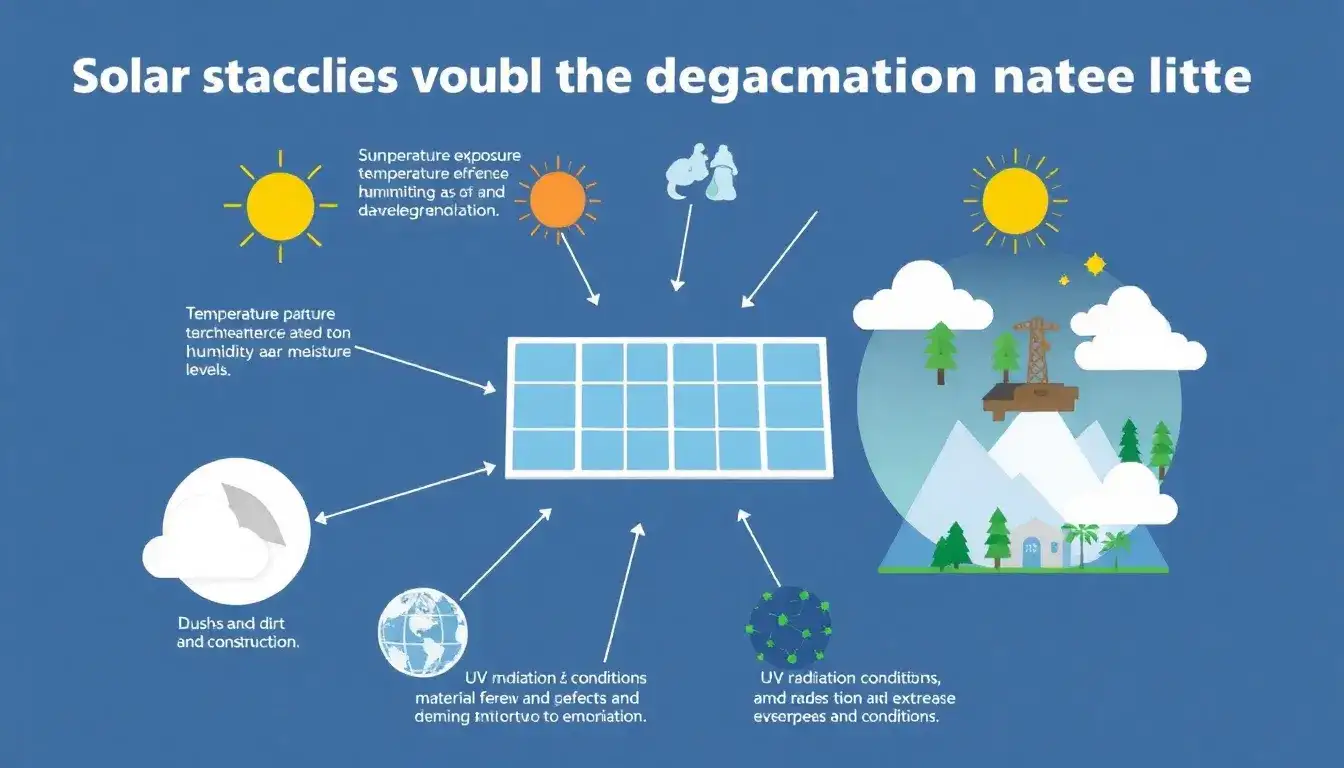
Main Factors Affecting Solar Panel Degradation
-
Weather Conditions:
- Temperature Variations: Constant thermal cycling (expansion and contraction due to temperature changes) leads to microcracks in the solar cells.
- Humidity, Rainfall, Snow, and Ice: These contribute to panel wear, frame corrosion, and cell contamination.
- Strong Winds: May cause flexing of panels, though this is less common with proper installation.
-
Exposure to UV Rays and Sunlight:
- Light-Induced Degradation (LID): Initial exposure to sunlight can lead to a 1-3% efficiency drop soon after installation, stabilizing afterward.
- Direct Light-Induced Degradation (DLID): Immediate warping or buckling can occur due to direct sunlight and heat.
- Potential-Induced Degradation (PID): Occurs due to high voltage differences across components, leading to significant performance drops if not addressed.
-
Quality and Assembly of Panels:
- Materials and Construction: Low-quality components can increase degradation rates. Proper assembly practices are crucial to avoid incompatibility issues.
- Installation: Improper handling, incorrect installation, or faulty connections can cause initial or accelerated degradation.
-
Maintenance and Environmental Factors:
- Soiling: Accumulation of dust, dirt, or debris reduces sunlight exposure, impacting efficiency.
- Inadequate Maintenance: Neglecting regular checks on connections and inverters can exacerbate degradation.
These factors collectively influence the rate at which solar panels degrade over time, with high-quality panels typically experiencing a degradation rate of about 0.5% per year.
Original article by NenPower, If reposted, please credit the source: https://nenpower.com/blog/what-are-the-main-factors-that-influence-the-degradation-rate-of-solar-panels/

