

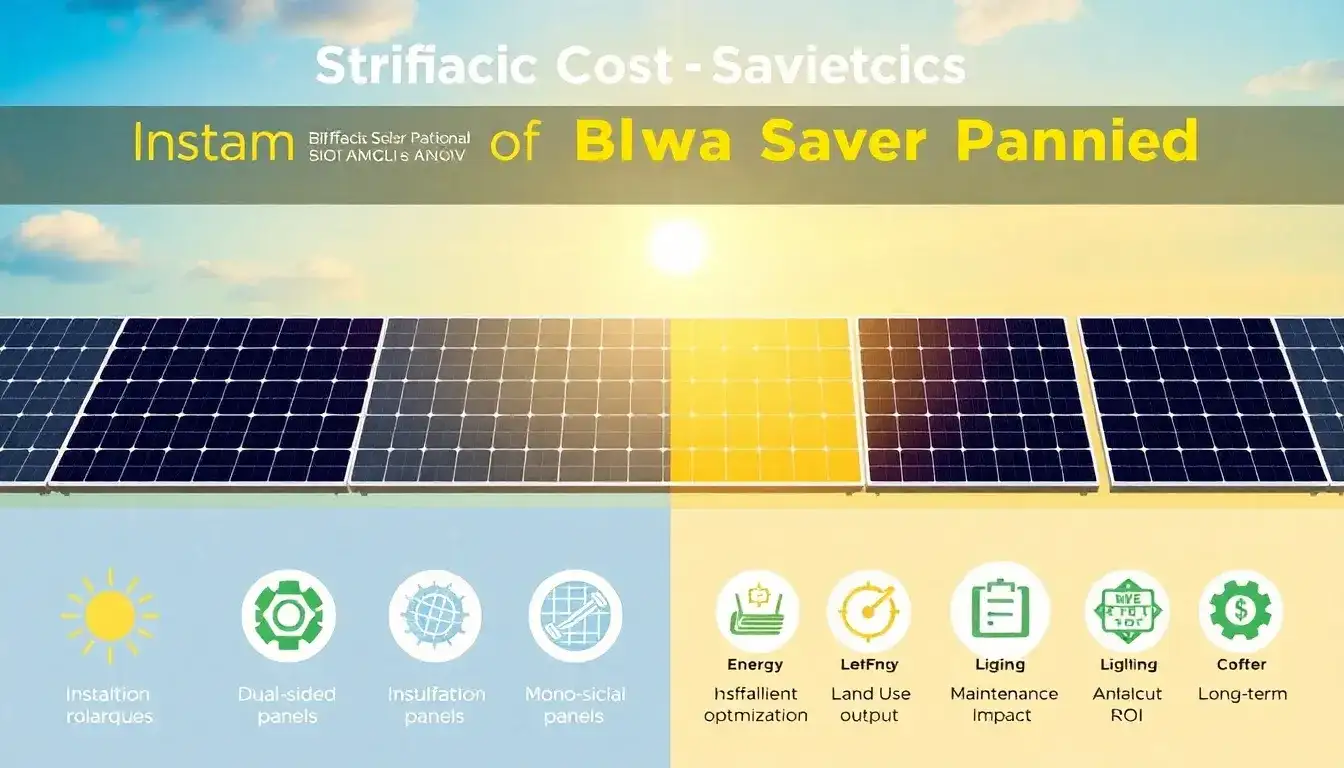
The main factors that influence the cost savings of bifacial solar panels include:
1. Increased Energy Production
Bifacial panels capture sunlight from both their front and rear sides, which increases total energy output compared to traditional monofacial panels. This higher energy yield translates directly into cost savings by generating more electricity for the same installation size or fewer panels needed for the same output.
2. Installation Configuration and Location
The amount of additional energy captured by the rear side varies with how the panels are installed. Factors such as tilt angle, height above the ground, and the reflectivity of the surface beneath the panels (albedo) significantly impact performance. For example, surfaces with higher reflectivity (like snow or white gravel) enhance the rear-side generation. Also, installations using tracking systems or elevated mounts can increase bifacial gains.
3. Environmental and Climatic Conditions
Bifacial panels tend to perform better in environments with high albedo and cooler temperatures. Their improved performance in hot climates and certain environmental conditions can lead to greater overall energy production and thus better cost-effectiveness.
4. Cost of Bifacial Panels vs. Energy Savings
Although bifacial modules generally have a higher upfront cost—roughly $0.50 more per watt compared to monofacial panels—their improved durability and higher energy generation reduce the levelized cost of electricity (LCOE) over the system’s lifetime. Studies have found bifacial systems can have competitive or even lower LCOE compared to traditional systems, especially in optimal conditions.
5. Government Incentives and Rebates
Financial incentives such as tax credits, rebates, and other government programs can lower the initial investment costs for bifacial solar installations, enhancing overall cost savings.
Summary Table
| Factor | Impact on Cost Savings |
|---|---|
| Increased Energy Production | More electricity generated increases savings |
| Installation & Surface Reflectivity | Optimized tilt, height, and reflective ground increase output |
| Environmental Conditions | Cooler temperatures and high albedo boost performance |
| Upfront Costs vs. LCOE | Slightly higher initial cost offset by lower lifetime costs |
| Incentives & Rebates | Reduce installation cost, improving return on investment |
In conclusion, the cost savings of bifacial solar panels depend primarily on their enhanced energy production enabled by installation parameters and environmental conditions, balanced against their higher initial cost and supported by relevant incentives. This makes bifacial panels a financially attractive option especially where site conditions maximize rear-side energy capture.
Original article by NenPower, If reposted, please credit the source: https://nenpower.com/blog/what-are-the-main-factors-that-influence-the-cost-savings-of-bifacial-solar-panels/

