

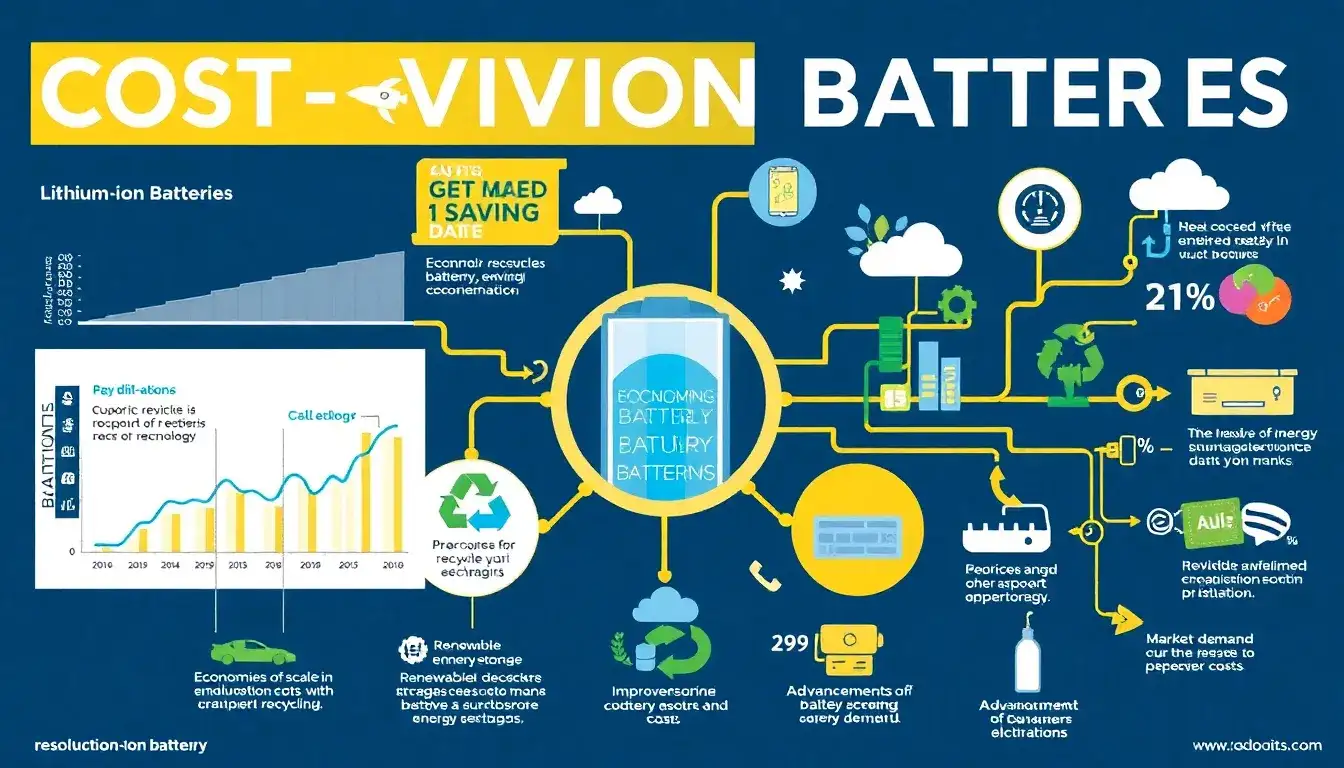
The main factors that influence the cost savings from using lithium-ion batteries include the following:
1. Energy Efficiency and Electricity Costs
Lithium-ion batteries are significantly more energy-efficient compared to alternatives like lead-acid batteries. They typically consume about 30% less electricity due to better charge retention and minimal energy loss during charging. This efficiency translates directly into lower energy bills over time, contributing significantly to cost savings.
2. Maintenance and Operational Costs
Lithium-ion batteries require virtually no maintenance:
- No regular watering
- No cleaning or ventilation needed to prevent corrosion or hazardous gas buildup
- Built-in Battery Management Systems (BMS) provide real-time monitoring and optimize battery use
This lack of maintenance reduces labor costs and eliminates downtime related to battery swaps or servicing, which are necessary for lead-acid batteries. Hence, operational disruption costs are minimized, increasing overall cost-effectiveness.
3. Battery Life and Cycle Durability
Lithium-ion batteries offer a much longer cycle life, often 3,000–5,000 cycles, compared to 300–500 cycles for lead-acid batteries. This extended lifespan means fewer replacements and associated capital expenditures over the battery’s life, making lithium-ion systems more cost-effective in the long run.
4. Technological and Manufacturing Advances
Investments in research and development (R&D), especially in chemistry and materials science, play a crucial role in reducing lithium-ion battery costs. Improvements in materials, such as enabling thicker electrodes while maintaining power requirements, lower manufacturing costs. Economies of scale from increased production capacity also contribute, though R&D advances are the primary driver behind recent cost declines.
5. Battery Capacity and Size (for Home and Energy Storage Applications)
Cost savings are influenced by the battery’s capacity (measured in kilowatt-hours, kWh), which determines how much energy the battery can store and deliver. Larger capacity can increase upfront costs but also enhances energy independence and the ability to reduce energy bills by shifting usage from peak to off-peak hours. Features such as depth of discharge, efficiency rate (typically 90%–95%), and smart controls for monitoring energy use further modulate economic benefits.
Summary Table of Cost-Saving Factors in Lithium-Ion Batteries
| Factor | Explanation | Impact on Cost Savings |
|---|---|---|
| Energy Efficiency | 30% less electricity use than lead-acid, reducing energy bills | Lower operational electricity costs |
| Maintenance Requirements | No watering, no cleaning, no ventilation needed, minimal labor | Reduced labor and downtime costs |
| Cycle Life & Longevity | 3,000–5,000 cycles vs. 300–500 cycles for lead-acid | Longer battery life reduces replacement costs |
| R&D and Materials Advances | Improved chemistry, thicker electrodes, better manufacturing techniques | Lower production costs and better performance |
| Battery Capacity and Features | Larger capacity, high efficiency, smart controls | Enhanced savings via peak/off-peak energy management |
Lithium-ion batteries offer significant long-term cost savings primarily through energy efficiency, reduced maintenance, longer life cycles, and technological improvements driven by R&D efforts. These factors collectively outweigh the initially higher upfront costs, making lithium-ion batteries a more economical choice over time.
Original article by NenPower, If reposted, please credit the source: https://nenpower.com/blog/what-are-the-main-factors-that-influence-the-cost-savings-from-using-lithium-ion-batteries/

